The Village That Was Declared a Model
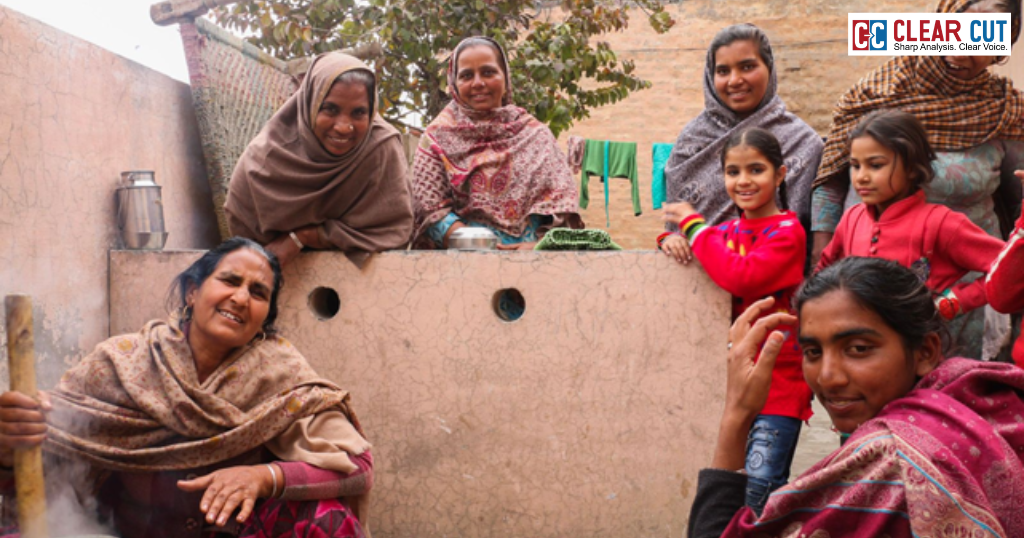
Kanchanpur is a village in Uttar Pradesh’s Hamirpur district where approximately 65% of residents are from Scheduled Caste communities. In 2022, it was selected as an Adarsh Gram under PM-AJAY. Unfortunately, this was a designation that should have brought converged government services, infrastructure upgrades, and livelihood investment. By 2025, the drainage system was complete. The community centre was built. The SHG meeting room had a ceiling fan. What had not arrived was the promised literacy programme, the skill development workshop, or the cooperative credit linkage. The village was a model. Some of its parts were working.
On May 26, 2026, the Ministry of Social Justice and Empowerment announced the launch of the PM-AJAY Portal and PM-AJAY Mobile Application is a digital platform designed to improve the planning, monitoring, and accountability of the PM-AJAY.
What PM-AJAY Is and What It Must Do
PM-AJAY targets 16+ crore Scheduled Caste Indians across SC-majority villages. Budget 2025-26 allocation: Rs. 2,140 crore. As of FY 2023-24: 1,260 villages declared Adarsh Grams. 100% centrally funded scheme.
PIB / Ministry of SJE / pmajay.dosje.gov.in
PM-AJAY is a merger of three earlier Central Sponsored Schemes: Pradhan Mantri Adarsh Gram Yojana (village development), Special Central Assistance to Scheduled Caste Sub Plan (income-generating and infrastructure projects), and Babu Jagjivan Ram Chhatrawas Yojana (hostel construction for SC students in higher education). The merger was designed to eliminate the fragmentation that had historically prevented these schemes from delivering converged, holistic outcomes in SC-dominated areas.
The new portal requires states and union territories to submit Annual Action Plans online to receive central funds by replacing the previous manual and paper-based process that created delays, disbursement leakages, and accountability gaps. States can track sanction orders, fund releases, and implementation progress in real time. Gram Panchayats and district administration can access their scheme data. The mobile app extends this access to field-level functionaries.
The Structural Problem the Portal Must Confront
The PM-AJAY portal is a necessary improvement. It is not a solution to the problems that have historically constrained SC welfare delivery. The scheme’s geographic targeting model has been critiqued by social scientists, including by a question submitted to the UPSC by the scheme’s own assessment ecosystem, for potentially leaving out SC families who live in mixed-caste villages. In states like Tamil Nadu, Karnataka, and Andhra Pradesh, many of the most economically marginalised SC households are in villages where they are a minority, not a majority.
Digital portals, however well-designed, cannot address what field-level analysis consistently reveals: the most acute need among SC communities is not a portal for fund tracking. It is the quality of the intervention after the fund arrives. A hostel built under BJRCY that is 40 kilometres from the nearest university is not serving its beneficiaries. A skill development programme funded under the Grants-in-Aid component that has no certified employer tie-up is training without employment. The portal tracks disbursement. It must also track outcomes.
The Accountability Demand
The portal must publish, in public-facing form, scheme-wise and state-wise outcome data: hostel occupancy rates, income improvement in Adarsh Gram households, and educational attainment among scholarship beneficiaries. Disbursement transparency is the entry-level accountability standard. Outcome accountability is the one that actually matters for the 1,260 villages and the millions of SC households who depend on this scheme.
Civil society organisations, independent researchers, and SC community representatives must be given structured access to anonymised portal data for independent assessment. Government-to-government monitoring through the portal is necessary but not sufficient. The people the scheme serves must be part of evaluating whether it is working.
Technology as the Beginning, Not the Answer
Kanchanpur village has a drainage system and a community centre. It does not yet have the literacy programme or the credit linkage. The PM-AJAY portal will not, by itself, deliver either. But it creates the visibility in the national, publicly accessible, real-time record of what was promised and what was received. This makes accountability possible. Use the visibility. Demand the outcomes. The portal is live. Now ensure that in Kanchanpur, and in the 1,259 other Adarsh Grams, the model actually functions. Every child in every designated village deserves the full stack of what this scheme promised.
Clear Cut Research, Livelihood Desk
New Delhi, UPDATED: May 28, 2026 09:00 IST
Written By: Tanmay J Urs