- NFHS-6 (2023–24) highlights steady improvements in maternal and child health, with higher institutional deliveries, better antenatal care, increased immunization, and expanded health insurance coverage across India.
- Child nutrition indicators have improved significantly, as stunting and severe wasting declined while early breastfeeding rates increased, reflecting the impact of government health and nutrition initiatives.
- The survey also shows progress in women’s empowerment through higher internet use, greater financial inclusion, and improved access to healthcare, while emphasizing the need to address nutrition, social inequalities, and regional disparities.
The recently released National Family Health Survey-6 (NFHS-6, 2023-24) by the Union Health Ministry details concrete gains across the country in significant public health and social indicators. Conducted by the International Institute for Population Sciences (IIPS), Mumbai, the survey of approximately 6.79 lakh households across 715 districts provides district-level estimations on population, health, nutrition, and family welfare.
The proportion of births in health facilities increased from 88.6% to 90.6%, and ANC coverage across all health facilities reached 95.9% during the survey. The percentage of mothers receiving four or more ANC visits increased from 58.5 to 65.2, while ANC visit coverage during the first trimester increased impressively. Over 85.3% of the deliveries received postnatal care within two days of the event. As high as 87.1% of all children aged 12-23 months had received full immunization by the time of the survey (up from 83.8% earlier), and over 85.4% had received the rotavirus vaccine. 95.6% children were immunized at public health facilities.

Prioritize Child Nutrition:
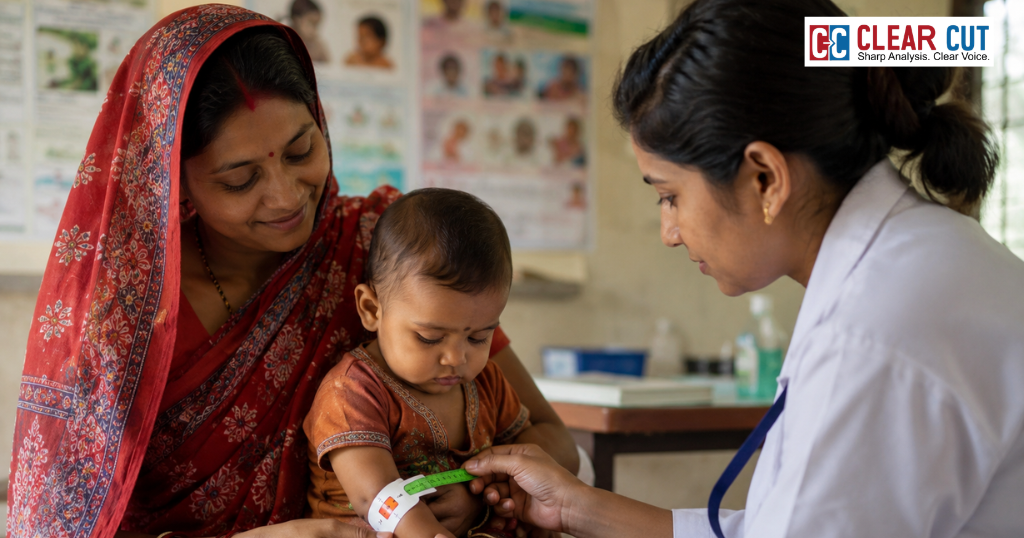
Child nutrition indicators also showed trends aligned with long-established policy concerns. The percentage of stunted children declined dramatically from 35.5% to 29.3% (17% reduction), and the percentage of severely wasted children declined sharply from 7.7% to 5.2%. In addition, the proportion of new-borns exclusively breastfed in the first hour of life increased by close to 10 percentage points, to 50.1%.
The shifts were in sync with government interventions such as POSHAN Abhiyaan, Pradhan Mantri Matru Vandana Yojana, and increased immunization coverage under the National Health Mission.
Health and financing:
Coverage under health insurance or financing schemes increased considerably from 41% of households to 60.2%, boosted by initiatives such as the Ayushman Bharat-PMJAY scheme. Meanwhile, indicators of women’s empowerment showed improved progress, with women’s internet use more than doubling from 34% to 64.3% over the past 6 years. Bank account ownership was at 89%, and the use of hygienic menstrual protection products increased from 45.3% to 55.1% (a 22% relative increase). Total Fertility Rate remains at 2.0, with contraceptive prevalence up to 69.1%.
Comparative Perspective: India in Global Context
While India performs well in some areas, it has some way to go compared with global standards. According to WHO and UNICEF estimates (based on data from about 2-3 years ago), the prevalence of global stunting was around 22-25%, with South Asia often recording a higher average than the rest of the world. With 29.3% now recorded, India has made progress but must accelerate to meet the SDGs. Gains in immunization coverage parallel those in Bangladesh and Vietnam, where high routine immunization rates are delivered through community health worker models and digitally monitored systems – two approaches that India has adopted through U-WIN and ASHA workers. The Hindu
At over 90%, India’s rate of institutional delivery outranks most LDCs, especially those in sub-Saharan Africa, where the proportion of births in facilities is still between 60% and 70%. Countries such as Thailand and Sri Lanka maintain continuity of care and achieve lower maternal deaths as they achieve greater integration of primary health care. The PM-JAY financing protection mechanism embodies the same logic as the Brazilian SUS or the Indonesian BPJS, aiming for universal coverage and zero out-of-pocket costs for catastrophic events for people with low incomes.
Experts suggest that systemic issues remain important to ensuring long-term success. In the WHO’s words, integrated nutrition-sensitive and nutrition-specific interventions, plus social protection, produce “the most sustainable effects,” which guide strategies such as the convergent POSHAN program and the NHM. Similar evidence shows that long-term political commitment and data-based planning at the district level, using the NFHS, have achieved quicker, more equitable gains.
Policy and Social Implications
NFHS-6 offers concrete evidence to inform improvements to interventions. Several experts propose intensifying attention to the first 1,000 days, adolescent health, and urban-rural disparities. “Though the spread of coverage may be increasing, what will determine the next lap of progress is our ability to tackle the social determinants – gender norms, dietary diversity, and a resilient and climate-smart agriculture system”, comments one analysis.
India’s own experience highlights the power of public interventions that converge and are targeted to deliver societal change at a mass scale.
With increased attention to reaching the last mile, ensuring inclusion, and adapting strategies over time, India is better positioned to achieve equitable health and nutrition for its families and more sustainable development outcomes, even as district-wise analysis would further strengthen specific interventions.
Clear Cut Health Desk
New Delhi, UPDATED: July 14, 2026 13:00 IST
Written By: Yatharth Pathak