
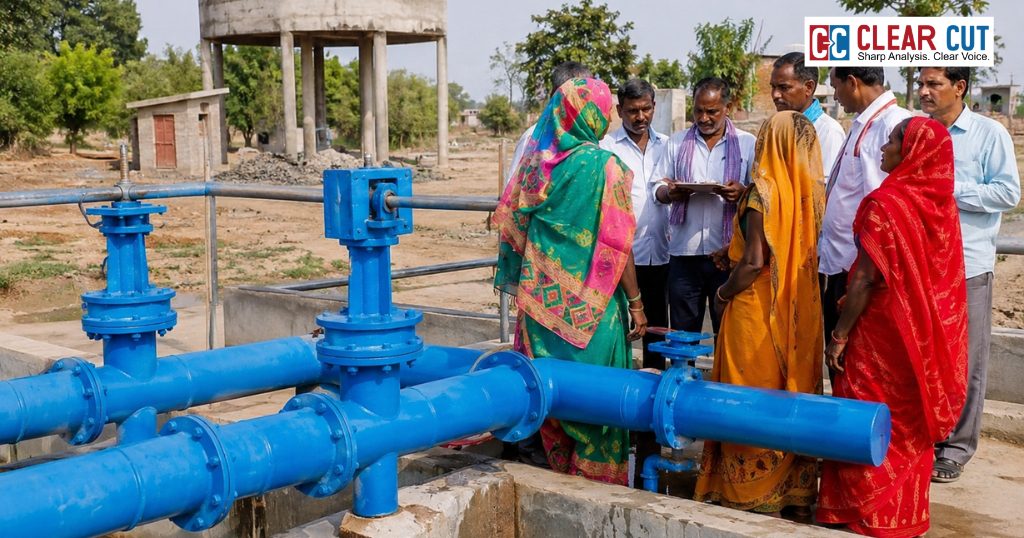
- Jal Jeevan Mission 2.0 is shifting its focus from building rural water infrastructure to ensuring long-term sustainability through professional village-level water management and strong community participation.
- The article highlights the role of VWSCs, UNOPS tools, water quality monitoring, water budgeting, financial sustainability, and climate resilience in securing safe and reliable drinking water for every rural household.
The Government of India’s Jal Jeevan Mission has executed one of the largest rural infrastructure deployments in global history, laying down an extensive network of pipelines and tap connections across the countryside. However, as the mission transitions from asset creation to long-term sustainability, the focus must pivot to a much more critical phase: ensuring the permanence of the infrastructure and the uninterrupted purity of the water supply.
It is a common observation in the developmental sector that pipelines are laid and sources are commissioned, but without structured maintenance or robust source sustainability, systems begin to falter over time. Addressing this precise challenge in a special technical discussion on Green Talk with Anil Pratap Singh, Mr. Vinod Mishra, Country Manager for the United Nations Office for Project Services (UNOPS), outlined a revolutionary blueprint for rural water governance: Transforming villages into professional ‘Water Utilities’.
The Concept of a Rural ‘Water Utility’
In urban landscapes, municipal corporations operate as professional utilities. They guarantee service delivery, monitor water quality, handle technical upkeep, and collect user charges to remain self-sustaining. Historically, rural water systems have suffered from an ad-hoc approach.
The operational guidelines of Jal Jeevan Mission 2.0 offer a structural correction through the Village Water and Sanitation Committee (VWSC). As a formal, legally recognized sub-committee of the Gram Panchayat, the VWSC holds the mandate to manage rural water. To ensure true sustainability, these committees must now transcend their administrative identities and evolve into professional ‘Water Utility Operators’—mirroring the institutional discipline of urban water boards but tailored to the rural context.
The Three Pillars of Water Security and Innovative UNOPS Tools
True water security relies on three non-negotiable pillars: Accessibility (equity in access), Availability (quantity, specifically the benchmark of 55 LPCD), and Water Quality (potability). To operationalize these on the ground, UNOPS has successfully deployed participatory tools that empower communities to manage their own resources:
- CLoNB (Community Leave No One Behind): Grounded in the core philosophy of the UN 2030 Agenda, this tool empowers rural communities to assess their current baseline and design inclusive frameworks. It ensures that marginalized families at the absolute tail-end of the village are not excluded from the water network.
- CLASS (Community Led Action for Sanitary Surveillance): Water quantity means very little if the quality is compromised. Instead of top-down lecturing, the CLASS tool uses participatory methodologies to educate communities on microbiological and chemical contamination, training them to conduct regular sanitary surveys and manage localized testing independently.
- Pani Panchayat and Water Budgeting: Humanity cannot manufacture freshwater; we can only manage and conserve what exists. Through water budgeting, communities map their annual water availability (rainfall and groundwater recharge) against total consumption (agriculture, household, and local industry). If the budget runs into a deficit, the village proactively initiates source sustainability measures, such as catchment area protection, field bunding, and pond rejuvenation, to avert future crises.
The Four Pillars of Capacity Building for VWSCs
To enable Gram Pradhans and VWSC members to think and act like utility operators, a systematic capacity-building framework must be institutionalized across four core areas:
- Institutional Strengthening: VWSCs must transition to formal administrative entities. This means holding regular, minuted meetings, presenting audited accounts to the Gram Sabha, and formalizing local resolutions.
- Technical Empowerment: Rather than relying on external technicians for minor operational faults, villages must train and equip local youth as certified plumbers, fitters, and pump mechanics. This ensures immediate maintenance while generating localized green livelihood opportunities.
- Financial Sustainability: Committees must learn to effectively leverage untied funds from the 15th Finance Commission, which are specifically earmarked for water and sanitation. Simultaneously, they must establish transparent user-charge collection systems managed through dedicated bank accounts to ensure the financial autonomy of the utility.
- Environmental & Climate Resilience: Local utilities must maintain an environmental plan informed by the village’s historical exposure to droughts or floods, ensuring that the physical infrastructure is structurally resilient against climate variations.
The Call for Personal Responsibility
An infrastructure investment of this magnitude cannot survive on institutional mandates alone; it requires a deep sense of personal responsibility from every citizen. Freshwater is a finite, precious resource. True community ownership begins at home — through simple, everyday practices like turning off running taps during domestic chores and choosing bucket baths over high-flow showers.
Elevating our villages into self-reliant, professional water utilities is the only viable path to protecting India’s monumental investment in rural water supply. By strengthening local governance and treating water as a shared public utility, we can ensure that our rural communities pass down a secure, sustainable water legacy to the generations to come.
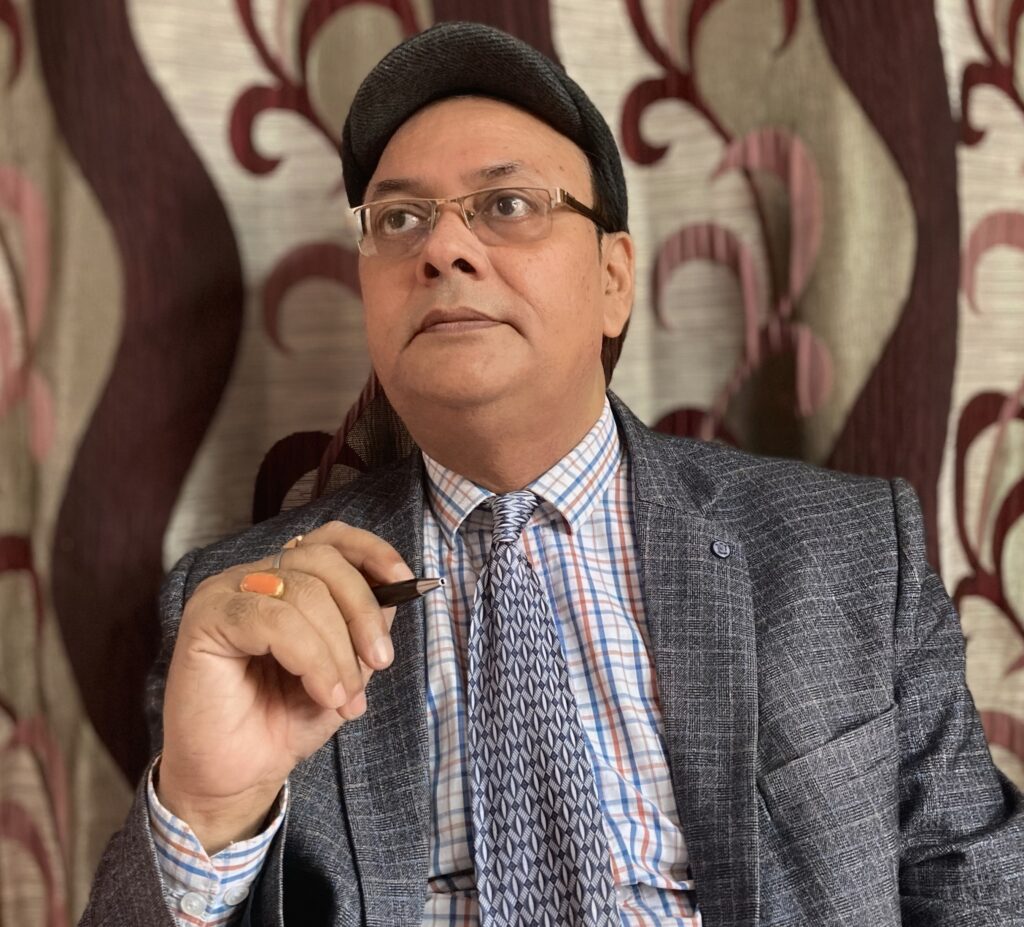
Dr. Anil Pratap Singh is a scientist, environmental author, and public health policy expert based in Uttar Pradesh, India. He is the Founder Director of the Global Science Academy (GSA), a premier organization he has led for over three decades, dedicated to scientific outreach and environmental conservation. The host of the environmental television program Green Talk with Anil Pratap Singh on Munsif TV, Dr. Singh also serves as a Strategic Mentor and Project Evaluator for the United Nations Development Programme (UNDP) Youth4Climate initiative and has extensive experience evaluating national public health interventions.
Clear Cut WASH Desk
New Delhi, UPDATED: July 13, 2026 18:00 IST
Written By: Dr. Anil Pratap Singh