- BSNL has reported consecutive profitable quarters for the first time since 2007, driven by revenue growth, rural expansion, and its indigenous 4G rollout.
- The turnaround highlights the importance of public telecom infrastructure in connecting remote and commercially unviable regions across India.
- The real challenge now is ensuring reliable rural connectivity and maintaining long-term service quality beyond profitability.
The Telecom Grave Nobody Expected to Open
For most of the previous decade, Bharat Sanchar Nigam Limited (BSNL) was subject to a very specific kind of policy conversation. The public sector telecom company was losing money at a big scale, shedding subscribers in crores. BSNL was routinely described as irrelevant in a market dominated by Jio, Airtel, and Vodafone-Idea. The conversations around it had a specific vocabulary such as voluntary retirement schemes, spectrum refarming, asset monetisation, managed obsolescence. The possibility of actual commercial recovery was not, for several years, part of the serious analytical discussion.
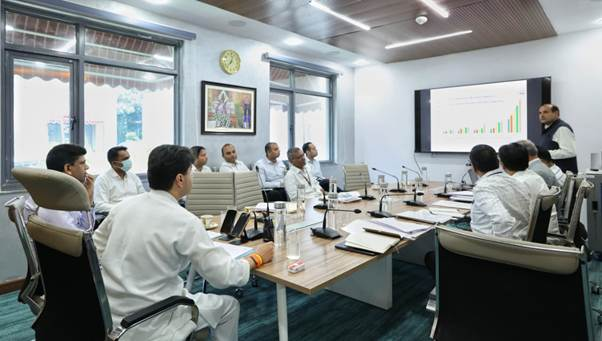
That conversation has changed. BSNL’s revenue has grown from Rs. 21,000 crore to Rs. 25,000 crore, a 20-25% increase over the last two years, according to a statement made by Minister of State for Communications Dr. Chandra Sekhar Pemmasani on May 26, 2026. More significantly, BSNL reported a net profit of Rs. 280 crore in Q4 FY 2024-25. This was the second consecutive profitable quarter, the first time it had achieved consecutive profitability since 2007.
The Numbers That Reframe the Narrative
BSNL revenue growth: Rs. 21,000 crore to Rs. 25,000 crore in two years (+20-25%). Q4 FY25 net profit: Rs. 280 crore (second consecutive profitable quarter; first since 2007). FY25 annual loss: Rs. 2,247 crore. Down 58% from Rs. 5,370 crore in FY24.
(PIB / Business Standard, May 2026)
The improvement is structural, not cosmetic. BSNL’s operating revenue rose 7.8% to Rs. 20,841 crore in FY25. Mobility services grew 6% to Rs. 7,499 crore annually. The Fibre-to-the-Home segment rose 10% to Rs. 2,923 crore. The 4G rollout used indigenously developed technology stacks and equipment that Prime Minister Modi consistently cited as Atmanirbhar Bharat achievement. This has enabled BSNL to begin recovering subscribers in rural and semi-urban markets where network presence now matches what private players offer. Its highest-ever capital expenditure in FY25 funded the 4G infrastructure that is generating the revenue recovery.
The government’s Rs. 1.64 lakh crore revival package for BSNL, approved in 2022, provided the financial runway for this recovery. Spectrum allocation, debt restructuring, and guaranteed procurement of indigenous telecom equipment gave BSNL the conditions to attempt a genuine commercial comeback. Three years into that revival plan, the profitability signal is emerging.
Why the BSNL Turnaround Matters Beyond BSNL
The significance of BSNL’s recovery extends well beyond a single public sector company’s financial statements. BSNL is the primary carrier in geographies that are commercially unattractive for private telecoms: remote hill districts in Himachal Pradesh and Uttarakhand, aspirational districts in Jharkhand and Odisha, islands in the Andamans. If BSNL cannot sustain itself commercially, the connectivity infrastructure in these regions depends entirely on government subsidy, making it permanently fragile.
The Atmanirbhar dimension is also real. BSNL’s 4G network was built using TCS-led indigenous technology such as software, hardware, and core network components developed domestically. This is the first large-scale deployment of a fully indigenous telecom network in India. If the technology performs at commercial scale with BSNL as the validation customer, it creates an exportable product and a domestic manufacturing ecosystem for telecom equipment. That is a strategic dividend that goes well beyond BSNL’s income statement.
The Accountability Test: Profit Is Not the End Goal
Consecutive quarterly profits are necessary but not sufficient. The test of BSNL’s genuine recovery is service quality at the rural margin, whether it delivers the speed and reliability that enables meaningful economic activity. Revenue growth from urban broadband subscribers and enterprise services can mask continued underperformance in the connectivity deserts where BSNL has its most unique and important mandate.
The Ministry must publish district-level 4G quality-of-service data for BSNL’s rural rollout: coverage, speed, and uptime, disaggregated by aspirational districts and remote areas. Profitability tracked at the national level is a financial achievement. Connectivity quality tracked at the village level is the actual mission.
The Telecom Company That India Still Needs
Private telecoms have transformed India’s urban and peri-urban connectivity. They have not solved, and will not solve, connectivity for the geographies that are structurally unprofitable. BSNL exists precisely for those geographies. Its turnaround is not proof that it should be run like a private company. It is proof that a public telecom company, with adequate investment and a clear mandate, can be commercially sustainable while serving the populations that the market has decided to leave behind. Sustain the investment. Track the rural quality. The turnaround is real. Make it permanent and make it universal.
Clear Cut Research, Livelihood Desk
New Delhi, UPDATED: May 28, 2026 01:00 IST
Written By: Tanmay J Urs