
- The Padma Awards 2026 honoured 131 individuals across cinema, music, public service, sports, and grassroots community work during the Civil Investiture Ceremony at Rashtrapati Bhavan.
- The article examines how the ‘People’s Padma’ initiative has broadened recognition while also raising questions about representation, omissions, and political influence in India’s national honours system.
The Award Given Twice: Once in Announcement, Once in Person
The Padma Awards occupy a peculiar space in Indian public life. They are announced on Republic Day as part of the ceremonial calendar that marks India’s statehood. They are conferred months later in a formal investiture at Rashtrapati Bhavan, in a ceremony that converts a gazette notification into a physical moment of recognition between the POI and the individual being honoured. The gap between announcement and ceremony is, in some ways, the most interesting part. It is the period in which the country processes who has been chosen, who has been overlooked, and what the selection reveals about the values India is choosing to celebrate.
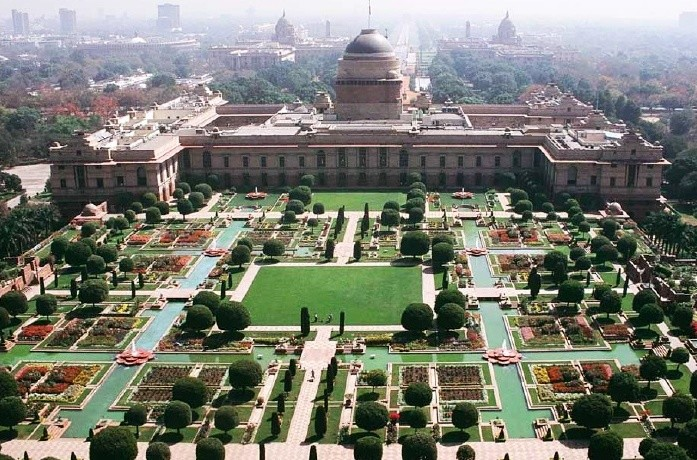
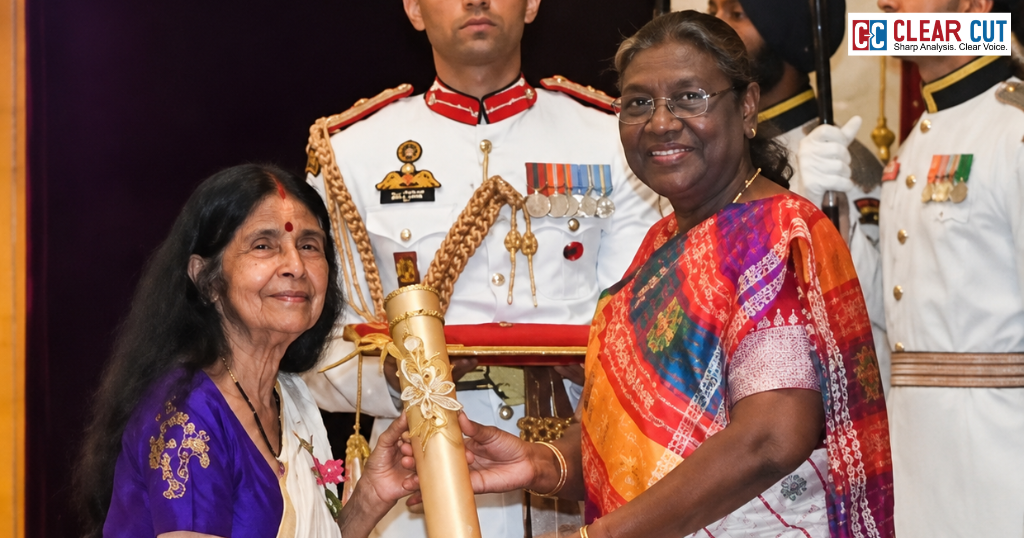
On May 25, 2026, President Droupadi Murmu conferred Padma Awards in the first Civil Investiture Ceremony of the year at Rashtrapati Bhavan. The ceremony honoured recipients from the 131 Padma Awards announced on Republic Day 2026 comprising five Padma Vibhushan, 13 Padma Bhushan, and 113 Padma Shri awards, with 19 women awardees, six from the Foreigners/NRI/PIO/OCI category, and 16 posthumous awards.
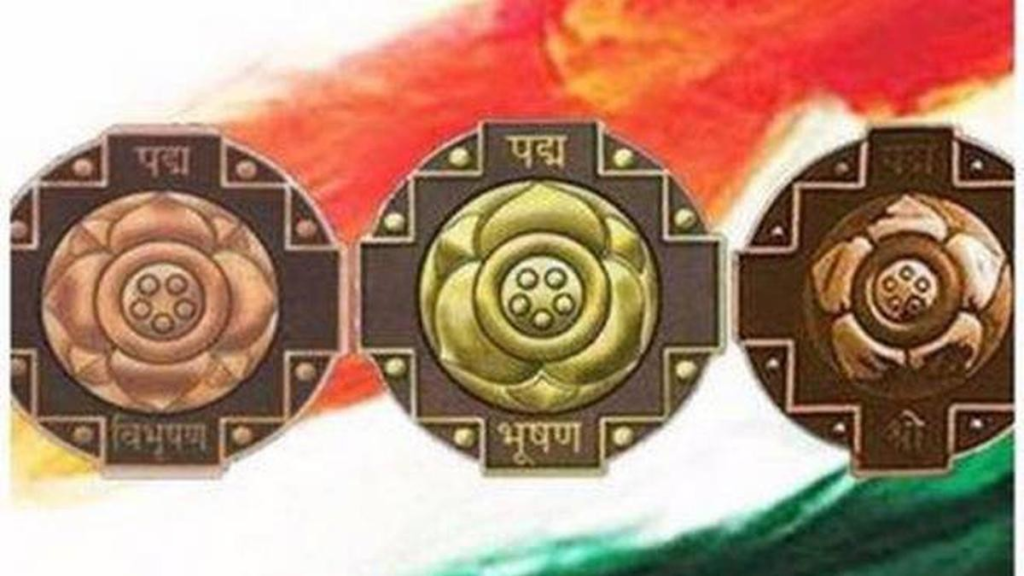
Who Was Honoured and Why It Matters
Padma Awards 2026: 131 total. 5 Padma Vibhushan. 13 Padma Bhushan. 113 Padma Shri. 19 women awardees. 16 posthumous. 6 from Foreigners/NRI/PIO/OCI category.
PIB / MHA, January 26, 2026
The Padma Vibhushan list is the most scrutinised. Actor Dharmendra Singh Deol was conferred the honour posthumously, recognised for a six-decade contribution to Hindi cinema that shaped the popular cultural imagination of multiple generations. Violinist N. Rajam received the Padma Vibhushan in the field of art. It is a recognition of Hindustani classical instrumental music by a musician who trained under Pandit Omkarnath Thakur and spent decades building the modern vocabulary of the sarangi and violin in the classical tradition. Former Supreme Court Justice K.T. Thomas was similarly honoured posthumously.
Among the Padma Bhushan awardees, singer Alka Yagnik’s recognition arrived after she publicly disclosed her rare hearing loss diagnosis in 2023, making her honour simultaneously a tribute to forty years of playback singing and a cultural moment about the relationship between art, vulnerability, and public acknowledgment. Actor Mammootty’s Padma Bhushan acknowledged not only his Malayalam cinema legacy but the cultural reach of regional language cinema in the national awards framework. Banker Uday Kotak received the Padma Bhushan for trade and industry. Advertising legend Piyush Pandey was honoured posthumously.
The ‘People’s Padma’ Question
Since 2014, the government has explicitly framed the Padma Awards as a ‘People’s Padma’ initiative, inviting citizen nominations including self-nominations through the Rashtriya Puraskar Portal. The logic is democratic: by opening nominations to the public, the awards can reach the unsung practitioners of traditional arts, anonymous social workers, grassroots scientists, and community healers who are invisible to conventional institutional nomination processes.
The 113 Padma Shri awards represent this aspiration most concretely. Among the 2026 recipients are individuals working in tribal medicine, handloom weaving, folk performance traditions, and community conservation. It is a work that would never have surfaced in the era of government-only nominations. Cricketer Rohit Sharma’s Padma Shri and actor Prosenjit Chatterjee’s recognition alongside a tribal healer from Odisha is not contradictory. It is the point: the award acknowledges that distinction takes many forms.
What the Omissions Also Say
Every year, the awards list generates as much discussion about who was not included as who was. Scholars, scientists, and activists working in fields that are politically complicated such as environmental activism, civil liberties, investigative journalism, minority cultural traditions. They are systematically underrepresented in the awards, a pattern that commentators from both within and outside the government have noted in successive years. The ‘People’s Padma’ portal generates hundreds of thousands of nominations. The final selection process, which runs through committees and ultimately requires political clearance, does not fully insulate the list from the political context in which it is produced.
This is not unique to India. Every national honour system reflects the value priorities of the government that administers it. The accountability question for the Padma Awards is whether the selection process, over time, moves toward the stated democratic aspiration of recognising distinction wherever it genuinely exists, including in places that are inconvenient to the political moment.
Conclusion: Make the People’s Padma Truly People’s
The Padma Awards, at their best, tell India a story about itself: that a classical violinist from Banaras and a Bollywood icon from Sahiwal and a folk healer from a Gondi village all belong in the same national narrative of excellence. The 2026 list, with its 19 women and 16 posthumous recognitions and handful of grassroots practitioners, takes some steps in that direction. The vision it must move toward is one where the selection process is independently reviewable, where statistical patterns of inclusion and exclusion are published annually, and where the Rashtriya Puraskar Portal nominations can be seen, in the final list, to have genuinely influenced the outcome. Honour broadly. Honour honestly. The Republic is enriched by every form of distinction it is willing to see.
Clear Cut Awards & Events, Research Desk
New Delhi, UPDATED: May 28, 2026 05:00 IST
Written By: Tanmay J Urs