- India’s Ayushman Bharat Digital Mission (ABDM) has crossed 90 crore ABHA accounts, creating one of the world’s largest digital health identity systems and enabling secure, consent-based access to health records.
- The initiative is improving healthcare continuity by making medical records portable across hospitals and healthcare providers, reducing paperwork, duplicate tests, and administrative delays.
- With strong participation from states, union territories, and nearly equal representation of women, ABHA is helping build a more connected, accessible, and citizen-centric healthcare ecosystem across India.
India’s digital health programme has hit a milestone that few countries can match. The Ayushman Bharat Digital Mission has crossed 90 crore Ayushman Bharat Health Accounts. That is more than two-thirds of India’s population of approximately 1.4 billion holding a unique digital health identity. Few, if any, other countries have built a health ID system at this scale.
The Ayushman Bharat Digital Mission, implemented by the National Health Authority under the Ministry of Health and Family Welfare, crossed the landmark milestone of 90 crore ABHAs across the country. The achievement marks a major step in India’s journey towards a connected, interoperable and citizen-centric digital health ecosystem.
What ABHA Actually Is
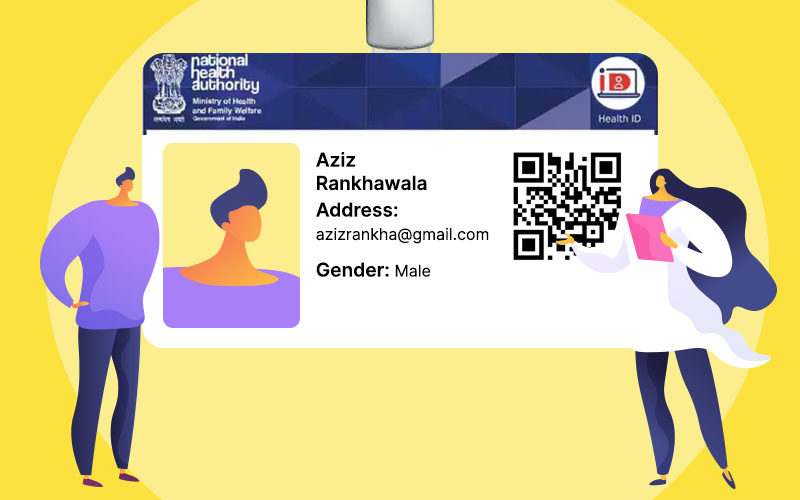
Before the numbers can be understood, it helps to understand what ABHA doesABHA is a unique 14-digit digital health identity that enables citizens to securely link, access and share their health records with their consent. As one of the key building blocks of ABDM, ABHA supports the creation of longitudinal health records across healthcare providers, facilities and digital health applications, empowering citizens with greater control over their health information.
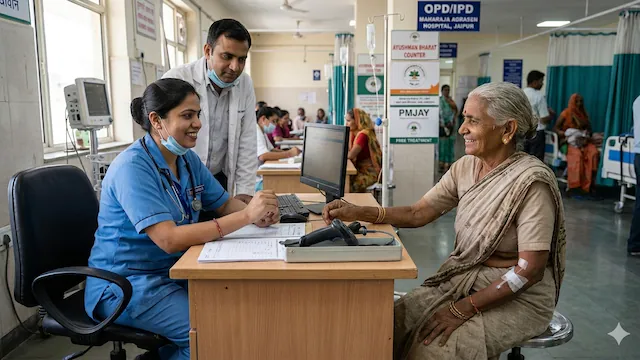
In practical terms, it ends one of the most persistent problems in Indian healthcare. Patients have long had to carry physical files, repeat tests already done at other hospitals, and rely on memory for their medical history. ABHA makes a patient’s records portable, shareable, and secure. In principle, a doctor at a government hospital in Lucknow could access the same records a private clinic in Mumbai holds, provided both are on the ABDM network and the patient consents , with the patient’s consent.
Five Years of Consistent Growth
The growth of ABHA creation has been one of the most consistent adoption curves seen in India’s digital programmes in recent years.
Cumulative ABHA creation increased from 14.7 crore in 2021 to 30.4 crore in 2022, 50.6 crore in 2023, 72.2 crore in 2024, and 84.5 crore in 2025, before surpassing the 90 crore milestone in 2026. 
That is an average addition of roughly 15 crore new accounts every year across five years. The pace has not slowed. It has held steady even as the programme extended beyond urban centres, a shift reflected in saturation figures from smaller states and remote union territories.
The States Leading the Way
The milestone has been driven by participation across the entire country, not just its most populous states.
Uttar Pradesh leads the nation with over 15.3 crore ABHAs, followed by Rajasthan and Maharashtra with 7.1 crore each, Bihar with 6.3 crore, and West Bengal with 5.9 crore ABHAs. Significant contributions have also come from Madhya Pradesh, Gujarat, Andhra Pradesh, Odisha and Karnataka.
Saturation figures tell an even more compelling story. Andaman and Nicobar Islands, Ladakh, Lakshadweep, and Dadra and Nagar Haveli and Daman and Diu have achieved full saturation. Among larger states and UTs, Andhra Pradesh has recorded 98.5% ABHA saturation, followed by Odisha at 91.9%, Chandigarh at 90.8%, Rajasthan at 89.7%, Himachal Pradesh at 88.9%, and Chhattisgarh at 86.6%. Jammu and Kashmir, Tripura and Telangana have also achieved saturation levels exceeding 75%.
The fact that remote union territories have hit full saturation is significant. It signals that this programme has reached beyond metro hospitals and urban health centres into India’s most geographically challenging regions.
Women Are Driving Inclusion
One of the most important dimensions of the milestone is who holds these accounts.
Females account for nearly half of all ABHAs created, constituting 49.75% of total ABHA holders. This marks an important step towards empowering women, including those in rural areas, with secure digital access to their health records.
Near-equal participation of women in a digital health programme at this scale is not a given in any developing economy. It reflects both the ground-level outreach work done by states and the integration of ABHA creation into maternal and child health services and immunisation drives.
What the NHA CEO Said
Dr. Sunil Kumar Barnwal, CEO of the National Health Authority, spoke directly to the significance of the milestone.
“The creation of over 90 crore ABHAs reflects the growing participation of citizens, States, UTs and ecosystem partners in the Ayushman Bharat Digital Mission. ABHA is an important step towards empowering citizens with secure, consent-based access to their own health information. As ABDM adoption deepens, ABHA will enable continuity of care, reduce dependence on physical records and support a more seamless, transparent and citizen-centric healthcare delivery system,”  he said.
The Broader Ecosystem Being Built
ABHA is only one layer of a larger digital health architecture being constructed under ABDM.
The broader ABDM framework includes digital infrastructure components such as the Healthcare Professionals Registry and the Health Facility Registry, alongside ABHA. The government said the progress has been made possible through collaboration between central and state authorities, along with private sector healthcare providers, diagnostic labs, insurers, and health-tech platforms integrated into the ABDM ecosystem.
The ABHA system is also being used to support continuity of care across maternal and child health services, immunisation tracking, and routine healthcare delivery.
The vision is an interoperable health system where a patient’s full medical history travels with them. Where a government ASHA worker’s records link seamlessly to a district hospital. Where insurance claims can be processed without paper. India is not there yet. But 90 crore health accounts is a foundation few countries have managed to build.
Clear Cut Health Desk
New Delhi, UPDATED: June 09, 2026 09:00 IST
Written By: Ayushman Meena