
- Neha Dixit’s The Many Lives of Syeda X tells the story of a Muslim migrant woman whose three decades of invisible labour reveal the realities of India’s informal economy, poverty, and social inequalities.
- Built on nine years of research and interviews with over 900 people, the award-winning book transforms one woman’s life into a powerful people’s history of “Invisible India,” earning widespread critical acclaim and multiple literary awards.
Neha Dixit’s The Many Lives of Syeda X is the most important Indian nonf iction debut in years. It is also the kind of book that makes you feel a little guilty for not having noticed sooner.There is a woman who shells your almonds. She trims the loose threads off your jeans, sews the panels of footballs your children kick around, and assembles the connectors on the light fixtures in your ceiling. She has done over fifty different jobs in three decades. She has never, not once, been paid minimum wage. Her name is Syeda, and until August 2024, she did not exist in the Indian literary imagination.
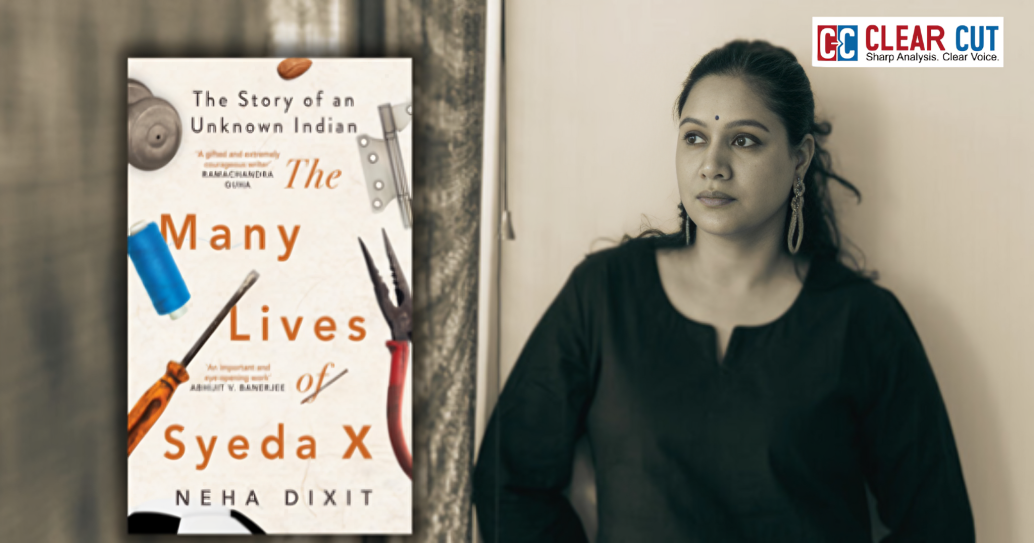
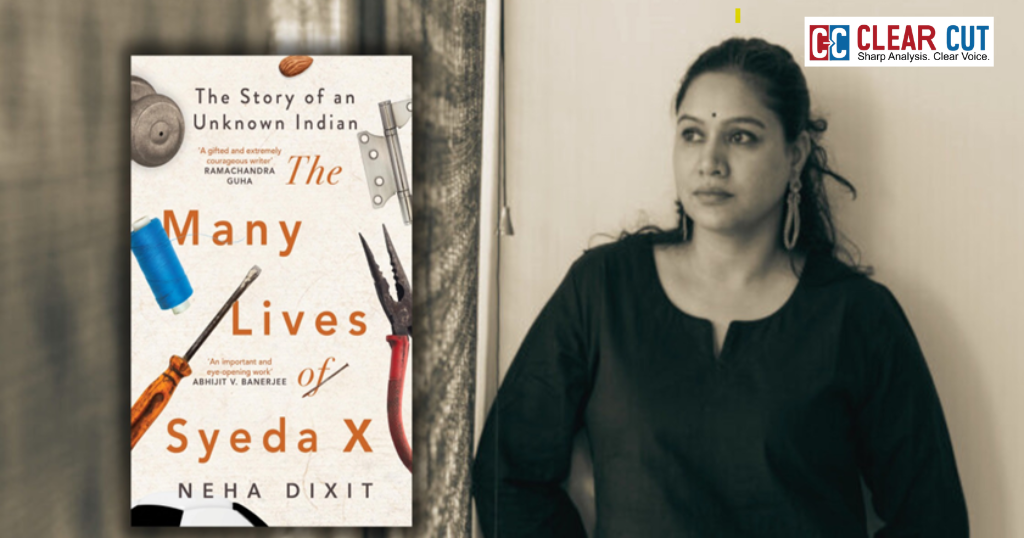
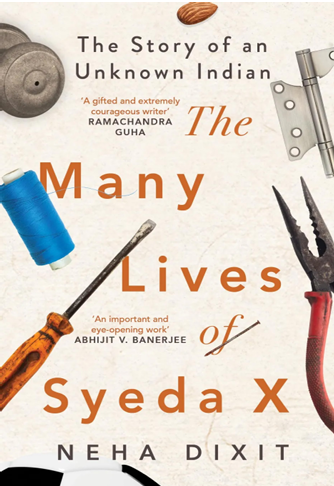
On 14 August 2024, journalist Neha Dixit’s debut non-fiction book, The Many Lives of Syeda X: The Story of an Unknown Indian, published by Juggernaut Books, was launched in Delhi. The book took nine years to research and write, drawing on interviews with over 900 people. It Ayushman Meena has since been translated into four languages: Hindi, Telugu, Malayalam, and Marathi, and was published in the UK, Ireland, Australia, and other Commonwealth countries in May 2025 by Footnote Press under the subtitle A People’s History of Invisible India. The book was named Book of the Year 2024 by both The Hindu and the Deccan Herald. It went on to win the Ramnath Goenka Sahitya Samman for Best Debut and the Kalinga Literary Prize for best non-fiction in 2025, and received an Honorable Mention from the CG Moore Prize for Human Rights Writing in 2026. The scale of the book’s reception is unusual for Indian nonf iction. It is not a political memoir. It is not a celebrity tell-all. It is the story of a Muslim migrant woman from Banaras who spent thirty years doing the invisible work that keeps Delhi running, and it has travelled further than most books about the urban poor ever get to go.
The Book
Syeda migrated to Delhi with her husband and three children from Varanasi after the riots of 1992. When she realised that her husband was incapable of providing for the family, she took on the mantle of becoming the primary wage earner. Over the next thirty years, she had over 50 jobs, many seasonal, all exploitative, and none with any security. What emerges is a picture of a life lived under constant corrosive tension. In Delhi, she settled into the life of a poor migrant, juggling multiple jobs a day, from trimming the loose threads of jeans to cooking namkeen, and from shelling almonds to making tea strainers. Each chapter is named after an industry or commodity, moving through the informal economy the way Syeda herself moved through it: sideways, always sideways, never up. The “X” in the title is not an accident. It is a deliberate act of anonymisation. Dixit withholds Syeda’s surname to protect her identity, but the X does something more than that. It turns one woman into every woman. It is the mark of the unrecorded, the placeholder in official forms, the signature of those who were never taught to write their own name. Syeda becomes Everywoman, one of the roughly 35,000 poor migrants who arrive in Delhi every single day and disappear into its economy without a trace.
A product of interviews with 900 people over a period of nine years, the book is chronologically structured and explores three distinct phases of India’s political and economic transformation, using Syeda’s household as the lens. The Babri Masjid demolition displaces her family. The IT boom changes the nature of her neighbourhood. The Delhi riots of 2020 upend her life again. India’s macro history keeps arriving at Syeda’s door, and she keeps getting back up. We meet an unforgettable cast of characters: a rickshaw driver in Chandni Chowk who ends up tragically dead in a terrorist blast; a doctor who gets arrested for pre-natal sex determination; a gau rakshak whose sister elopes with Syeda’s son; and policemen who delight in beating young Muslim men.
What Critics Said
The book landed hard in literary circles. The Financial Times called it “a trenchant and invaluable people’s history of the bottom of the pyramid in the world’s most populous nation.” Rahul Jacob’s review in the FT, published in September 2024, described it as a vivid chronicle written with courage after almost a decade of reporting. Soutik Biswas of BBC News said the book “shines a spotlight on the invisible lives of India’s neglected female home-based workers.”Priya Ramani, writing for NDTV Profit, called it the book about “invisible India” that everyone must read, describing Modi’s India itself as “a key protagonist alongside the titular character.” In Frontline, journalist Ruben Banerjee described it as a powerful portrait of India’s hapless migrants, noting how it tells the extraordinary story of ordinary people through a single family’s experience.
Countercurrents called it “an essential book,” noting that Dixit masterfully weaves together personal and political narratives to show how economic and communal violence intersect. jury of the The Ramnath Goenka Sahitya Samman described the book as “a work of grave moral attention and disciplined reportage,” noting that Dixit “traces the quiet yet enduring forces of gender, poverty and institutional power that govern contemporary immersed herself in Syeda’s life for many years while researching the book. The result is an immensely readable work of narrative nonf iction that draws the reader into Syeda’s life and family, as she navigates ingrained hardships that have affected generations.” Indian existence” and that the book “restores dignity to a life rendered invisible by neglect and silence.”The CG Moore Prize jury wrote that “Dixit
The Author Speaks
Dixit has been refreshingly blunt about what drove her to write the book. In an interview w i t h Scroll, she explained that early in her career, she worked at a television news channel and quickly understood what she did not want to do. “We were constantly told that we had to write about the urban rich, and not to do bleeding-heart stories. Don’t write about poor people. If you want to sell pressure cookers or chimneys or kitchen appliances on primetime television, then you can’t be talking about malnutrition.” In the book’s author’s note, she writes: “I am not a historian, economist or political scientist. I have used no disciplinary boundaries. As a reporter, the only training I have is to dig out information, corroborate it, analyse it, find the story and tell it. That is what I have done here.”
Speaking to Democracy Now! in May 2026, Dixit said: “Syeda is the person right now who shells all the California almonds, who makes garments for a lot of U.S. global corporations. She’s also the one who’s making exam blue books that are making a return in various universities. These are the people who are from the most socioeconomically marginalised classes in India.”In a conversation with Scroll, she said: “I stuck with Syeda because as she was me her telling about life in a non chronological fashion, I realised that it is also the story of India over the last thirty years. An India where we see excruciatingly high levels of urban poverty.”In an interview with The Chakkar, Dixit reflected on what nine years of proximity to Syeda’s life actually felt like: “Imagine, 90 per cent of our population is nowhere represented.” She also recounted the personal cost of writing it. During her research, she was stalked and threatened. Break-in attempts were dismissed by the Delhi Police. When Dixit told Syeda about it, Syeda’s response was simple, almost maternal: ignore it.
Why It Stays With You
The book works because it refuses sentimentality. The writing is understated and never tries to romanticise Syeda’s struggle. The tone is respectful and patient, letting Syeda’s reality speak for itself. What you get is not a tragedy but something more complicated, a woman who organises almond workers, negotiates with landlords, raises children, and keeps showing up.
Dixit first met Syeda at a massive strike organised by almond workers in Delhi for better wages and working conditions. That detail says a lot. Syeda was not a passive subject. She was already in motion. Dixit just followed. India has many books about its poor. It has very few that make you feel like you owe someone a second look and Neha made sure this one does.
Clear Cut Review Desk
New Delhi, UPDATED: July 19, 2026 07:00 IST
Written By: Tanmay J Urs