

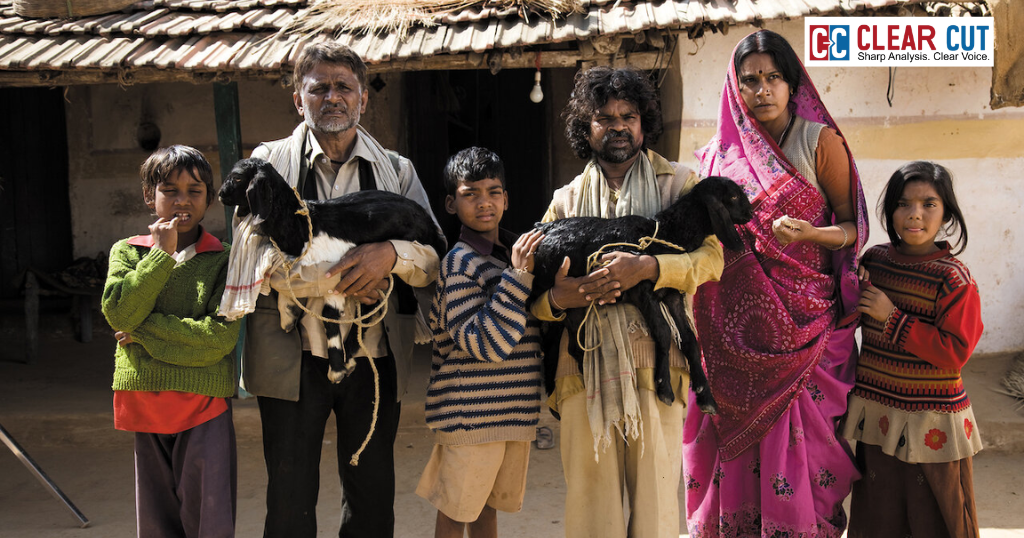
- Peepli Live uses dark comedy to expose the harsh realities of farmer debt, rural distress, and how media and politics turn personal tragedies into public spectacles.
- The film’s ending shows that losing land often leaves migration as the only option for struggling farmers, a reality that remains deeply relevant as India’s agrarian crisis continues.
There is a scene early in Peepli Live where a farmer named Natha vomits out of a moving vehicle’s window. It is played for laughs. But underneath the comedy is a man who has just learned he is about to lose the only thing his family owns: a small plot of land, mortgaged against a loan he cannot repay. Within a few scenes, he and his brother Budhia stumble upon a half-understood rumour about a government compensation scheme for farmers who die by suicide. What follows is a film that manages to be devastatingly funny and unbearably sad in the same breath, a rare balancing act in Indian cinema (Time Out, n.d.; Letterboxd, n.d.).
A dark comedy with a painfully real core, Peepli Live exposes how debt, media spectacle, and rural distress push farmers to the edge—making migration not a choice, but a last resort.
A Debut Built on Real Reporting
Peepli Live was the directorial debut of Anusha Rizvi, a former journalist with NDTV, produced by Aamir Khan and Kiran Rao and released in August 2010 (Wikipedia, n.d.-b). Rizvi did not write the film from imagination alone. Her years as a TV reporter had put her in direct contact with the machinery the film satirises: a 24-hour news cycle that descends on tragedy, extracts a story, and moves on before the tragedy is actually resolved. That lived knowledge shows in every frame.
The film does not present farmer suicide as an abstract statistic. It presents it as a slow, grinding administrative process. This is a family negotiating with moneylenders, a local bureaucracy too overwhelmed to respond, and eventually, a national media circus that arrives not to help Natha but to use him (The Federal, 2025; Movie Mahal, n.d.).
The film became the first Indian production to compete at the Sundance Film Festival and was later selected as India’s official entry for the Best Foreign Language Film category at the 2011 Academy Awards (The Federal, 2025). Critics at the time praised its refusal to be either purely comic or purely tragic. As one reviewer noted, the film “does not pull its punches” even while staying frequently, sharply funny (Letterboxd, n.d.). The cast including a then littleknown Nawazuddin Siddiqui, drew from real rural locations and dialects, lending the satire an authenticity that mainstream Hindi cinema rarely attempts (Wikipedia, n.d.-b).
The Ending Nobody Talks About Enough
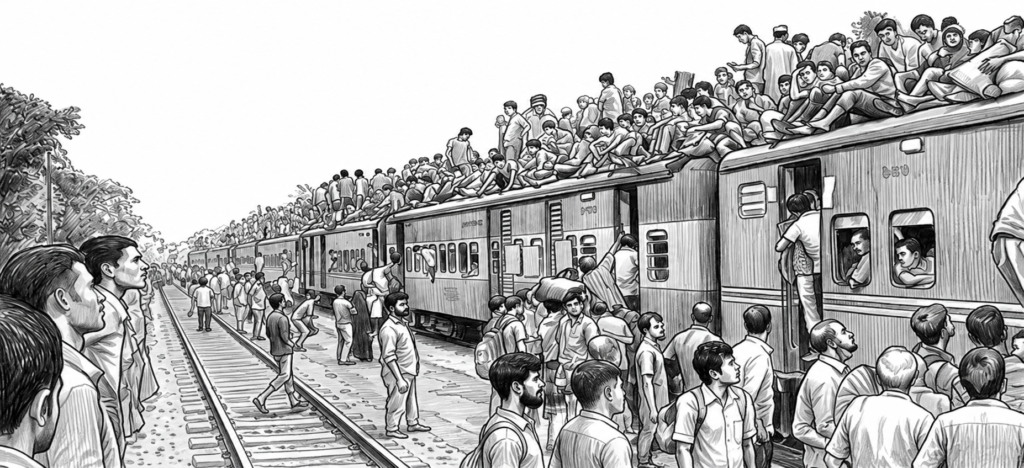
Much of the conversation around Peepli Live focuses on its media satire. The cameras, the politicians, the talk-show panels arguing over Natha’s fate while he sits silently in the background of his own story. But the film’s quietest and most important statement comes at the very end. After surviving the media storm, narrowly escaping death, and losing his land anyway, Natha does not return to some restored version of his old life. He disappears from his village and resurfaces, anonymously, as a labourer on a construction site in the city. It was just another faceless migrant worker among thousands, his identity erased by the very system that briefly made him famous (Movie Mahal, n.d.; The Federal, 2025).
That ending is the film’s real argument. It suggests that for India’s most distressed farmers, migration is not a choice made in hope. It is the last option left after every other door has closed. The film never spells this out with a speech or a statistic. It simply shows a man walking into anonymity and lets the silence say what words cannot.
The Crisis Beneath the Satire
Fifteen years after its release, the numbers behind Peepli Live’s satire have not improved as much as one might hope. According to National Crime Records Bureau data, at least 394,206 farmers and agricultural labourers died by suicide in India between 1995 and 2023. An average of roughly 13,600 deaths every year over that period (Down To Earth, 2025). In 2023 alone, 10,786 people connected to farming died by suicide, including 4,690 cultivators and, for the first time on record, a higher number of agricultural labourers at 6,096 (Down To Earth, 2025; Vajiram & Ravi, 2025). The most recent available figures, released by the NCRB in May 2026, recorded 10,546 such deaths in 2024. It meant that even with a slight yearon-year dip, India still loses roughly 28 people connected to farming to suicide every single day (Down To Earth, 2026).
Maharashtra has remained the epicentre of this crisis for nearly 3 decades, consistently accounting for the largest share of farm-sector suicides in the country 38.5% in 2023 and 36.26% in 2024, driven heavily by drought-prone regions like Vidarbha and Marathwada (Vajiram & Ravi, 2025; Down To Earth, 2026). Researchers at the Centre for Sustainable Agriculture note that the crisis intensified after India’s entry into the World Trade Organization in 1995, when reduced subsidies and rising import competition squeezed the incomes of small and marginal farmers in ways that have never fully been reversed (Down To Earth, 2025).
Why a Comedy Still Feels Like a Warning
What makes Peepli Live worth revisiting today is not nostalgia. It is the uncomfortable fact that the film’s central mechanism. It is a desperate family treated as a story rather than a household in crisis, till plays out in newsrooms and political rallies whenever agrarian distress makes headlines. The film never asked audiences to feel sorry for Natha. It asked them to notice how quickly his suffering became someone else’s entertainment, and how little actually changed for him once the cameras left. Fifteen years on, with one farmer or farm labourer still dying by suicide every hour in India (Down To Earth, 2026), that question remains every bit as urgent as the day the film was released.
Clear Cut Review Desk
New Delhi, UPDATED: July 19, 2026 07:00 IST
Written By: Tanmay J Urs