

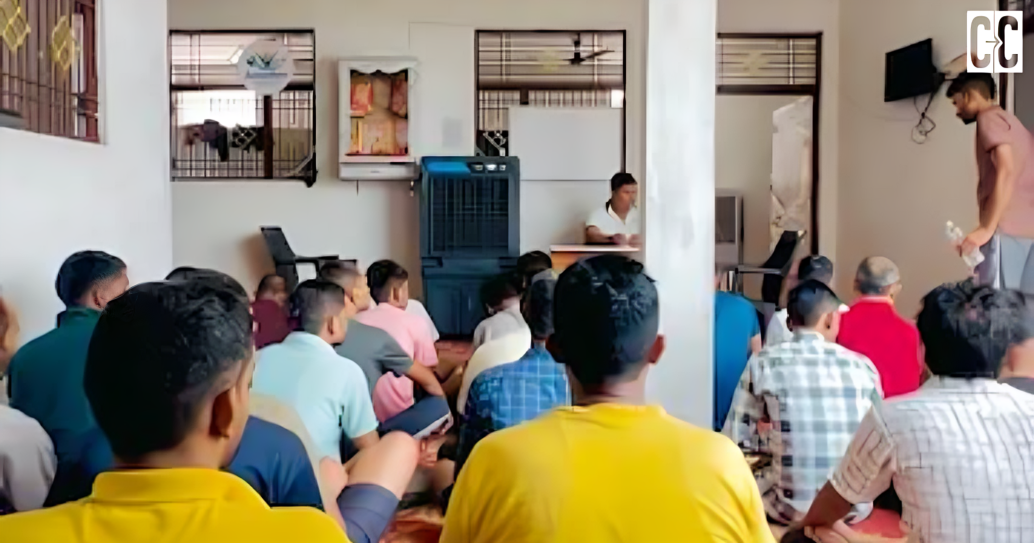
This Case is one of several “recovery-to-livelihood” accounts published as the Ministry of Social Justice and Empowerment marks six years of its national anti-substance-abuse campaign
According to a September 3, 2026, Press Information Bureau (PIB) release from the Ministry of Social Justice and Empowerment, a government-run rehabilitation centre successfully treated a 29-year-old man for alcoholism. It helped him secure a formal job at a local private hospital. This is one of many success stories of the Ministry in terms of “Recovery-to-Livelihood,” published near the sixth anniversary of its national anti-substance-abuse campaign “Nasha Mukt Bharat Abhiyaan (NMBA)“.
The release, titled “From Alcohol Dependence to a New Beginning,” identifies its subject only as Raihan, a name PIB says has been changed to protect his identity. Educated up to high school and unemployed, Raihan lived in a household where his father was also dependent on alcohol — a factor the release said heightened his relapse risk and added to the family’s emotional and financial strain. The household’s income came chiefly from a small evening food stall. Early in his recovery, Raihan experienced anxiety, insomnia and emotional distress associated with withdrawal, compounded by social stigma and guilt over being unable to contribute financially, the Ministry’s account said.
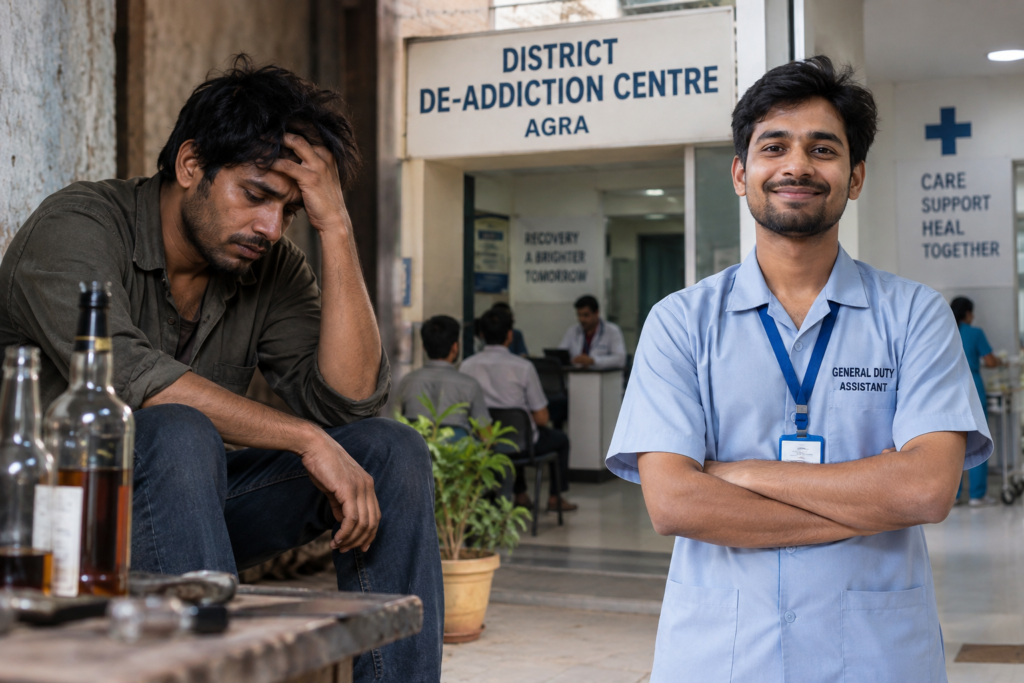
His treatment began on January 20 2026, at a District De-Addiction Centre (DDAC) in Agra run by the NGO Samuhik Utthan Sewa Samiti, one of scores of NGO-operated centres the Ministry funds under the National Action Plan for Drug Demand Reduction (NAPDDR). Free counselling, rehabilitation and follow-up treatment were provided to him. With the support of the centre, he undertook a General Duty Assistant training that could eventually help him secure a job in the health sector. He was subsequently employed at a private hospital, which the press release cites as crucial to its concept of ‘Whole Person Recovery’: that rehabilitation would go beyond the detox to finding employment and social inclusion.

The case is being publicised against the backdrop of a much larger, and only partly met, national need. The Ministry told Parliament on July 23 2026, that alcohol remains India’s most widely used psychoactive substance, with an estimated 15.10 crore adult users, based on the first National Survey on the Extent and Pattern of Substance Use in India, conducted by the National Drug Dependence Treatment Centre at AIIMS, Delhi. Cannabis (2.90 crore users) and opioids (1.90 crore) followed as the next most common substances nationally, while an estimated 30 lakh Indians aged 10 to 17 were also found to use alcohol.
India’s de-addiction infrastructure (as of 23 July 2026)
| Metric | Figure |
| Integrated Rehabilitation Centres for Addicts (IRCAs) | 344 |
| District De-Addiction Centres (DDACs) | 145 |
| Outreach & Drop-in Centres (ODICs) | 76 |
| Community-based Peer Led Intervention Centres (CPLIs) | 45 |
| Hospital-based Addiction Treatment Facilities (ATFs) | 155 |
| Persons treated and rehabilitated to date | 28.29 lakh |
| People reached under NMBA awareness drive since 2020 | 29.68 crore |
Source: Ministry of Social Justice and Empowerment, 23 July 2026 (PIB)
Compared to an estimated user pool nearly 10 times larger, these total treatments indicate the reach, or lack, that the outreach has. Beyond the sheer numbers, it is also a matter of structure. While there are nearly 800 districts in India, the consolidated DDAC approach used to handle Raihan is available in only 145 districts. The remaining districts, many semi-urban with profiles similar to Agra’s, still largely offer one of the much thinner traditional formats – either IRCA or ODIC – mostly through single local NGO sites rather than consolidated one-stop centres.
Independent research backs the release’s emphasis on sustained follow-up over one-time treatment. A study led by psychiatrist Pratima Murthy, which tracked alcohol-dependent patients from a Bengaluru slum, found in the Indian Journal of Community Medicine that those given continued community-based follow-up maintained a 53% improvement in non-drinking days a year after discharge, against 28% among patients given only routine hospital follow-up. The finding is consistent with the DDAC model Raihan went through, where counselling continued well past initial detoxification.
Raihan’s job shows another example of a consciously constructed policy: the NAPDDR is delivering skill courses, such as the General Duty Assistant scheme, via the PM-DAKSH livelihood scheme for recovering substance users, on the theory that a stable income can reduce the likelihood of recurrence while eliminating the economic shame and stigma that could hinder recovery. Individuals interested in similar provisions can access the Ministry’s free-of-charge, 24-hour national de-addiction helpline at 14446.
Clear Cut Health Desk
New Delhi, UPDATED: September 05, 2026 18:30 IST
Written By: Yatharth Pathak