

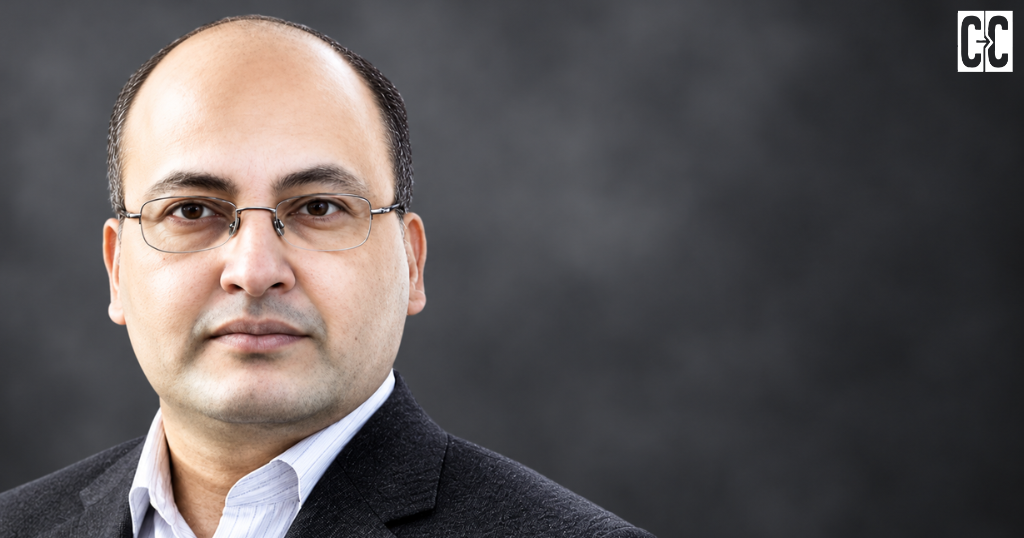
In this edition, Clear Cut speaks with Rohit Prasad, Chief Executive Officer at HelpAge India, to trace India’s eldercare journey—from relief-based welfare to rights-based, community-driven ageing support— highlighting why economic security, healthcare access, and social inclusion are critical to building a dignified, age-friendly India.
Personal Journey
- You have worked across consulting, public health, and now the social sector. What made you believe that ageing deserved your professional attention at this stage of your career?
My career has spanned research and consulting, public health, and the social sector. What first drew me to HelpAge India was its work in community health. However, it was only after joining the organisation that I fully appreciated the scale and significance of population ageing and longevity. The more I learned, the more I realised that ageing is one of the defining social transformations of our time. While longer lives are a remarkable achievement, they also bring important challenges around health, care, livelihoods, social protection, and inclusion. Ageing is not a niche issue – it touches every family and every community.
What struck me most was the invisibility and ageism that many older people experience, often
leading to vulnerability and inadequate support. Yet older people are far more than recipients of care – they are contributors, caregivers, mentors, and custodians of knowledge whose potential is frequently overlooked. At this stage of my career, contributing to HelpAge India’s mission feels deeply meaningful. Ageing is ultimately about all of us – our future selves, our families, and the kind of society we want to create. Helping people live longer, healthier, and more dignified lives is both professionally rewarding and profoundly human.
India’s Ageing Challenge
India will soon have over 200 million older persons. Yet ageing rarely features in mainstream
development conversations.
- Why do you think India has been slow to recognise ageing as a national development
issue?
India was, in fact, an early mover in recognising ageing as a development issue, with the National Policy on Older Persons (NPOP) in 1999 and several subsequent policy and legislative measures. The challenge has been less about recognition and more about prioritisation, preparedness, and resource allocation. As a relatively young country, India’s development focus has understandably centered on women, children, and youth. However,
demographic realities are changing rapidly. Today, around 10% of India’s population is aged 60 and above, and this figure is expected to nearly double to about 20% within the next 25 years.
This pace of demographic transition, combined with increasing longevity, migration,
urbanisation, and changing family structures, demands far greater urgency in planning and
response. I think ageing has often been viewed primarily as a welfare concern rather than a
mainstream development and systems issue. In reality, it has implications for healthcare,
long-term care, livelihoods, social protection, housing, financial security, and workforce
participation. The question is no longer whether India will age, but whether we are prepared for
it. The encouraging sign is that awareness is growing across Government, academia, the private sector, and the social sector. More recently, the extension of Ayushman Bharat hospitalisation health insurance coverage to all 70+ has been an important step. The way forward would be embedding ageing and longevity into all aspects of development planning.
- Population ageing is often portrayed either as a looming crisis or as an opportunity. Which
narrative do you think is misleading, and what should India really be focusing on?
The biggest misconception, and perhaps the biggest misframing, is to view population ageing
as a crisis or something to be feared. Living longer has always been one of humanity’s greatest aspirations, and population ageing is a natural outcome of development, reflecting improvements in healthcare, nutrition, education, and living standards. Whether it becomes a challenge or an opportunity depends on how we prepare for it. The real question is whether our policies, institutions, and communities evolve at the same pace as our demographics.
If we fail to prepare, ageing can place significant pressure on families, health systems, and
social protection mechanisms. But with timely investments in preventive and promotive health,
geriatric care, financial security, lifelong learning, and age-friendly environments, we can
improve outcomes while reducing long-term social and economic costs.
Equally important, we need to move away from seeing older persons primarily as dependents. Many continue to contribute through work, entrepreneurship, volunteering, caregiving, mentoring, and community leadership. Their knowledge, experience, and social capital are
valuable assets that society often underestimates.
India should move beyond the crisis-versus-opportunity debate and focus instead on preparedness. The goal is to create the conditions for healthy, active, productive, and dignified
ageing. Ultimately, the measure of success is not just adding years to life, but adding life to those years, and most importantly, ensuring that those years are lived with dignity
- From your experience, what are the three most pressing challenges older persons face today?
We must first recognise that older persons are not a homogeneous group. Their experiences vary widely by age, gender, income, health status, geography, and social circumstances. For example, an older person living alone in a rural area may experience ageing very differently from someone living in an urban setting. However, three challenges consistently emerge.
The first is health and care. As people live longer, the burden of non-communicable diseases, disability, frailty, and care needs increase. Yet access to affordable, age-friendly healthcare, rehabilitation, and long-term care services remains limited for many older persons, especially those who cannot afford paid care and support services.
The second is income and economic security. A large proportion of India’s workforce is employed in the informal sector, often without pensions, savings, or adequate social protection. There is also limited awareness of financial planning for old age. As a result, many older persons face financial insecurity and remain vulnerable.
The third is social isolation and exclusion. Loneliness is increasingly emerging as both a
social and public health concern. Changing family structures, migration, urbanisation, and rapid digitalisation can leave older persons disconnected from social networks, services, and opportunities.
These challenges are often most acute for vulnerable groups, particularly older women, those living alone, people in poverty, and the oldest-old. In particular, rural elders face multiple vulnerabilities given their lived context. Our recent report on Climate Resilient Ageing focused on rural elders, examining their vulnerability and coping efforts, along with the policy & community responses needed.
Policy & Governance
- If redesigning India’s elder care ecosystem, what three policies would you prioritise?
Before talking about policies, I would emphasise the importance of preserving the foundational
values of care and respect for older persons that are deeply rooted in our culture. While
changing family structures are placing these traditions under strain, most people still aspire
to age in their own homes, surrounded by family and loved ones.
First, I would prioritise stronger social protection and income security. No older person
should be forced into poverty or compelled to work simply to survive. This requires adequate
pensions (both amount and coverage) and social security measures that protect people
throughout later life. While social pensions provide an essential protective foundation, it is
equally important for those in the formal sector to incorporate long-term financial planning for old age, particularly in the context of rapidly increasing longevity.
Second, I would focus on reorienting primary health systems towards comprehensive geriatric care, encompassing preventive and primary healthcare, geriatric services, rehabilitation, long-term care, palliative care, and support for caregivers. The Government of India’s National Programme for Health Care of the Elderly (NPHCE) is comprehensively designed, and elderly care is also included as a key component of the service packages delivered through Ayushman Bharat Health and Wellness Centres. However, there is a need for accelerated
implementation in mission mode. For older persons, ensuring access to affordable, quality
services within communities and closer to people’s homes will be critical to promoting healthy
ageing and improving quality of life.
Third, I would prioritise the creation of age-inclusive environments. Our cities, homes, transport systems, workplaces, financial services, digital platforms, and disaster response systems all need to be designed with ageing in mind. Elder care is not only about schemes and institutions; it is about creating environments in which older persons can prepare for later life,
live safely and independently, and remain connected to society. Achieving this requires the active involvement of multiple sectors, not just Government. Industries such as finance and insurance, urban planning and real estate, telecommunications, technology, and others must recognise older persons as an important constituency and play a proactive role in fostering inclusion, participation, and well-being.
HelpAge India
- What have the Mobile Healthcare Units taught you about the realities of ageing in
rural and low-income India?
HelpAge India’s Mobile Healthcare Units are built on the principle of community-based
care, reaching older persons who are often left behind or unreached by health systems. They have taught us that ageing in rural and low-income communities is rarely just a health issue – it is closely intertwined with income insecurity, limited mobility, social isolation, and inadequate
access to essential services.
The most important lesson is that the challenge is often not simply illness, but access to
healthcare, medicines, point-of- care diagnostics, and follow-up care. This is especially significant as older persons face a growing burden of non-communicable diseases such as hypertension, diabetes, arthritis, and vision impairment. By bringing services closer to communities, MHUs support early diagnosis, continuity of treatment, and better management of chronic conditions, improving quality of life while reducing pressure on higher-level healthcare facilities and cost to society. We have also added a custom-designed Telehealth service, as part our Digital Health for Elders initiative, to further expand reach and impact.
Our experience has also highlighted the importance of trust and continuity. In many
communities, the Mobile Healthcare Unit is not just a medical service but a trusted and
familiar presence. For many older persons, it provides reassurance, human connection, and a sense that they have not been forgotten. HelpAge India’s MHUs also serve as a vital bridge to government health and welfare schemes, as well as referral linkages to Primary Health Centres (PHCs) and Community Health Centres (CHCs). In doing so, they help older persons access services, entitlements, and benefits that they might otherwise be unaware of or find difficult to navigate.
Importantly, there is a gender dimension, with nearly two-thirds of those served being
older women, many of whom tend to delay or forego care due to social and economic barriers.
Bringing healthcare to their doorstep helps overcome these barriers and ensures more timely
access to treatment and support. Overall, our experience has reinforced the tremendous value
of making healthcare accessible, affordable, and available within the community, where older
people live and age.
- Is there a story that changed how you think about ageing and resilience?
I have encountered many such stories, but one lesson has stayed with me: resilience
in older age is rarely about individual strength alone. It is often rooted in supportive
relationships, strong communities, and systems that enable people to cope with adversity.
I have met older persons who have lived through poverty, illness, displacement, and
personal loss, yet continue to care for grandchildren, support family members, earn
livelihoods, and contribute actively to their communities. Their circumstances were
often difficult, but they demonstrated an extraordinary ability to adapt, persevere, and
find purpose.
What these experiences have taught me is that we must not define older persons solely by their vulnerabilities. They are not just recipients of care; they are individuals with agency,
wisdom, resilience, and the capacity to contribute in meaningful ways. Perhaps the most important lesson is that resilience is not something people possess in isolation. It flourishes when individuals are supported by families, communities, and systems that enable them to
live with dignity and remain engaged in society. Ageing, therefore, is not simply about
growing older, it is about ensuring that people have the opportunities, support, and
respect they need to continue living purposeful and fulfilling lives.
- Based on your interactions with international partners, what lessons can India learn
from global models of elder care?
While there is much to learn from elder care models around the world, particularly from rapidly aging Asian countries, India will need to innovate and develop solutions that reflect our unique family structures, social dynamics, and resource realities. The objective should be to adapt global lessons, not simply replicate them. This also means building India-specific research
and evidence-based solutions. HelpAge India has just launched the Institute for Longevity and
Ageing Research (ILAR) with this aim.
One important lesson is the value of community-based care. Strong communities provide the most effective ecosystem for care, connection, and support, and are more sustainable in the long run. India already has a strong foundation to build on. In rural areas, community collectives supported by the National ural Livelihoods Mission (NRLM), including Elder SelfHelp Groups, are helping older persons improve their wellbeing, social participation, and
economic security. In urban areas, Senior Citizen Associations can be similarly strengthened
and supported to play a more active role in promoting social engagement, mutual support,
and community-led solutions for ageing.
A second lesson is that elder care must be viewed as a continuum rather than as a set of isolated interventions. Healthcare, long-term care, housing, transport, income security, digital inclusion, and community participation need to work together to support healthy and dignified ageing throughout the life course. In this context, the development of robust long-term care systems is particularly important. This includes building a trained geriatric caregiving workforce, strengthening community and home-based care, and establishing sustainable financing mechanisms. As populations age, the demand for long-term care will increase significantly, and the associated costs can be substantial.
The experience of countries such as Japan demonstrates that designing, financing, regulating,
and delivering quality long-term care services is both complex and challenging, even in high-income settings. India, therefore, has an opportunity to plan and develop systems that are affordable and sustainable, accessible, and responsive to the needs of its growing older population. Finally, systems must be designed around the preferences, rights, and dignity of older persons themselves. The most successful models are those that enable older people to remain independent, engaged, and connected to their families and communities for as long as possible.
Technology & Innovation
- How can India ensure that technology narrows rather than widens the digital gap?
The digital divide faced by older persons is one of the emerging challenges of our times, and
it is particularly pronounced among older women and rural elders. Technology has enormous potential to improve the quality of life and access to services, but only if inclusion is built into its
design and delivery. As India advances rapidly in its digital transformation, those who lack access, skills, confidence, or support risk being left further behind. To ensure that technology
narrows rather than widens the gap, we need to focus on three things: access, literacy, and
design. Older persons need affordable access to devices and connectivity, opportunities
to develop digital skills, and technologies that are simple, accessible, and responsive to their needs. This requires action from both Government and industry. While the Government should bring a dedicated focus on older persons within the Digital India agenda, the technology, electronics, and telecom sectors must also step forward and make older persons a priority in their digital inclusion strategies. Only then can technology become a tool for empowerment rather than exclusion. Equally important is recognising that technology should complement, not replace, human interaction. Whether in healthcare or financial services, digital platforms should be backed by assisted and community-based support, especially for the most vulnerable older persons. This will not only improve adoption but also ensure meaningful and sustained use.
The goal should not be digitalisation for its own sake, but digital inclusion, ensuring that older persons can participate confidently and benefit fully from India’s digital progress.
Shared Responsibility
- With changing family structures, migration, and urbanisation, is the traditional model of family-based elder care beginning to weaken? How should society respond?
Changing family structures, including the decline of joint families, migration, urbanisation,
and smaller households, are undoubtedly placing pressure on traditional family-based care
systems. However, the family model is not disappearing; rather, it is changing. Families remain the primary source of care, support, and emotional connection for older persons in India, and are likely to remain so. The key challenge is to support families in fulfilling this role by trengthening community-based services, healthcare, caregiving support, and long-term care
systems that can complement family care. The real challenge is that families today often need greater support to fulfill this role. As demographic and social realities evolve, we need to strengthen the ecosystem around families through community-based services, accessible healthcare, caregiver support, social protection, and age-friendly environments. The response should not be to replace family care, but to complement it. Governments, communities, civil society, and the private sector all have a role in building support systems that enable older persons to age with dignity, while reducing the burden on families. Ultimately, the goal should
be an integrated model where families remain at the heart of care, supported by responsive
institutions and strong community networks.
- Where do you see the biggest opportunities for CSR and philanthropy to strengthen
elder care beyond funding healthcare?
CSR and philanthropy can play a transformative role in shaping India’s response to ageing.
Opportunities exist across healthcare, geriatric caregiving, livelihoods, digital inclusion, and community-based care. While support for older persons is growing, ageing still accounts
for a relatively small share of overall CSR and philanthropic investments. Given India’s rapidly changing demographics, there is significant scope for greater engagement and innovation. Strategic investments today can help develop scalable solutions and strengthen systems
that support healthy, active, and dignified ageing. One key area is strengthening community-based support systems. Investments in Elder Self-Help Groups, senior citizen collectives, day-care centres, and volunteer networks can help reduce isolation, enhance social participation, and build resilience among older persons. A second area is digital and financial inclusion. Supporting digital literacy, access to technology, and financial capability programmes can
help older persons participate more fully in an increasingly digital economy and society,
while also improving access to services, entitlements, and social connections. Third, there is significant scope to support innovation, research, and evidence-building. Philanthropy can help pilot new models of care, support family caregivers, promote age-friendly communities, and generate knowledge that informs policy and scale-up. The greatest opportunity is to shift the narrative on ageing itself, from one of dependency to one of inclusion, participation, and contribution. CSR and philanthropy can help build a society where older persons are not only supported but also empowered to remain active, engaged, and valued members of their communities.
- What key actions are needed at the policy, organisational, and individual/ community levels, so that India truly becomes an age-inclusive society?
At the outset, preparing for an ageing society requires a fundamental shift in mindset. We must stop viewing ageing as a burden and start recognising it as one of the great achievements of development, as well as a potential resource for society. Ageing needs to be reframed, from a problem to be managed to an opportunity to be harnessed; from focusing only on needs to recognising capabilities, experience, and contributions; and from simply adding years to life to adding life to years. Achieving this will require a whole-of-society response. At the policy level, we need stronger investments in healthy ageing, social protection, long-term care, digital inclusion, and age-friendly infrastructure. Ageing should be mainstreamed across sectors rather than treated solely as a welfare issue. At the organisational level, businesses, institutions, and other organisations must become more age-inclusive through workplace policies, lifelong learning opportunities, accessible products and services, and greater engagement of older persons as mentors, volunteers, caregivers, and contributors. Academia, in particular, can play a significant role by expanding opportunities for lifelong learning and
reskilling, enabling older persons to remain active, engaged, and connected throughout later life. At the individual and community level, we need to strengthen intergenerational solidarity and challenge age-related stereotypes. Families and communities remain the foundation of support for older persons, and community-based initiatives play a vital role in reducing isolation, fostering participation, and promoting active ageing. Ultimately, an age-inclusive
India will be one where longevity is celebrated as an achievement rather than viewed as a burden, and where every older person has the opportunity to live with health, security, dignity,
participation, and purpose.
Clear Cut Health Desk
New Delhi, UPDATED: September 06, 2026 12:30 IST
Written by: Clear Cut Team