
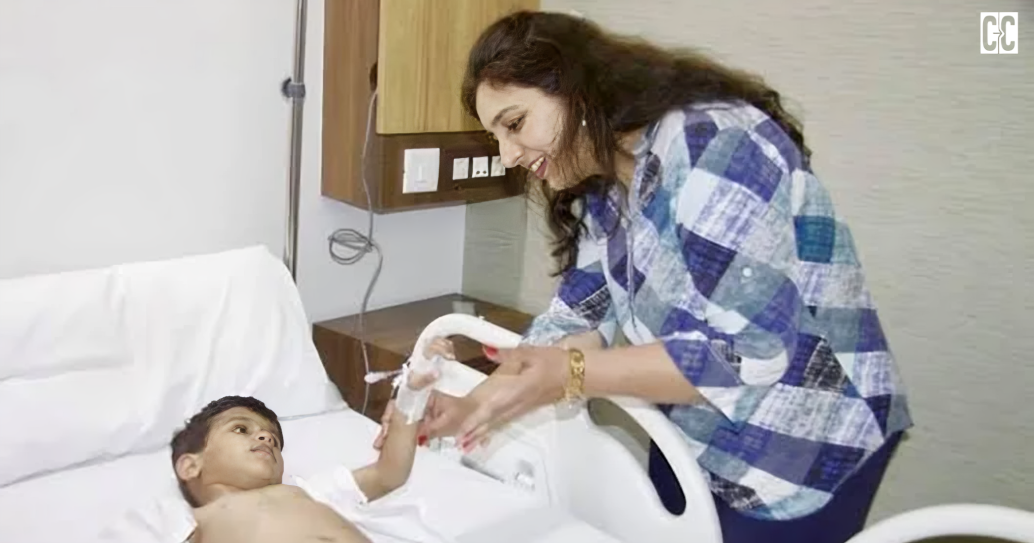
Coal India’s Thalassemia Bal Sewa Yojana has supported more than 1,050 bone marrow transplants since its launch in 2017, marking significant progress in access to treatment for children with thalassemia. However, donor availability, treatment costs and limited public outcome data highlight the need for greater transparency and long-term government support.
In May 2023, the count stood at 356. In August 2024, the Ministry of Coal reported 500. In September 2026, it reported more than 1,050 children transplanted under Coal India’s Thalassemia Bal Sewa Yojana (TBSY). The scheme has completed about twice as many transplants in the past three years as in the six before.
One detail in the figures needs care. The ministry’s August 2024 release states that 500 transplants had been completed and also that the scheme had benefited 356 children. The second number matches the May 2023 count, which suggests it was carried over from an earlier tally. The release does not explain.
How the scheme works
TBSY was launched in 2017 by the Union Health Ministry under the National Health Mission, funded from Coal India’s CSR budget. It pays up to ₹10 lakh per patient directly to an empanelled hospital for a bone marrow transplant for thalassaemia major or aplastic anaemia. The hospital network has grown from four to 21, according to the Ministry of Coal statement reported by PSU Watch. Families with annual incomes below ₹8 lakh qualify, according to the 2024 ministry release.
The original project document set a narrow clinical rule. The patient had to be transfusion dependent and have a matched related donor. Matched unrelated, cord blood and haploidentical transplants were excluded. A hospital’s patient guide now lists separate criteria for children without a matched sibling donor, which suggests the rules have widened. Current eligibility should be checked on the scheme’s portal.
Scale against need
A former Union Health Minister put India’s thalassaemia major births at 10,000 to 15,000 a year. Supportive care means lifelong transfusions, which cost ₹1 lakh to ₹2.5 lakh a year according to ministry statistics cited by All India Radio. The same statistics put a transplant at ₹14 lakh to ₹15 lakh. A Medanta guide to the scheme gives ₹15 lakh to ₹25 lakh. On either estimate, ₹10 lakh covers most but not necessarily all of the bill, and the sources do not say who pays the balance.
Donor availability is a further limit. A haematology professor at Amrita Hospital, Faridabad, has said that a matched donor in the family is found in only 25 to 30 per cent of cases. That helps explain why a scheme designed around matched siblings cannot reach every child who needs a transplant.
Taken together, these figures show that 1,050 transplants over nine years is a substantial achievement and a small fraction of the need. Dividing one by the other would mislead, because only some children are transfusion dependent with an eligible donor. The number of eligible children waiting for a transplant has not been published in the sources reviewed.
What is known about results
The ministry says most treated children are reported to be leading normal and healthy lives. The statement does not give survival rates, graft failure, complications or the length of follow-up. A transplant director at Medanta has said that reports from experienced centres indicate overall survival above 90 per cent with a fully matched sibling donor. That is a hospital statement about such centres in general, not data from this scheme. Without a published outcome register for scheme patients, hospitals cannot be compared.
Cure and prevention call for different budgets. Health department data cited by The Statesman put national carrier rates at 3 to 4 per cent, and as high as 10 per cent in parts of West Bengal. The National Health Mission has issued guidelines on prevention and control of haemoglobinopathies. A transplant treats a child who already has the disease, while carrier screening reduces the number of new cases.
The scheme entered its third phase in 2023, with a new online portal. Its next test is transparency. The most useful disclosures would be the number of eligible children awaiting transplant, outcomes by hospital, and out-of-pocket costs borne by families. They would also show whether a CSR-funded arrangement can serve as a lasting public programme, or whether the state will need to take over its financing as demand grows.
Clear Cut Health Desk
New Delhi, UPDATED: November 23, 2026 23:00 IST
Written By: Tanmay J. Urs