CSR funding for education is shifting towards outcomes-based financing, as demonstrated by Haryana’s Early Literacy Development Impact Bond, which linked payments to measurable learning outcomes for children. The initiative highlights how CSR in education can prioritise foundational literacy, accountability, and long-term learning impact over activity-based spending.
The reading gaps
ASER 2024 is the latest national household survey of rural learning. It found that 23.4% of Class 3 children in government schools could read a Class 2 text. That is the best result ASER has recorded on this measure. It is up from 16.3% in 2022 and 20.9 % in 2018 (ASER Centre, 2025). Even so, about 3 in 4 children at that stage were reading below the level expected 2 grades earlier.
Education has been identified as one of the top priorities of corporate funders. An analysis by Parekh and Iyer (2026) of the British Asian Trust finds that education receives in excess of US$ 1.18 billion annually in CSR and philanthropic funding. They also find that a considerable share of the funding likely goes to inputs and short-term outputs. For example, building a school is an input, while a child’s literacy is an outcome.
Paying for results
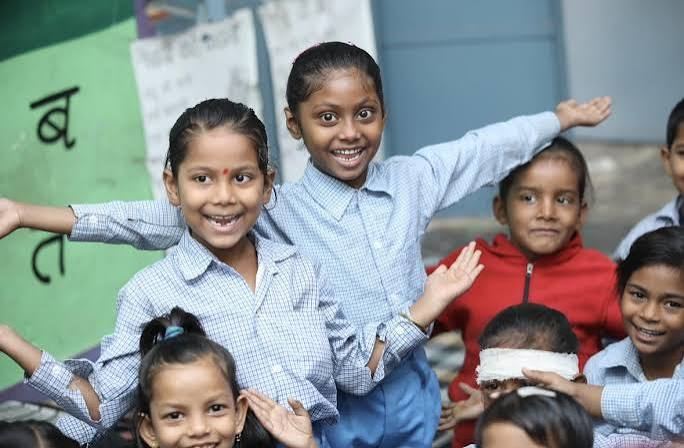
The Haryana Early Literacy Development Impact Bond ran from 2019 to 2022 and tried a different approach. CSR funders agreed to pay after results were measured. IndusInd Bank and SBI Foundation became the outcome funders. Central Square Foundation acted as risk guarantor. The Language and Learning Foundation delivered the programme with the state government, and Educational Initiatives measured the results (Business Standard, 2022).
The partners reported a cost of ₹15.57 crore and a reach of 164,000 children in 3,300 government schools across 7 districts. In a standard CSR grant, the funder pays for activities such as teacher training or the provision of materials and receives an activity report. In this bond, payments were linked to targets for children’s learning.
What the evaluation reported
The evaluation report is available on the foundation that implements the project. Parekh and Iyer (2026) further indicated that children in intervention schools likely had a fluency of 42.4 words per minute, while in non-intervention schools, it was roughly 30.3 words per minute, equating to a 12-word difference. Furthermore, the partner reported a learning gain that was 3.5 times the predefined measure and corresponded to an extra 1.6 years of schooling, despite COVID-19 disruptions (Business Standard, 2022). These are figures from the partners.
What the evidence cannot show
There are several limitations to note. The headline data was provided by the programme partners and commented on by one of the organisations involved in outcomes-based finance. Also, programme documentation varies in its magnitude. An early account reported 115,000 children across 3,300 schools (CSR Universe, 2020). Later, partners gave 164,000 children. However, a UNESCO toolkit page displays 330 schools. (UNESCO, n.d.)
The sources do not describe the comparison as a randomised trial. There was no evidence on whether the gains lasted after 2022. The partners said in 2022 that Haryana was scaling the programme to all 22 districts (Business Standard, 2022), but no independent results were found from that expansion. The bond also measured only early literacy.
Why it matters for CSR budgets
The timing seems important, as well. India’s National Initiative for Proficiency in Reading with Understanding and Numeracy (NIPUN Bharat) has set 2026-27 as the deadline for universal foundation literacy and numeracy for all children up to Grade 3. In addition, one of the latest outcomes-based funds – LiftEd – was announced in 2024, with funding of around US$20 million to help 6.5 million children over five years (Parekh & Iyer, 2026).
The Haryana test is an affordable one for corporate social responsibility (CSR) committees: the reading list, comparison and trigger to pay were decided before any money was released. While India’s CSR rules mandate that those spending the most pay for third-party evaluations of projects, these evaluations occur only after disbursement. A bond would have the same evaluation discipline at the outset.
Earlier bonds in India point the same way. The Educate Girls bond reached 116% of its enrolment target and 160% of its learning target by its final year. The Quality Education India bond reported learning gains that were 2.5 times those of comparison schools (Parekh & Iyer, 2026). The programmes or their supporters report all of these results, and each used a different measure. Haryana was described as the first state to issue an education bond supported by CSR funding (Business Standard, 2022).
The open question is whether CSR boards will accept paying later, for results they cannot fully control, when a computer lab or a new classroom produces a photograph much sooner.
Clear Cut CSR, Education, Research Desk
New Delhi, UPDATED: October 13, 2026 14:23 IST
Written By: Tanmay J. Urs