
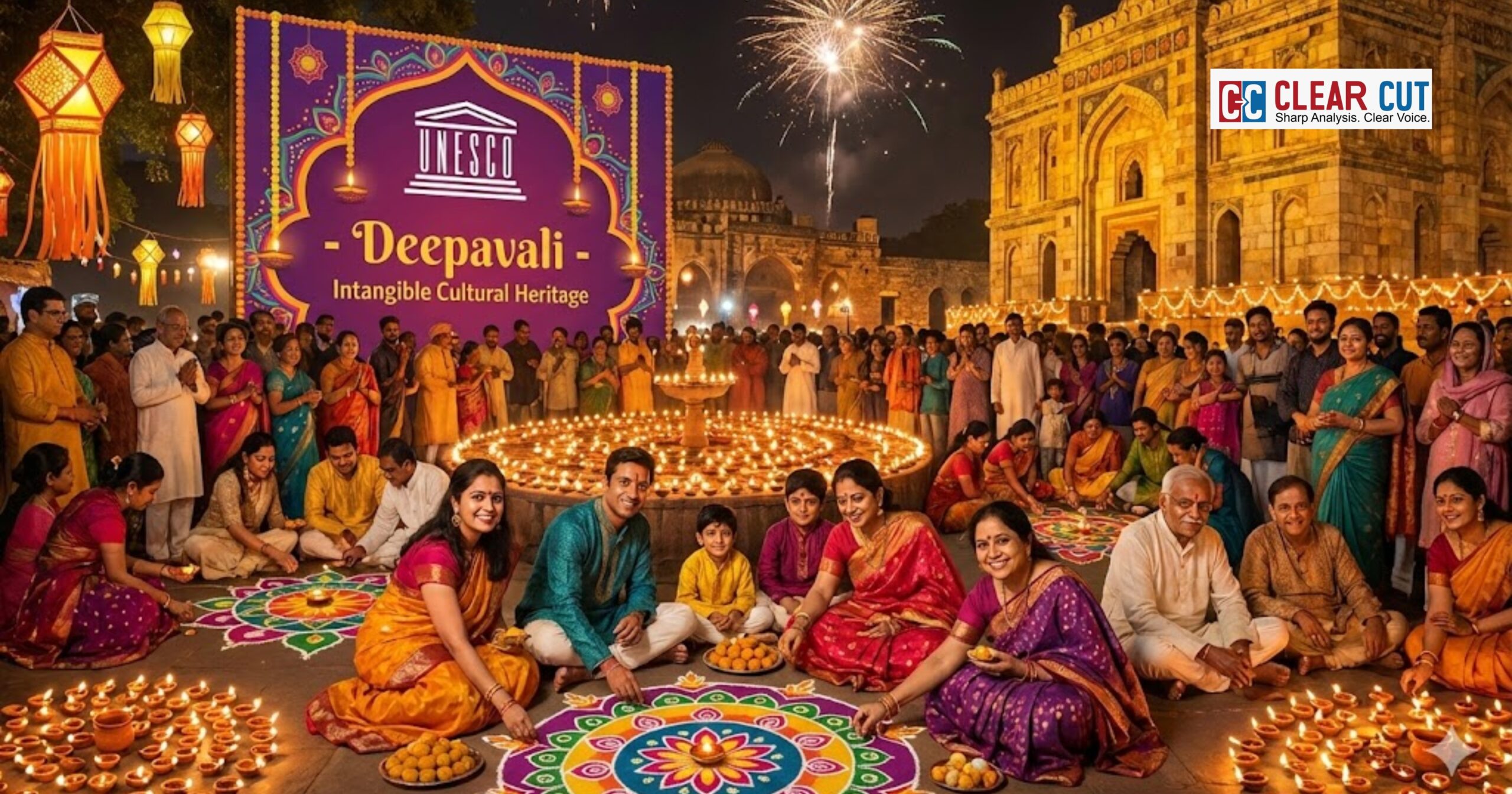
Deepavali, one of India’s most cherished and widely celebrated festivals, has reached a historic milestone. It is being officially inscribed on the UNESCO Representative List of the Intangible Cultural Heritage of Humanity. This recognition, announced during the 20th meeting of the Intergovernmental Committee for the Safeguarding of the Intangible Cultural Heritage, held in New Delhi from 8-13 December 2025, marks a moment of immense pride for the nation. With this inclusion, Deepavali becomes the 16th cultural element from India to join the prestigious list, reaffirming the depth, richness, and continuity of India’s living cultural traditions.
Understanding the UNESCO Inscription
UNESCO’s Intangible Cultural Heritage list celebrates practices, expressions, and knowledge systems that strengthen community identity and ensure cultural continuity across generations. Deepavali’s inscription under the category of “social practices, rituals, and festive events” acknowledges its unique cultural significance. Far beyond its religious origins, Deepavali embodies a shared celebration that unites people across regions, languages, faiths, and social backgrounds. The recognition highlights the festival’s role in nurturing cultural diversity, creating a sense of belonging and promoting the transmission of traditions from one generation to the next. It reinforces the idea that Deepavali is not merely a festival but a vibrant cultural expression that strengthens social fabric and fosters collective well-being.
Deepavali as a Cultural Symbol
Often referred to as the Festival of Lights, Deepavali symbolises the triumph of light over darkness, wisdom over ignorance and good over evil. Its rich tapestry of rituals the lighting of diyas, preparation and sharing of traditional sweets, creation of intricate rangoli designs and community gatherings together convey messages of hope, renewal and harmony. UNESCO also noted the festival’s widespread celebration beyond Indian borders. Among the global Indian diaspora, Deepavali serves as an emotional and cultural link to their heritage. In many countries, it is celebrated with equal fervor, bringing communities together and strengthening the festival’s role as a universal cultural connector. Through these celebrations, Deepavali fosters a sense of identity and unity among people living far from their homeland.
India’s Expanding UNESCO Heritage Footprint
Deepavali’s inclusion further enriches India’s representation on UNESCO’s Intangible Cultural Heritage list, which already includes several significant traditions such as Yoga, Kumbh Mela, Garba of Gujarat, Durga Puja of Kolkata, Ramlila, Kalbelia folk traditions, and Buddhist chanting of Ladakh. This growing list showcases the remarkable diversity of India’s cultural landscape. Each element reflects the country’s unique ability to preserve and nurture living traditions that continue to thrive in modern society. Together, they portray India as a nation deeply rooted in tradition yet dynamic in expression.
Broader Cultural and Global Impact
The global recognition of Deepavali carries multiple cultural and diplomatic implications.
• International Recognition: The inscription enhances worldwide appreciation for Indian cultural practices and reaffirms the global significance of India’s intangible heritage.
• Cultural Preservation: It encourages the safeguarding of traditional rituals, knowledge systems, and craftsmanship linked to the festival, ensuring they remain relevant for future generations.
• Community Identity: The recognition strengthens cultural confidence among Indian communities, including those living abroad, by validating a tradition that holds deep emotional significance.
• Cultural Diplomacy: Deepavali’s global presence helps boost India’s cultural visibility, reinforcing its soft power on international platforms.
At the same time, UNESCO’s decision highlights the need to protect intangible heritage in an era of rapid cultural change. Traditions like Deepavali depend heavily on intergenerational transmission through storytelling, rituals, artisanal crafts, and community celebrations. As societies modernize, these practices risk being diluted, commercialised, or forgotten. The inscription encourages communities to preserve these traditions mindfully while adapting them responsibly to contemporary cultural contexts.
Conclusion
Deepavali’s inclusion in UNESCO’s Intangible Cultural Heritage list is far more than an accolade it is a recognition of India’s profound cultural legacy and the timeless values woven into the festival’s rituals and celebrations. As one of the world’s most widely observed festivals, Deepavali exemplifies the enduring power of cultural traditions to transcend boundaries, connect generations, and bring people together in shared celebration. This international acknowledgment ensures that the Festival of Lights will continue to illuminate not only individual homes, but also the collective cultural consciousness of the world for generations to come.
References:
- https://ich.unesco.org/en/RL/deepavali-02312
- https://www.newsonair.gov.in/unesco-adds-deepavali-to-intangible-cultural-heritage-list
- https://www.unesco.org/en/articles/deepavali-inscribed-unescos-representative-list-intangible-cultural-heritage-humanity
- https://en.wikipedia.org/wiki/UNESCO_Intangible_Cultural_Heritage_Lists
- https://www.pib.gov.in/PressReleasePage.aspx?PRID=2201375
- https://ich.unesco.org/en/RL/deepavali-02312
Clear Cut Awards & Events Desk
New Delhi, UPDATED: Dec 15, 2025 05:45 IST
Written By: Priyanka Thakur