
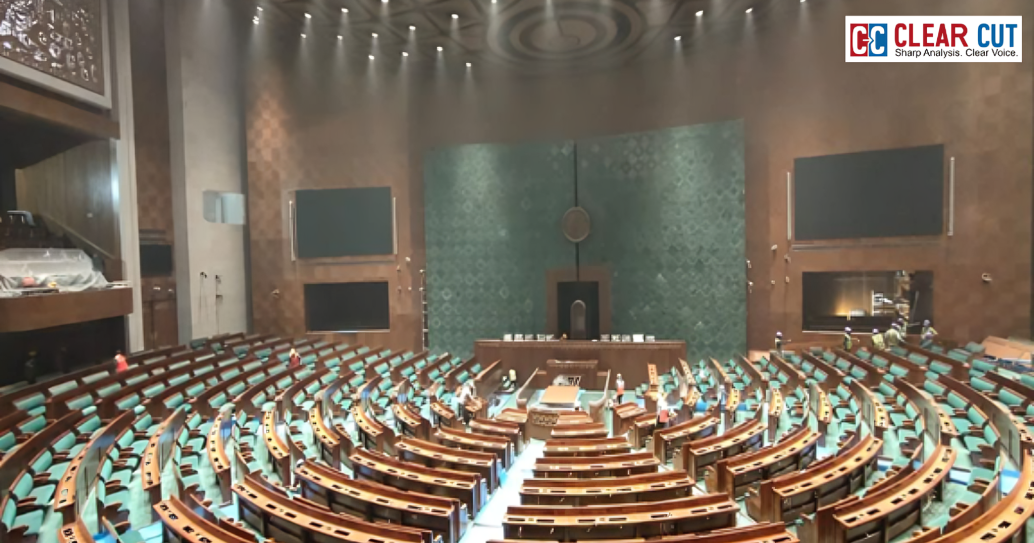
- The government plans to reintroduce the Delimitation Bill 2026 during the Monsoon Session, proposing to redraw Lok Sabha constituencies, expand the House, and reserve one-third of seats for women.
- The bill remains politically contentious, with opposition parties raising concerns over seat redistribution and its impact on different states, while the government seeks support from key regional parties.
- The debate now centres on ensuring a transparent and broadly accepted delimitation process that strengthens representative democracy rather than deepening regional divisions.
A BILL THAT ALREADY FAILED ONCE, COMING BACK FOR ROUND TWO
Most legislation that fails to pass quietly disappears from the agenda, reworked or abandoned. The Delimitation Bill, 2026 and its companion Constitution (131st Amendment) Bill, are taking the harder path. The central government is now actively preparing to reintroduce both pieces of legislation when Parliament’s Monsoon Session convenes from July 21 to August 12, 2026. It is reportedly engaging in intense negotiations with two key regional parties whose support could change the arithmetic entirely.
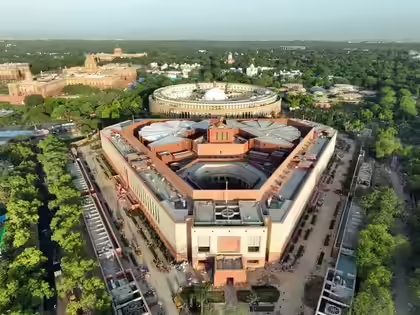
What makes this bill unusually consequential, even by the standards of constitutional amendments, is its scope: if passed, it would redraw the boundaries and number of India’s Lok Sabha constituencies for the first time since 1976, basing the redistribution on the 2011 Census rather than waiting for the upcoming 2027 Census, and potentially expanding the Lok Sabha from 543 seats to as many as 850, with one-third of those seats reserved for women.
| 543 Current Lok Sabha Seats | 850 Proposed Maximum Seats | 1/3rd Women’s Seat Reservation | 1976 Last Delimitation Exercise |
WHY THE FIRST ATTEMPT FAILED
The Opposition’s resistance in April was not a rejection of women’s representation itself. Every major opposition voice on record explicitly supported the principle of reserving a third of seats for women. The opposition parties argued the government was using a genuinely popular reform, women’s reservation, as a vehicle to push through nationwide seat redistribution that many states, particularly in southern India, they view as a punitive redrawing of political power based on population growth that disproportionately favours northern states with historically higher birth rates.
Union Home Minister Amit Shah pointed to the historical precedent that the last seat reallocation occurred under Indira Gandhi’s government in 1972. The seats expanded from 522 to 543, following to which he framed the current proposal as simply continuing an overdue, decades-old process. The TMC shared the broader opposition’s concern at the time, despite being a regional rather than southern party, reflecting that the resistance crossed typical north-south political lines.
THE NEW ARITHMETIC BEING TESTED
Ahead of the Monsoon Session, government sources indicate active engagement specifically with MP from the DMK and TMC. This engagement carried its own political subtext, given Tamil Nadu’s dramatic May 2026 election upheaval. The Congress left the DMK-led alliance entirely to back the TVK-led state government instead. Reports suggest some disgruntled TMC MPs may favour the delimitation issue even without their party’s formal endorsement, while DMK has adopted a softer, conditional stance, indicating it wants to see the government’s revised draft before committing either way.
This positioning matters enormously for the bill’s prospects: DMK’s apparent openness, even conditional, represents a meaningful shift from outright opposition just months earlier. It is worth noting DMK’s own bruising electoral defeat in Tamil Nadu, and its broken alliance with Congress, may be reshaping its calculations on national issues independent of the delimitation question’s substance.
WHAT GENUINE TRANSPARENCY REQUIRES HERE
A constitutional change of this magnitude deserves a public, transparent methodology disclosure before any vote, not backroom negotiation with individual MPs whose support might be secured through unrelated political considerations. The government should publish, well in advance of the Monsoon Session, the precise population data, projection methodology, and state-by-state seat allocation model the bill intends to use.
Parliament’s job in the coming session is not simply to find the votes to pass this bill, or the votes to block it. It is to ensure that however India’s representative democracy gets redrawn, the process commands genuine cross-regional legitimacy rather than narrow procedural victory. A second failed attempt, secured only through last-minute deal-making rather than substantive consensus, would leave the underlying north-south trust deficit this bill has exposed entirely unresolved.
Clear Cut Research Desk
New Delhi, UPDATED: July 02, 2026 09:00 IST
Written By: Tanmay J. Urs