
A fireside chat at the Clear-Cut Education Summit 2026 argued that scale needs government ownership, whole-school thinking and a lasting role for civil society
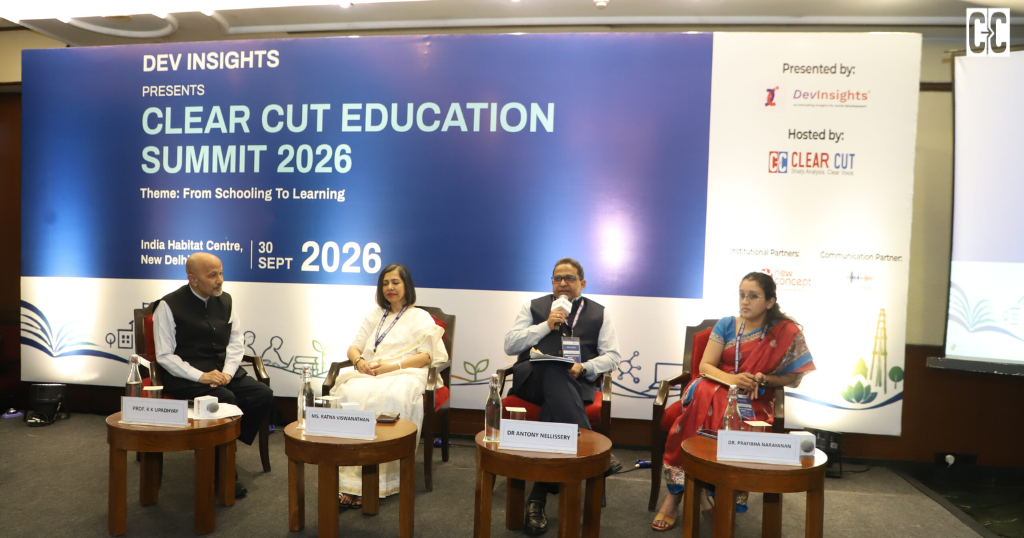
Education models scale when government owns them, when pilots are built around the whole school rather than the intervention alone, and when they bend to local conditions, speakers said at “What Scales? Lessons from Successful Models”, a fireside chat at the Clear-Cut Education Summit 2026 held on 30 September.
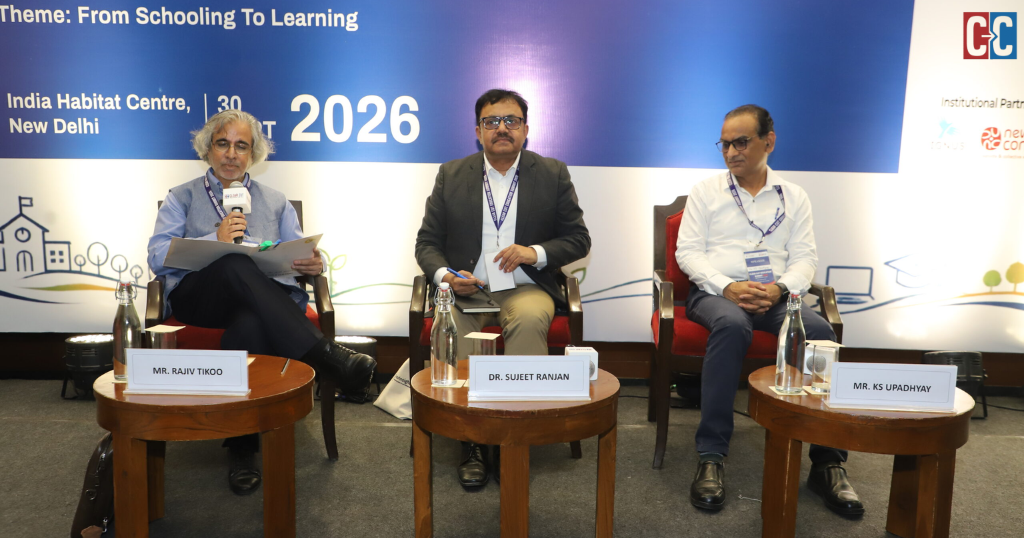
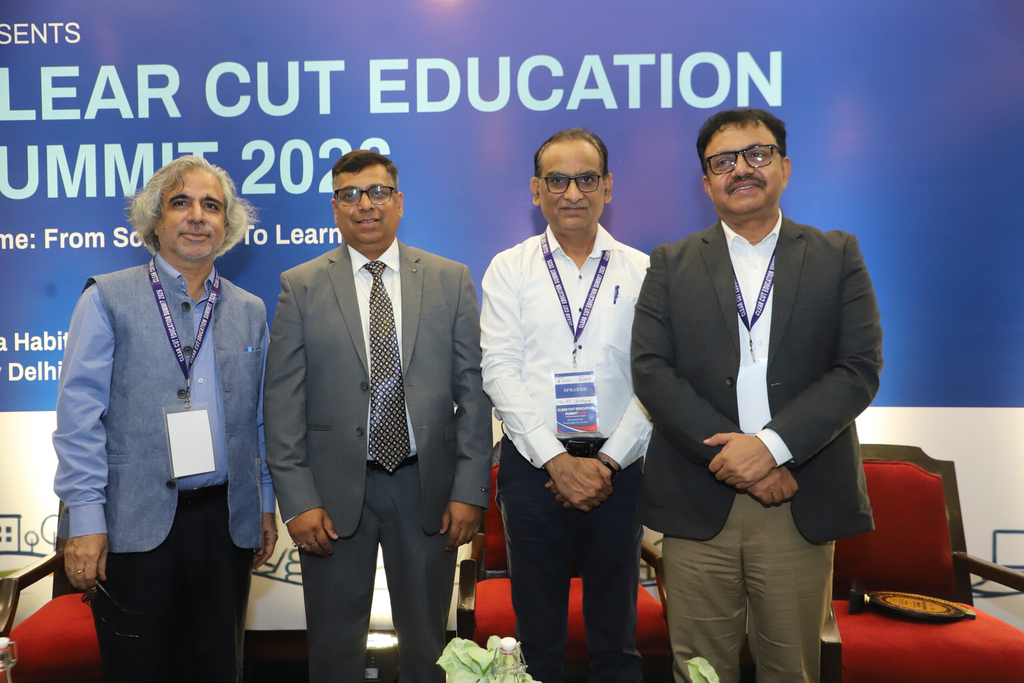
Moderated by Rajiv Tikoo, senior journalist, editor and development communication consultant, the conversation asked what it takes to move promising interventions from pilots to sustainable, system level impact. It featured Sujeet Ranjan, Chief Executive Officer of United Way of Delhi, and KS Upadhyay, Additional Director of Education and CEO of the Delhi Board of School Education, Government of NCT of Delhi.
Large-scale improvement needs government ownership and participation, the session heard. Successful pilots supply the evidence and models that government can then carry to more schools. The best-known Indian example is Pratham’s Teaching at the Right Level approach, which was tested through randomised evaluations and has scaled across India and Africa to reach over 60 million students, with government teachers trained and supported to run it. Elements of an evaluated model were also taken up in a programme covering 5,000 government primary schools in Haryana.
Piloting and scaling, the session said, have to go hand in hand. Starting with fewer schools allows a model to be tested and strengthened before it expands, and Delhi’s experience was shared as an example of moving from a few pilot schools towards wider implementation. The Delhi Board of School Education, which Mr Upadhyay heads, began in 2021-22 with 30 affiliated government schools, including Schools of Specialised Excellence in STEM, humanities, arts and 21st-century skills.
That breadth matched another theme. Foundational learning, the session said, has to be combined with skills and future-oriented learning, including design, technology, AI, robotics and career-linked learning. The approach can extend to the humanities, with students exposed to pathways such as mass media.
Scaling also cannot stop at the intervention. Infrastructure, resources, skills and the readiness of existing stakeholders all need to be weighed when a pilot is designed. Models must be adapted to local contexts, because what works in one place may need changing elsewhere, particularly across regions with different infrastructure and resources. Researchers who tested Pratham’s approach in Uttar Pradesh found that some regions have a teaching culture too weak to support a purely teacher-led programme, a reminder that flexibility is a design requirement, not an afterthought.
Learning, the session stressed, happens beyond the classroom. Parents, communities and other stakeholders shape children’s learning and their transitions between stages, and first-generation learners need particular attention, along with efforts to build the capacity of parents and teachers.
Civil society and government plays complementary roles. Civil society organisations can pilot, build community engagement and develop models, while government provides resources, mandates and pathways to wider implementation. CSOs can keep contributing after a programme scale. The session cited 54 CSOs working together on quality education, values, livelihoods and skills as an example of collaboration, and noted that partnerships with CSR organisations and donors can support school readiness. United Way of Delhi, active since 2008, has partnered with over 200 NGOs, according to its Give.do profile.
A holistic view of school education was part of the same argument. Beyond academics, the session highlighted sports, technology, smart classrooms, STEM and AI, alongside health, water and sanitation. A healthy, enabling school environment is part of ensuring that children can learn and stay in school, which matters when official data put the secondary dropout rate at 11.5 percent in 2024-25.
The session closed on aspiration. Communities and children, it said, need to be empowered to think big and work towards reducing dropouts, while equal opportunities to learn are created for all. Scale, in this telling, is less a number of schools than a set of relationships among government, civil society, communities and families that can carry a good idea well beyond its first classroom.
Clear Cut Education Desk
New Delhi, UPDATED: October 19, 2026 10:00 IST
Written By: Yatharth Pathak