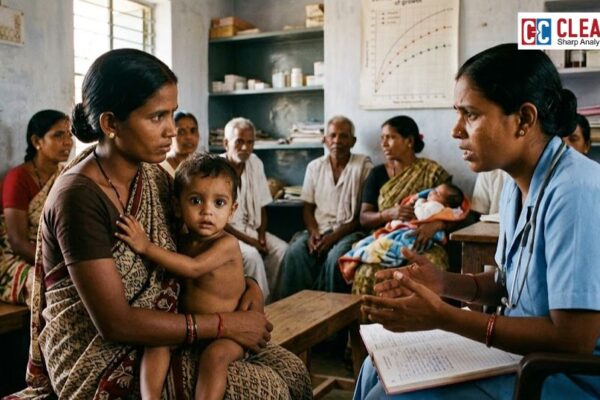
Why Does Malnutrition Persist in India? The Problem Is Bigger Than Food
Despite decades of nutrition programmes, malnutrition remains a major challenge in India. Discover the structural, social, and policy factors driving the crisis.


Despite decades of nutrition programmes, malnutrition remains a major challenge in India. Discover the structural, social, and policy factors driving the crisis.

The first 1,000 days, from conception to age two, are the most critical period for a child’s physical, cognitive, and emotional development. Learn how nutrition, maternal health, breastfeeding, and early care influence lifelong outcomes, and explore India’s progress in reducing child malnutrition through national nutrition initiatives.
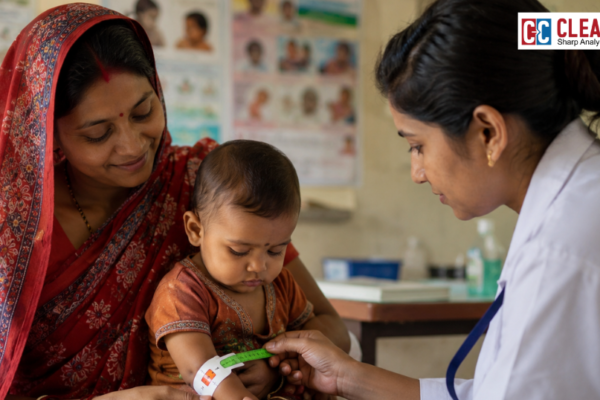
The recently released National Family Health Survey-6 (NFHS-6, 2023-24) by the Union Health Ministry details concrete gains across the country in significant public health and social indicators. Conducted by the International Institute for Population Sciences (IIPS), Mumbai, the survey of approximately 6.79 lakh households across 715 districts provides district-level estimations on population, health, nutrition, and…
Malnutrition remains one of the most important and persistent public health problems in India. It is estimated that undernutrition directly or indirectly contributed to more than 68% of under five deaths in the country. Its long-term effects of cognition impairment, lesser educational outcomes, lesser productivity in life and intergenerational poverty are a structural drag on…
The International Institute for Population Sciences (IIPS), Mumbai, has released the fact sheets of the National Family Health Survey (NFHS) 2023–24, for the sixth round of India’s largest and most widely used health and demographic survey. The findings come nearly five years after NFHS-5 (2019–21), at a time when reducing child malnutrition remains a key…
India’s GDP ranking decline in 2026 is mainly due to rupee depreciation and data revisions, even though real economic growth remains strong. However, the real concern is that despite this growth, there has not been significant improvement in nutrition, employment, and overall social development. The Ranking and the Reaction The IMF’s April 2026 World Economic…

India has added facial recognition to the Poshan Tracker to ensure nutrition benefits reach the right people and reduce leakages. However, it raises concerns about privacy, consent, and the risk of excluding genuine beneficiaries. The Problem it Hopes to Solve Arguably, India has one of the world’s largest child nutrition programmes. Every day, nearly millions…
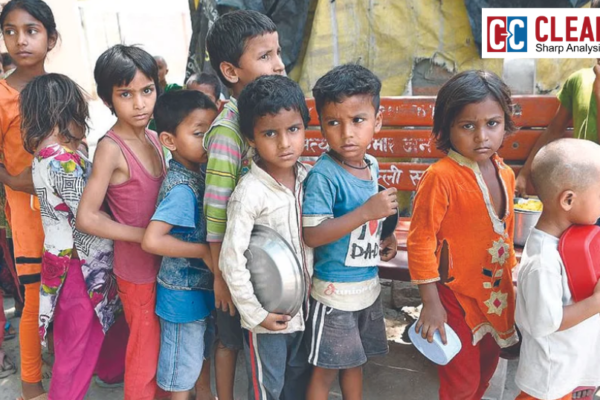
India is making strong progress toward SDG 1.2, significantly reducing multidimensional child poverty through social welfare programs, improved access to education, healthcare, and nutrition, according to UNICEF’s 2025 report. Declining Child Poverty: UNICEF India is making steady progress toward achieving Sustainable Development Goal (SDG) 1.2, which aims to reduce poverty in all its dimensions by…
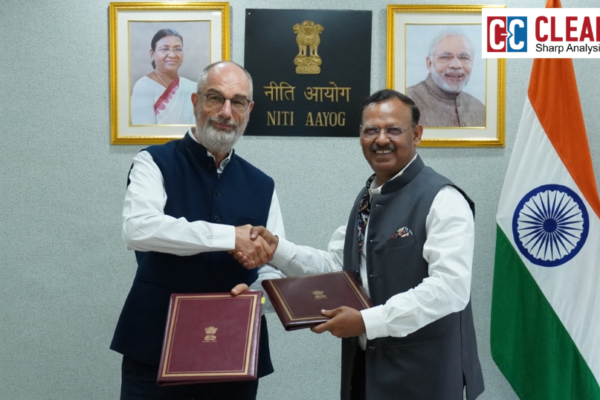
NITI Aayog and UNICEF India have partnered to improve maternal and child nutrition in Aspirational Districts through strengthened Anganwadi centres, frontline worker training, and CSR-supported initiatives. The collaboration aims to boost health outcomes and create scalable models for underserved regions. India’s policy think tank NITI Aayog has signed a Statement of Intent with UNICEF India…
NITI Aayog and UNICEF have partnered to improve maternal and child nutrition in India’s Aspirational Districts and Blocks through better healthcare delivery, awareness campaigns, and CSR-funded nutrition initiatives. The collaboration will also strengthen Anganwadi infrastructure, enhance ICDS services, and build the capacity of frontline workers to improve nutrition outcomes in underserved regions. India has taken…