Electronics, defence and pharma output have surged since the initiative’s 2014 launch, but manufacturing’s share of GDP, formal jobs and India’s standing in labour-intensive exports tell a more uneven story.
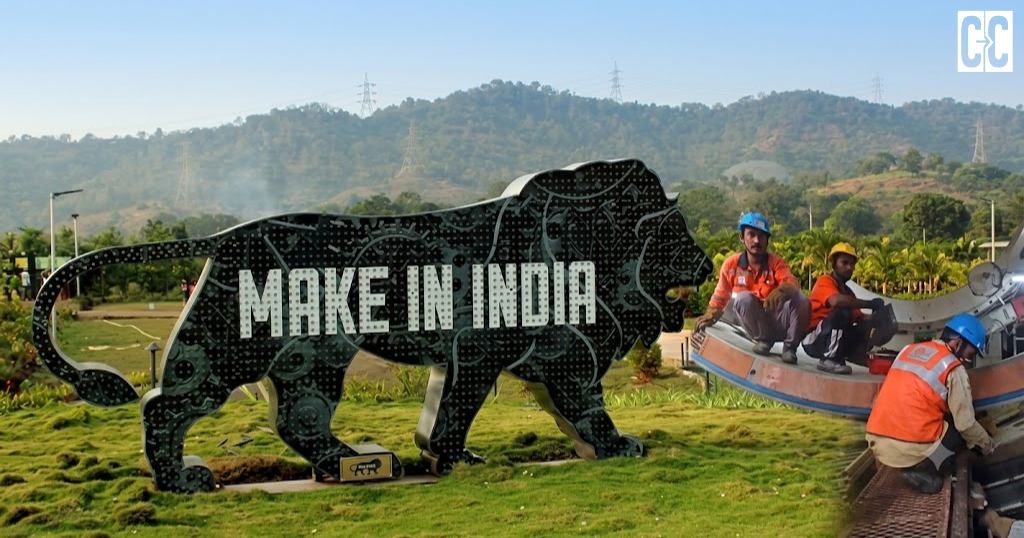
The Make in India initiative completed twelve years on September 25, 2026, with government data showing sharp gains in electronics, defence and pharmaceutical output even as manufacturing’s share of the Indian economy remains roughly where it stood when the programme began in 2014, and most of the sector’s workers remain outside formal labour protections such as minimum-wage enforcement, provident fund coverage and social security.
Launched by Prime Minister Narendra Modi in 2014 to position the country as a global hub for manufacturing, design and innovation, the initiative now spans 27 sectors under what the government calls “Make in India 2.0.” Electronics production has grown nearly sevenfold, from Rs 1.9 lakh crore in 2014-15 to Rs 13.11 lakh crore in 2025-26, while mobile-phone output has climbed roughly 33-fold over the same period, making India the world’s second-largest handset manufacturer by volume. Indigenous defence production has crossed Rs 1.78 lakh crore in FY 2025-26, nearly four times its 2014-15 level; crude steel output has more than doubled to 170 million tonnes; and Indian Railways’ average annual coach production has risen from under 3,300 before 2014 to 5,481 in the decade since. Pharmaceuticals, now the world’s third-largest industry by volume, recorded annual turnover of Rs 4.72 lakh crore in 2024-25.
The Production Linked Incentive scheme, running across 14 sectors, had drawn Rs 2.40 lakh crore in actual investment and generated more than 14.6 lakh direct and indirect jobs as of March 2026, Union Commerce and Industry Minister Piyush Goyal said this week, describing the shift as one where “India moved from manufacture for India to manufacture for the world.” Prime Minister Modi, marking the anniversary on social media, pointed to rising production, investment and exports as evidence of a transformation “visible across sectors.”
The picture is less settled beneath the headline numbers, and this is where equity gaps in the initiative’s record become visible. Manufacturing’s contribution to gross domestic product has held between roughly 15 and 17 percent for three decades, well short of the 25 percent goal the initiative set for itself, first for 2022 and later pushed to 2030. Economist R. Nagaraj of the Indira Gandhi Institute of Development Research has argued that the programme leaned on India’s ranking in global ease-of-doing-business indices rather than addressing deeper constraints, including rising dependence on imported capital goods and technology. Formal, organised manufacturing employs only around 27 million workers; roughly 70 percent of the sector’s total employment still sits in the unorganised economy, meaning much of the workforce the initiative promised to absorb remains informally employed and without those protections.
Incentive outlays have also concentrated narrowly: electronics, automobiles, pharmaceuticals, specialty steel and solar modules together account for close to 83 percent of PLI investment. Small and medium enterprises, which employ more than 110 million people and generate nearly half of India’s exports, continue to report credit shortages and payment delays even as large manufacturers capture most incentive spending. DPIIT Secretary Amardeep Singh Bhatia has acknowledged the shortfall is structural, noting that “the bottlenecks are not just of investment but also of technology.”
The gap is starkest in labour-intensive manufacturing, the segment best placed to absorb low-skilled and women workers who have gained the least from the capital-intensive sectors driving headline growth. India’s share of global exports in apparel, leather, textiles and footwear fell from a 2013 peak of 4.5 percent to 3.5 percent by 2022, the World Bank found, while Bangladesh’s share rose to 5.1 percent and Vietnam’s to 5.9 percent over the same period. “This is an area where India could focus,” World Bank senior economist Nora Dihel has said, pointing to trade costs and tariff barriers that remain higher than those of regional competitors and continue to hold back garment and footwear exporters.
The government’s next wager is Semicon 2.0, a Rs 1,27,500-crore push approved in July 2026 to build domestic chip-design, fabrication and materials capacity. Such capital-intensive bets have driven Make in India’s most visible wins so far, but they employ relatively few people for each rupee invested. Whether the next decade also builds formal, labour-absorbing capacity, in textiles, footwear and MSME manufacturing, rather than repeating a pattern of concentrated, capital-heavy growth, will decide whether Make in India closes the gap its first twelve years could not.
Twelve Years by the Numbers
| Indicator | 2014-15 | 2025-26 / Latest |
| Electronics production | Rs 1.9 lakh crore | Rs 13.11 lakh crore |
| Mobile phone production | ~Rs 18,000 crore | Rs 6.27 lakh crore |
| Indigenous defence production | Rs 46,429 crore | Rs 1.78 lakh crore (FY26) |
| Crude steel production | 81.7 million tonnes | 170.0 million tonnes |
| Manufacturing’s share of GDP | ~16% | ~15–17% (target: 25% by 2030) |
| Share of global apparel, textile & footwear exports | 4.5% (2013 peak) | 3.5% (2022) |
Source: Ministry of Commerce and Industry / Press Information Bureau; World Bank
Clear Cut Livelihood Desk
New Delhi, UPDATED: October 03, 2026 12:00 IST
Written By: Yatharth Pathak