EnAble India, founded by Shanti Raghavan and Dipesh Sutariya in 1999, has built a disability-inclusive employment model focused on skills, employer engagement and ability rather than sympathy. Over two decades, the organisation has worked with companies, policymakers and communities to expand employment opportunities for persons with disabilities across India.
When Shanti Raghavan’s younger brother Hari began losing his sight to retinitis pigmentosa as a teenager, she was working as an IT professional in the United States. Helping him adapt taught her something that would define the rest of her career: the barrier disabled people face is rarely their impairment; it is the absence of a system designed to let them prove their competence.
Rejecting the sympathy frame
In 1999, Raghavan and co-founder Dipesh Sutariya started EnAble India in Bengaluru with an unusual premise for its time: persons with disabilities did not need charity or sympathy; they needed rigorous, practical training and a corporate sector willing to evaluate them on ability rather than assumption. Early efforts were modest, but the organisation’s ambition scaled quickly once it began working directly with employers rather than only with candidates.
Building the employer’s case, not just the candidate’s
EnAble India’s core innovation was arguably not the skills training itself but the parallel work of building what its founders call a “business case” for hiring persons with disabilities: documenting productivity, retention, and quality outcomes so that hiring decisions were not framed as goodwill gestures but as sound recruitment decisions. That case has been made to companies including Accenture, IBM and Café Coffee Day, among hundreds of others, according to reporting on the organisation’s growth over the years.
Numbers that have grown with the organisation
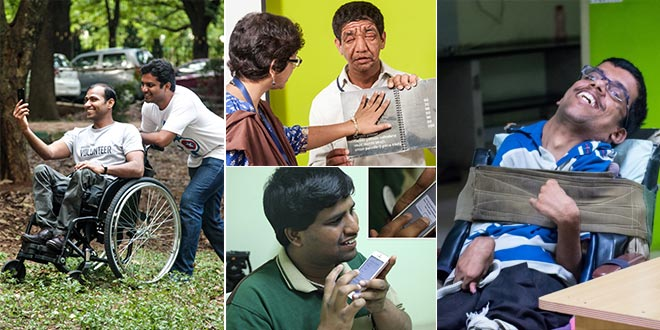
As with any organisation operating for over two decades, EnAble India’s own reported figures reflect different points in its growth rather than a single static total. A 2016 profile described the organisation as having positively touched the lives of more than 130,000 people with various disabilities, with over 4,500 individuals placed into jobs across roughly 600 companies. A 2019 award citation, marking twenty years of the organisation’s work, put the cumulative figure at 220,000 individuals, including trainees, their families, community leaders and employers, reached across 28 states, working with 729 business houses. More recent organisational descriptions cite active collaboration with over 725 companies across 26 cities, more than 3,500 persons with disabilities placed directly across 359 locations in 28 states, and reported starting salaries for placed candidates that vary widely by role and qualifications.
A wider ecosystem role
Beyond direct placements, EnAble India has worked to reshape policy and industry norms, including through its role as a founding member of the Disability NGOs Alliance, its collaboration with the Confederation of Indian Industry, and its position as the official placement cell for persons with disabilities for the Government of Karnataka. Raghavan herself has served on the governing council of India’s Skills Council for Persons with Disability and on the governing council of Workability International, extending the organisation’s influence into skilling and employment policy well beyond its own direct placements.
Why is the model hard to replicate quickly?
The organisation’s growth has been steady rather than explosive. That pace is arguably intentional: building genuine trust with employers, and genuinely rigorous training pipelines across nineteen different disability types, does not scale the way a purely technological intervention might. What EnAble India demonstrates over more than two decades is that inclusive employment at a meaningful scale is achievable in the Indian private sector without diluting standard job expectations, provided someone does the patient, unglamorous work of building the systems, training content, and employer trust required to make it possible. As India’s own disability rights framework, including the Rights of Persons with Disabilities Act, pushes both public and private employers toward stronger inclusion mandates, EnAble India’s two-decade playbook offers one of the country’s most tested templates for turning legal obligation into functioning, mutually beneficial employment.
Clear Cut Livelihood Desk
New Delhi, UPDATED: October 02, 2026 12:00 IST
Written By: Tanmay J. Urs