- Sandy Khanda founded the Green Pencil Foundation to break menstrual taboos through education, open conversations, and community engagement.
- Its Periods of Pride initiative promotes menstrual hygiene and reusable cloth pads while addressing environmental concerns, reaching over 200,000 women and girls.
- The initiative shows why menstrual health programmes should focus not only on pad distribution but also on dignity, awareness, sustainability, and stigma reduction.
Sandy Khanda was 12 years old, growing up in a farming family in Khanda village, Haryana, when a classmate got her first period in the middle of class. The boys around her didn’t understand what was happening and mocked her, assuming, wrongly, that sex had caused the bleeding. That evening, young Sandy went home with a question for his mother: why do you and didi never talk about periods? He did not get a satisfying answer that day. Years later, after surviving a near-fatal road accident in 2016, he built one himself, a foundation now reaching more than two lakh women and girls across 18 Indian states.

From accident to a newfound purpose
The 2016 accident, and the long recovery that followed, pushed Sandy to rethink what he wanted to do with the time he’d been given back. In 2019, he founded the Green Pencil Foundation, blending menstrual health education with climate action and community development. What started as one person’s search for meaning has grown into a movement working with schools, volunteers, corporates, and government partners across the country.
Why pads never solved the problem
Sandy discovered early on that simply distributing sanitary pads missed the real barrier: silence. In villages without waste disposal systems, he had watched women wrap used pads in paper and toss them into open fields, a practice that harmed soil and water even as it tried to solve one problem by creating another. His flagship initiative, Periods of Pride, focuses less on one-way awareness lectures and more on open, safe conversations, actively bringing men and boys into the discussion to help dismantle stigma that has usually been left entirely to women to carry.
Cloth pads as a climate choice
The foundation champions reusable cloth pads, framing menstrual health and environmental sustainability as two sides of one problem rather than separate causes. It is a deliberate pairing: cheap, washable pads solve an access problem in areas where commercial pads are hard to find or afford, while also cutting down on the plastic waste that disposable pads generate in places with no proper disposal infrastructure.
A reach that surprised even the founder
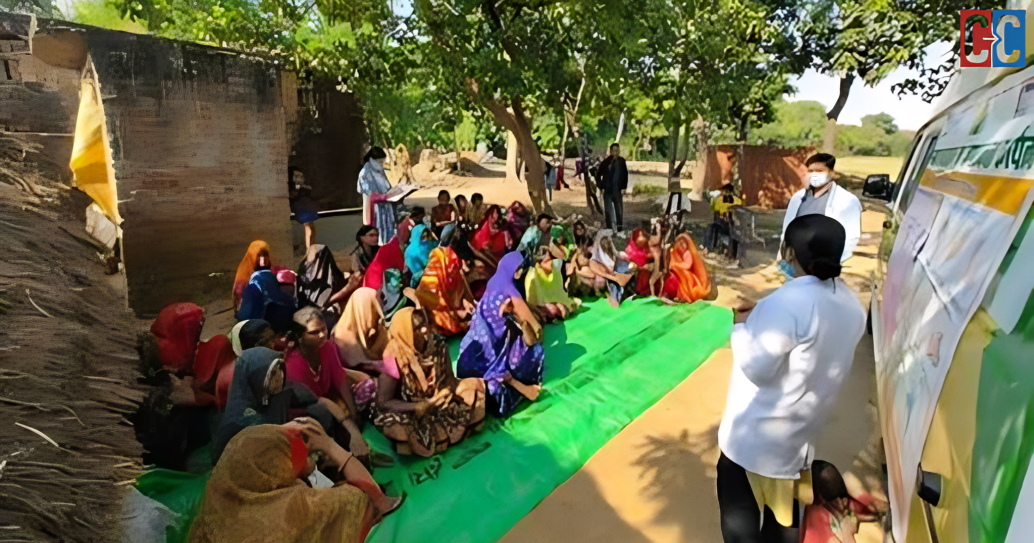
Periods of Pride has now touched more than 200,000 women and girls across roughly 200 slum areas in over 26 cities, and reaches communities from Punjab to Manipur and the remote hills of Uttarakhand. The Foundation was recognised with the MHM Champion Award at the 3rd MHM India Summit in 2023, one of several honours that have followed its expansion into 11-plus Indian states and union territories for its climate advocacy work as well.
Foundation’s own survey results
Green Pencil Foundation ran a comprehensive survey across government schools in several Indian states to understand the real, ground-level state of menstrual hygiene management. The findings, Sandy’s team says, were eye-opening even for people already working in the space: widespread menstrual taboos, patchy educational awareness, and significant gaps in basic knowledge among students, findings that now directly shape where Periods of Pride chooses to run its next round of school-based sessions.
The way fprward
Sandy Khanda’s dream, in his own words, is simple: to reach every village, and to make menstruation and sustainability everyday conversations instead of taboos. “If we can talk about periods without shame, we can change much more than hygiene. We can change mindsets,” he says. The policy lesson here is a specific one: government menstrual hygiene schemes still measure success in pads distributed, not conversations changed or waste avoided. Programmes like Periods of Pride show that dignity, sustainability, and health access are not three separate line items, they are one problem, and they should be funded and measured that way from now on.
Clear Cut Gender Desk
New Delhi, UPDATED: August 29, 2026 13:30 IST
Written By: Tanmay J. Urs