
“solid waste” means and includes solid or semi-solid domestic waste, sanitary waste, commercial waste, institutional waste, catering and market waste and other non residential wastes, street sweepings, silt removed or collected from the surface drains, horticulture waste, agriculture and dairy waste, treated bio-medical waste excluding industrial waste, bio-medical waste and e-waste, battery waste, radio-active waste generated in the area under the local authorities and other entities mentioned in rule 2;” [Rule 3.46 of Solid Waste Management Rules, 2016.]
Despite this comprehensive definition of “Solid Waste,” Indian law remains silent on a simpler, more foundational question: What constitutes “Waste” itself?
Article 3(1) of the European Parliament’s Directive 2008/98/ EC, which defines it elegantly: “‘waste’ means any substance or object which the holder discards or intends or is required to discard.”
Evidently, waste is not defined by its inherent properties or lack of financial value; it is defined entirely by the holder’s intent to abandon it. Furthermore, under this Directive, the status of waste is fluid. Controlled by the principle of “End-of-waste” status, Article 6(1) notes that certain waste ceases to be waste once it undergoes recovery or recycling and meets specific criteria. Crucially, one of those conditions is simple: a market or demand must exist for such a substance.
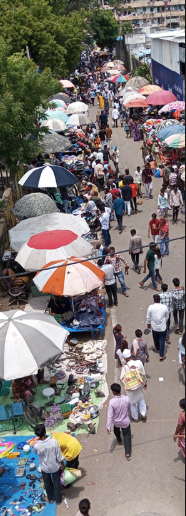
The Raviwari Market (Sunday Market) of Anand is the living example of this “End-of-waste” status loop. The Raviwari Market (Sunday Market) of Anand is the living example of this “End-of-waste” status loop.Clifford Geertz, published in The American Economic Review (1978)—who studied the intricate relational dynamics of traditional Moroccan bazaars—I realized that the Raviwari Bazar is built on a similar, if not more complex, web of territory, mutual dependence, and social contracts.
“I was the first one to establish this market here,” Yunusbhai, a senior vendor, told me when describing its history. “Previously, it was held in Gamdi—the oldest settlement of Anand—under the ancient banyan tree (popularly called Gamdibad). But as the city expanded, the space shrank, and the surging traffic posed a massive challenge. We approached the Municipality, met with the officers, and they told us to choose a new location. We chose this place. It has been fifteen years since. This place has also undergone changes. There was no flyover and this market was held on both sides of the main road. Now, as you see it is held only on one side of the road.”
I had met Yunusbhai purely by accident a few months ago. I was cycling toward the vegetable market when I noticed a diminutive, elderly man in his seventies riding a bicycle painted a striking, hand-brushed golden color. Tied securely to the horizontal rod of his cycle was a manual hand pump.
As I overtook him, curiosity got the better of me. “Why do you carry the hand pump?” I asked. He smiled warmly, exposing toothless jaws. “You never know when you might need it.” I nodded in agreement. Cycle repair shops are a rarity in Anand, and for a simple top-up of air, they demand ten rupees for a pair of tires—a steep price for a working man. We pulled over under the shade of an Ashoka tree near the Gurudwara Chowkdi to talk.
“What do you do for a living?” I asked. “I collect bhangar (scrap) and sell it,” he said, using the Gujarati term that encompasses everything from broken plastic chairs to outdated electronics, and added, “I cycle through the lanes of Vallabh Vidya Nagar, collecting discarded household objects from families, and then I sell them at the Raviwari Market.”
Intrigued, I asked for his mobile number so I could find him on Sunday. “I am a poor man. I cannot afford a mobile phone,” he said with that same innocent smile. He added, “I am always at the Raviwari. Look for the big Peepal tree on the road that leads to the old Sundar Cinema Hall. I sit right under it.”
“Do you live in Anand?” “No. I live in a nearby village,” he said, and ment ioned name of the village. “It is quite far from here,” I said. “Yes. For livelihood one has to work hard,” he said. “Since how long are you in this?”
“Around 15 years,” he said. “Who all are in your family?” “I, my younger brother and my sister,” he said. “What about your children?” “I did not marry.” “Your brother?” “He also did not marry,” he said. “I had an elder brother. He died while he was young. My brotherin-law also died. Due to these setbacks we did not recover. We never married. My sister also did not remarry. We live together,” he said.
“You Hindi is very good,” I could not stop myself from mentioning it. “Yes, I was in Mumbai for three years. I was assisting my Seth in his business,” he said. “You could have stayed in the same job,” I said. “I got any opportunity to work in Saudi Arabia. I told my Seth about it. He happily agreed and allowed me to go. I was in Saudi Arabia for eight years,” he said. “Did you not save money?” “The Iraq war started and I could not visit Saudi Arabia again. Whatever money I saved it was spent in the marriage of my sister. Unfortunately, my brother-in-law died. To go abroad we took loan. We had to sell the house, repay the loan and migrate,” said Yunusbhai. I was listening.
“We are Syeds. My father was a religious guru and many people came to meet him. If he blessed someone the person benefited. He died. There was nothing left in the city. From a village near Lunawada we migrated to Borsad and from there to our present place of living,” he said. I was not keen to stop the conversation but I was also conscious of the fact that Yunusbhai might get late. “Yunusbhai, let us meet in the Raviwari Market,” I said.
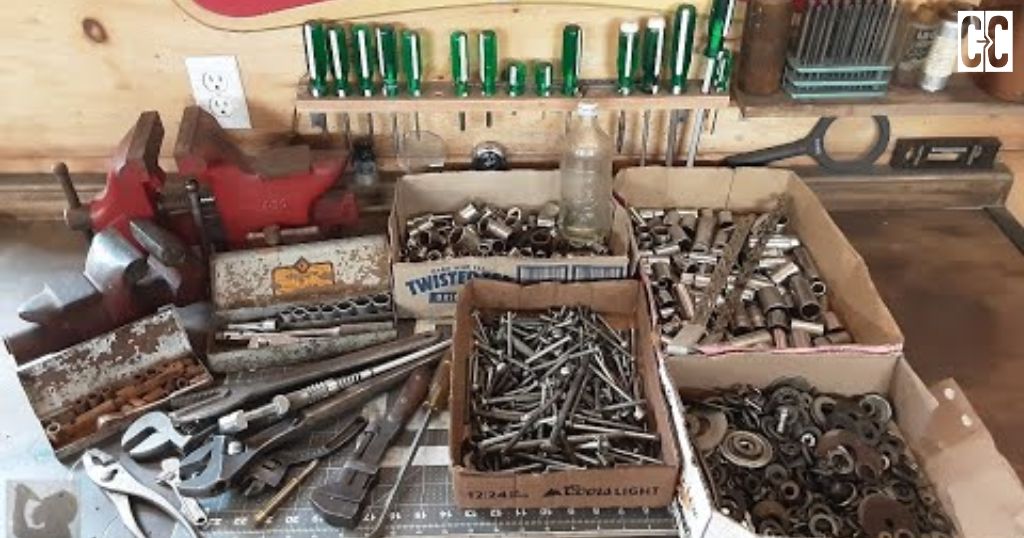
“Yes, please come to the Peepul tree,” he said with his usual smile. I visited Yunusbhai in the Raviwari market. He was squatting on a plastic sheet spread on the ground. He welcomed me with his contagious smile and introduced me to his brother Irfanbhai. It was not difficult to locate Yunusbhai in the crowded market. The golden cycle was standing to demarcate boundary of his ‘shop’. In front the edge of the black top of the road was the boundary and on the rear side stood the tall boundary wall of the Hindu cremation ground. The fourth side of the boundary of Yunusbhai’s shop was the scooter of his neighbour.
Most of the vendors sit on the ground. The vendors selling old and used clothes display their wares on plastic-woven steeltube frame cots. The majority, around 60-70% of the total number of shops are old clothes shops. Almost all the old clothes shops are owned by the caste Devipujak.
A small number of shops deal in new items, such as plastic ware, iron wares, wristwatches, electronic items, and wooden craft items prepared by the caste Suthar. There are carts selling vegetables at cheap rates. There are peripatetic vendors selling eatables such as samosa and ice gola. Near railway track a large area is occupied by vendors selling wooden furniture. I sat in Yunusbhai’s shop and observed how people were buying things. A school boy came and asked price of LED light.
“Rs 20/-,” said Irfanbhai. “Rs 10/-,” said the boy. “Ok,” said Irfanbhai. The boy indicated towards an Integrated Circuit (IC) board and asked its price. “Rs 60/-,” said Irfanbhai. “Rs 20/-,” said the boy. “No,” said Irfanbhai. “Rs 30/-,” said the boy. Irfanbhai once again rejected the offer. “What would you do with it?” I asked the boy.
“I will harvest capacitors and diodes for my summer project. It would reduce the cost of my project,” he said. “You are in which class?” “Class XII,” he said, and named the school. He also mentioned he was preparing for engineering entrance examination. After the boy left I asked Irfanbhai, ”How do you price IC boards?”
“Previously, they were very cheap but now all of a sudden the prices have increased. They say that silver is being harvested from the IC boards. Did you notice how the price of silver has increased?” “Who all come and buy things here?” I asked Yunusbhai. “All types of people come here. Mostly people of the working class come here,” he said. While we were talking a person came on scooter and started shouting at Yunusbhai in Gujarati. Yunusbhai responded calmly in Gujarati. The situation settled down after Yunusbhai gave a onehundred rupee note to the person. I asked Yunusbhai, “Who is this person?”
“He is a Patel. He lives in London and comes to India intermittently. He gave some old used household goods to sell,” said Yunusbhai and indicated towards a lot of old clothes and some electronic goods. I looked towards the goods. “The clothes are of big size. He is a foreigner with enough food to consume. You see most of the people who come here are workers with thin bodies. How can they fit into his clothes? The clothes did not sell. He is shouting for it. I gave him money for the goods I was able to sell. In this market nothing is certain. If a customer comes and buys, only then can I give money to him. You see so many people come and negotiate but they do not buy,” said Yunusbhai and added, “He is an NRI and came all the way to collect Rs 100/-.”
“What is the norm here?” I asked. “People we know call us and ask us to collect goods and sell them here. We ask what price they expect. For example, you see that new stove with a pressure cooker. The combined price quoted by the client is Rs 2,000/-. I cannot sell one item even though many customers were seeking only the pressure cooker. In case I sell the pressure cooker and the stove does not sell I have to pay Rs 2,000/- to the client. This is the second time I have brought the stove and cooker to this market in case it does not sell today I will ask the owner to decrease the price to Rs 1,500/- or take back the items,” said Yunusbhai.
“How much money would you make?” “I am asking Rs 2,500/- for the two,” he said. “How much money do you earn in a month?” “Rs 3,000/-,” he said. “Only Rs 3,000/- in a month!,” I exclaimed. He smiled innocently. While I was looking at his face a young person came to the shop holding cordless earbuds.
“How much would you pay me for these?” he said showing the whitecolored earbuds. “Rs 50/-,” said Yunusbhai. “My asking price is Rs 200/-. It is completely new,” he said. “Rs50/-,” replied Yunusbhai. “Ok, let us settle the deal at Rs 150/-,” said the boy. Yunusbhai did not budge. “At least pay me Rs 100/- so that I can buy a litre of petrol. I purchased this last week. My motorbike has no petrol. I have no money to buy petrol and therefore I am selling it,” said the boy.
Yunusbhai said, “Rs 50/- and I will also need a receipt.” The boy went. “How could I ascertain whether he owned the product or was trying to sell stolen product. One has to be very cautious in this market. There are police in plain clothes. They keep any eye on things. One cannot take a risk for earning Rs10/-,” said Yunusbhai looking at me.
“Did I not tell you about my elder brother? He died. He was the pupil of our eyes. You come to my house I will show his photographs to you. For six months I was like a mad person. I had lost my senses. I was regularly losing money in the fruit business. I was unable to walk. I sold fruit on a hand cart. There was no energy in my legs. I was unable to move the cart. I always saw him in front of the cart. It was he who got us the carts. I stopped selling fruits,” he said. “Please tell me how you joined Raviwari at the very beginning,” I said. “When I left selling fruit and did not work it was getting tough. The God instructed me to start collecting scrap. He is the one who decides who should do what. I started collecting scrap from the college hostels of Vallabh Vidya Nagar. I also collected scrap from the colleges. I sold the old notebooks and packaging items to the wholesaler. Some items, such as old electronic items were sold in the Raviwari market. The Municipality started door to door collection of scrap. We shifted solely to the Raviwari market,” said Yunusbhai.
It was 2 PM and the market crowd was getting thinner every minute. “How do three people manage in Rs 3,000/- a month?” I was curious. “There is no debt on me. I am the happiest person. There is an NGO that provides two packets of dinner every day. There is a mess that provides cheap food. I buy two packets from there. We manage,” he said.“This market is held only once in a week. What do you do on other days?” “On other days I collect items and on some days I work for a caterer. For threefour hours of a catering job he pays me Rs 150/- and the food is free. I do not wash utensils. I only serve food,” said Yunusbhai. “Isn’t it too hot?” “Yes. The poor get acclimatized to adversities,” he said and smiled.
“At least a big umbrella for shade?” I said looking at the colorful longhandled umbrellas over many shops. Yunusbhai looked at the sky casually and said, “There are clouds but no rain.” “What happens during the monsoon?” “It is difficult. Many times we do not come here if it rains. On other days we bring plastic to cover everything. This place gets wet and soggy. We rent cots. They are available at Rs 20/- per day,” he said. “Do people fight for places here?” “No. Everybody knows his place. I am sitting at this spot for the last 15 years,” he said. “What would happen if there is a newcomer?” “He has to find a place,” he said. “Is there any committee or any body to run this market?” “No, nothing,” he said. “You do not have to pay any rent for putting up a shop, either directly or indirectly,” I asked. “No. Municipal corporation does not seek any rent. Police do not collect any money,” he said and then added, “Yes, till two years back Hijras (transgenders) troubled us a lot. They collected thousands of rupees from this market. There may be around 600 shops here. From every shop they collected a minimum Rs 10/-. They misbehaved with us. They forced us to pay. Two years back a situation arose and I went to the police station and with folded hands I narrated everything to the police. The police came. The shopkeepers were afraid. They all mentioned that it was I who complained. The police came to me and asked questions. I once again narrated everything with folded hands. Since then, no Hijra has visited this place seeking money.”
“What if people owning spot sell their spot?” “I received a proposal from a person. He said he will pay me Rs 500/- for three hours. I refused. This kind of thing is not allowed and nothing like that has happened here. It is illegal. How can you sell the spot when you got it free,” said Yunusbhai.
“What happened during Corona (COVID)?” “It was really tough time due to the lockdown. All movement was put on hold. There was no Raviwari market. The police were beating anyone who went out of the house. There was no food. I put a mask and came out of the house and told the police personnel about the difficulty. He was a kind person. He asked me to collect food from the camp. Slowly the restrictions were relaxed and things came to normal,” said Yunusbhai. I listened. “Nothing happened to me. I am 72 and I come here cycling one and a half hours each way,” he said and smiled.
Clear Cut Livelihood Desk
New Delhi, UPDATED: August 02, 2026 14:00 IST
Written By: Dr. Ram Manohar Vikas