
- Vriddha Mitra is transforming elder care in India by helping senior citizens access healthcare, social security, companionship, nutrition, and essential services while continuing to live in their own communities.
- The initiative now supports over 60,000 elderly people across nine locations and is also training young people as professional caregivers through the Vriddha Mitra Academy.
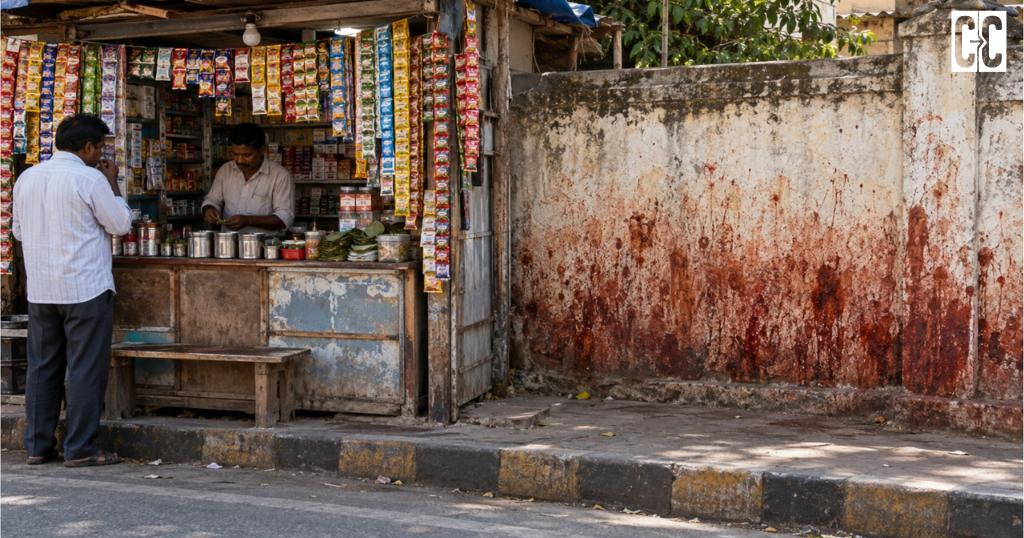
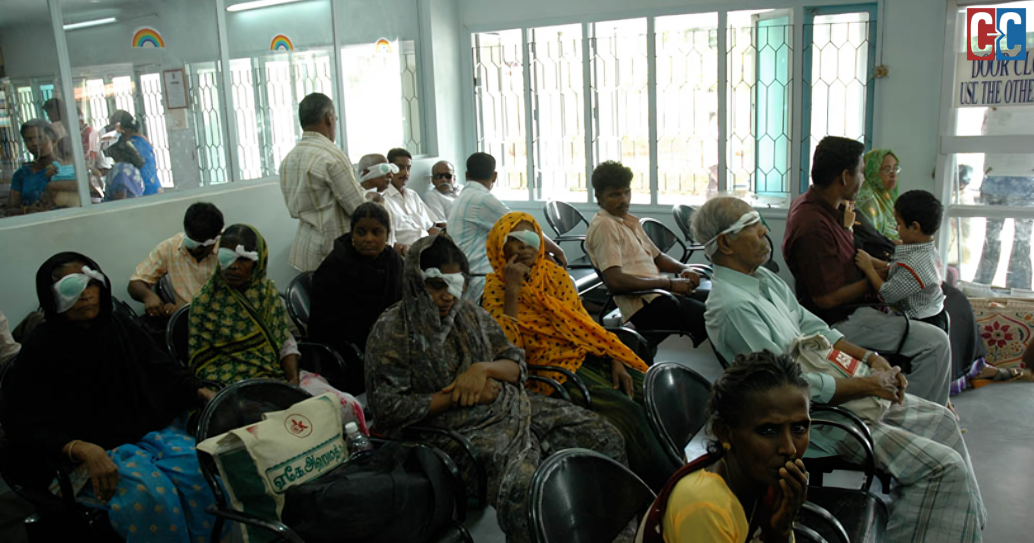
In a narrow lane in the old city of Varanasi, 79-yearold Chandrika Prasad Grandpa had spent a lifetime in daily wage labour, only to find himself bedridden, nearly blind, and going hungry in old age — his ration card discontinued, his hip fractured after a stray cow knocked him down, and his son nowhere in the picture. A Vriddha Mitra community officer identified his cataracts, arranged free surgery through a network hospital, facilitated a hip operation fully covered under an Ayushman Bharat card the team helped him obtain, and restored dry ration support. Today, Dadaji walks, sees, and has someone at his door Dr. Pawan Pathak August 2026 Edition/www.clearcutmedia.co.in every week. In Bhitarwar – rural Gwalior, Makhan Lohpeeta Grandpa had given up on his dream of a home after his application for the Awas Yojana was rejected. With Vriddha Mitra’s continuous advocacy, Grandpa has not only received the funds he was entitled to, but also built the foundation of his home. And in a slum in Pune’s busy Yerwada area, 69-year-old Nafisa Granny, who had been living alone since her husband’s death, had stopped eating regular meals. She did not think it was worth the effort. Today she participates in weekly community gatherings with other elderly women, singing her favourite songs, receives ration support for nurition, and says the Vriddha Mitra community officer who visits her every week feels like a daughter. These are not exceptional stories. This is every day in the life of Vriddha Mitra.
From Two Slums in Pune to a National Movement
The programme did not begin with a grand design. In 2018, SCHOOL — the Society of Community Health Oriented Operational Links — made a decision to work with the elderly. The initial instinct, as with most organisations entering this space, was to consider building an old age home. But that idea was quickly set aside, for a simple reason: it was impossible to accept that in a country of over a billion people, facing a demographic shift of historic proportions, the answer for the elderly could be a facility that might serve fifty or a hundred people at a time.
India’s elderly population had crossed 100 million by 2011 and was growing faster than the overall population. By 2050, elderly would outnumber children under 15. Dr. Benazir Patil, the CEO of SCHOOL and the architect of what eventually became Vriddha Mitra, put forth the concept of ‘ageing in place’ – a philosophy that moved away from the norm of institutional care for the elderly and enabled growing older in one’s own community, in one’s own home, surrounded by loved ones and with dignity.
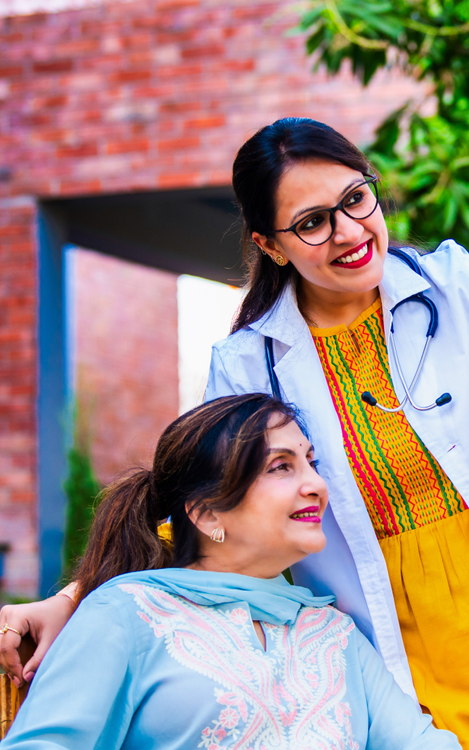
Dr. Patil put together Vriddha Mitra as an interconnected ecosystem that built support for the elderly, made stakeholders aware about their challenges and mobilized care from various sources, activated the public system to connect the elderly to their entitlements, but above all provided companionship to them in their own homes. And as the team went deeper into communities and listened, one truth became undeniable — no elderly person wanted to leave their home. Every grandmother and grandfather they met wanted to age surrounded by family, by neighbours, by the smells and sounds of the life they had built. And so, in 2019, Vriddha Mitra was launched in two slums in Pune with 620 elderly through a community-based intervention, reaching them in their own homes and communities. Today, the programme reaches over 60,000 elderly across nine locations in India: Pune, Mumbai, Bhopal, Gwalior, Delhi, Varanasi, Lucknow, Bhitarwar in rural Madhya Pradesh, and KhairthalTijara in rural Rajasthan.
The vision driving Vriddha Mitra is the creation of an agefriendly ecosystem in India. A country where the elderly are not pushed to the margins of family and community life, but remain active, connected, and supported within it. The mission is to provide integrated solutions for the multifaceted challenges that older adults face, not through a single intervention, but through a continuum of care that follows the elderly wherever they are, in their home, in their community, and in the health system. This continuum rests on four interconnected pillars.
A Continuum of Care, Built Around the Elderly
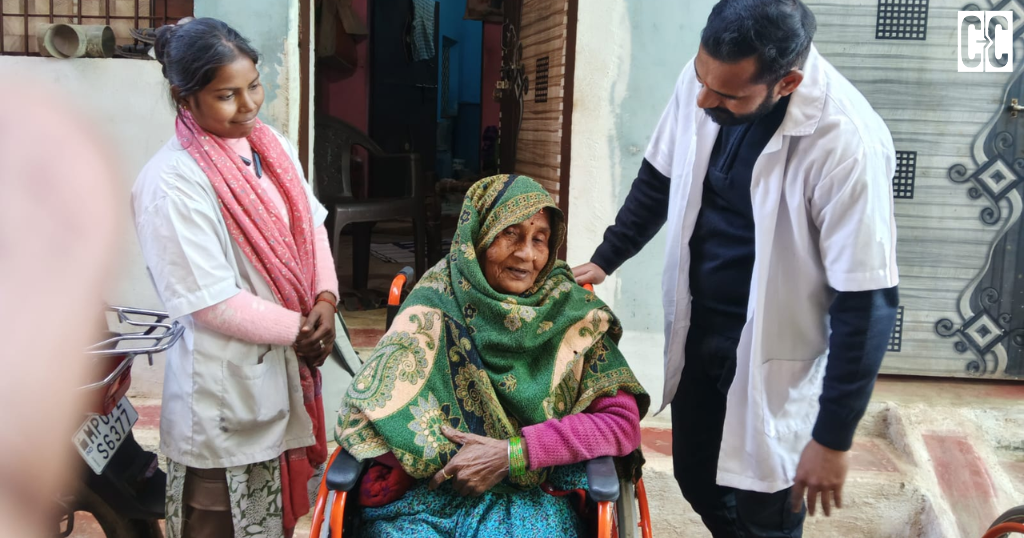
The first is the creation of social support structures. Vriddha Mitra community officers — trained meetings, activities, intergenerational and Vriddha Mitra Kendras — dedicated community spaces for older adults — ensure that the elderly remain embedded in social life rather than retreating from it. For many of the elderly served by the programme, these interactions are the only regular human contact they have outside their immediate family, if they have family at all. The second pillar is the provision of essential supplies and services, at home and in the community. Through direct programme delivery and through the Vriddha Mitra Network — a carefully built ecosystem of partner hospitals, specialist clinics, NGOs, government health facilities, and community organisations — elderly receive medicines, nutritional supplements, assistive devices such as wheelchairs and walkers, teleconsultations, specialist health physiotherapy, general and camps, and doorstep delivery of essentials. young people from within the communities they serve — conduct regular home visits to each enrolled elderly, providing companionship alongside health monitoring, counselling, and family sensitisation. Community.
The network ensures that the programme can extend its reach beyond what any single team could provide alone. An elderly in Varanasi who needs a cataract surgery, for instance, is referred to a partner eye hospital through the network to ensure his surgery is free of cost, escorted if needed, and followed up with at home. The community officer is the thread that ties the system together.
The third pillar is social security linkage — ensuring that the elderly receive the pensions, health insurance, and government entitlements they are legally entitled to but often unable to access. Vriddha Mitra community officers assist the elderly in obtaining and updating Aadhaar cards, ration cards, voter identity documents, Ayushman Bharat health insurance, and pension scheme registrations. For many of the elderly served by the programme, these entitlements have existed on paper for years but remained out of reach due to documentation gaps, lack of awareness, or simple inability to navigate government systems. Securing a monthly pension for an elderly woman living alone is not a welfare gesture — it is the difference between eating and not eating.
The fourth pillar is the creation of dedicated spaces for the elderly — physical environments designed specifically around their needs and comfort. Vriddha Mitra Kendras are communitylevel spaces where the elderly can gather, participate in recreational and wellness activities, access social security facilitation, and simply spend time in the company of peers. For elderly who live alone or whose families are away during the day, the Kendra often becomes a second home — a place where they are expected, welcomed, and known by name.
Alongside the Kendras, Vriddha Mitra has worked to establish Geriatric Units in partnership with public hospitals and local governments in cities. These programme units bring specialist services — including physiotherapy, dental care, and outpatient consultations — to a dedicated geriatric facility within the public health system, often free of cost for the elderly who need them most. Together, the Kendras and Geriatric Units ensure that the elderly have not only a person looking out for them, but a place that belongs to them.
Building the Caregivers of Tomorrow
As the programme grew, a gap became increasingly visible — and increasingly urgent. India has virtually no formal cadre of trained caregivers equipped to address the complex, interwoven needs of the elderly. Health workers trained for maternal and child health were not equipped for geriatric care. Family members willing to provide care lacked the knowledge to do so effectively.
And the elderly themselves often needed more than what a wellmeaning but untrained person could provide — from managing chronic disease and mobility limitations to supporting someone living with dementia or recovering from a stroke. In 2022, Vriddha Mitra responded by establishing the Vriddha Mitra Academy.
The Academy was built on a straightforward conviction: that caring for the elderly is a skill, and that India needs a generation of young people who are trained in that skill, take pride in it, and can build a livelihood from it.
The Academy offers specialised courses in foundational elderly care, bedridden patient support, physiotherapy assistance, and care for persons with degenerative disorders including dementia, Parkinson’s disease, and Alzheimer’s.
Trainees are recruited deliberately from economi ca l ly vulnerable communities — young women and men who might otherwise have limited employment prospects — and trained to be not just competent caregivers but genuine companions. The name says it — a Vriddha Mitra is a friend first. Graduates are placed within the programme, with partner hospitals, and with NGOs and institutions across the country. In a country that will need millions of trained elder care workers in the decades ahead, the Academy represents both a response to the present and an investment in the future What Vriddha Mitra has built, across seven years and nine locations, is not simply a programme.
It is a proof of concept — that community-based, home-centred care for the elderly is possible at scale in India, that it works, and that it is what the elderly themselves want and deserve. Chandrika Prasad Grandpa in Varanasi can see again. Makhan Lohpeeta Grandpa has a home.
And Nafisa Granny in Pune eats her meals every day, knowing that someone will come around to ask whether or not she did. One visit at a time, one friendship at a time, Vriddha Mitra is showing what it looks like when a country chooses not to forget its elderly.
About the Author
Dr. Pawan Pathak is a public health specialist with over 19 years of experience in health systems strengthening and maternal, child, and elder care. As COO of SCHOOL, he leads the Vriddha Mitra initiative, advancing community-based healthy ageing through innovative, evidencebased, and scalable elder care models across India.
Clear Cut Health Desk
New Delhi, UPDATED: August 25, 2026 04:00 IST
Written By: Dr. Pawan Pathak