
The Government of India and the Asian Development Bank (ADB) signed a $ 230 million loan on August 21 to rebuild Chennai’s water and sewer network. Deputy Secretary Saurabh Singh signed on behalf of India’s Department of Economic Affairs, and ADB India Country Director Mio Oka signed for the bank, under the guidance of Joint Secretary Baldeo Purushartha, as the two sides finalized the Chennai Climate-Resilient Water Security and Sewerage Project.
The project will lay over 170 km of water and sewer pipes, upgrade seven water pumping stations and 38 sewer pumping stations, and build India’s first comprehensive citywide ring main. This closed loop keeps water pressure steady by routing the supply around a blockage instead of stopping at it. ADB expects the work to reach 4.5 million residents across roughly 426 sq km of Greater Chennai. This coastal city relies heavily on desalinated water and still carries the memory of its reservoirs nearly running dry in 2019. The financing, Oka said, is meant to widen access to “safe and reliable water supply and better sanitation services” while making the city’s water utility more financially self-sustaining.
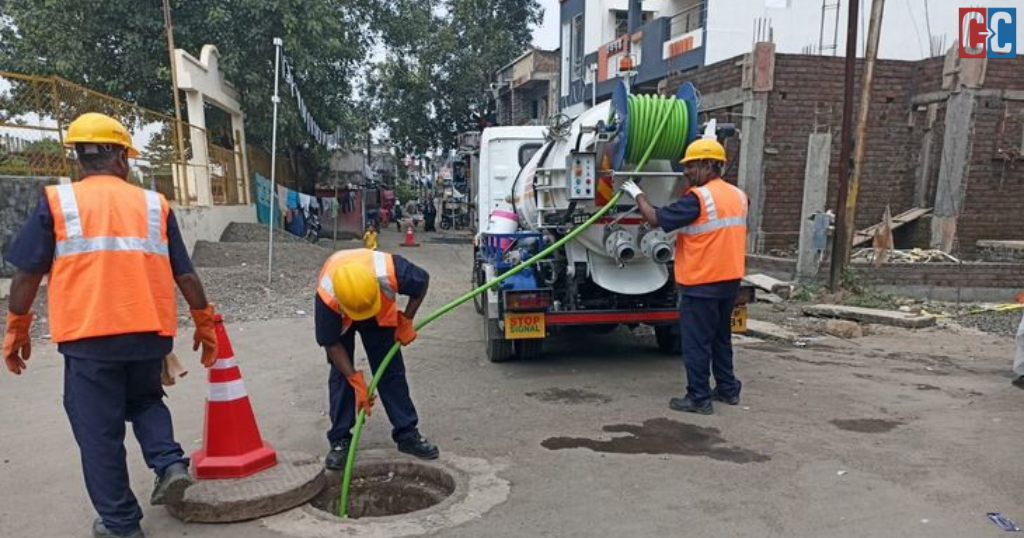
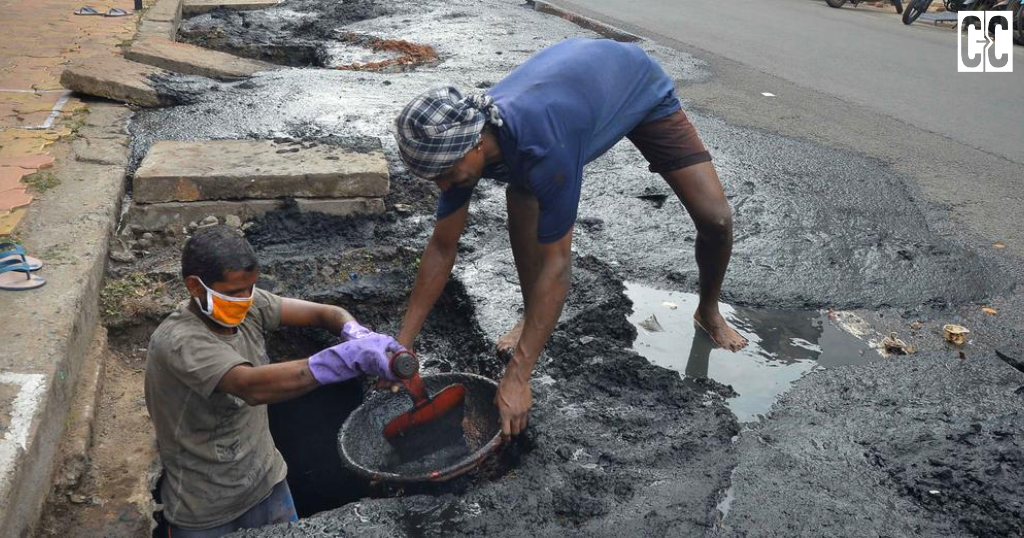
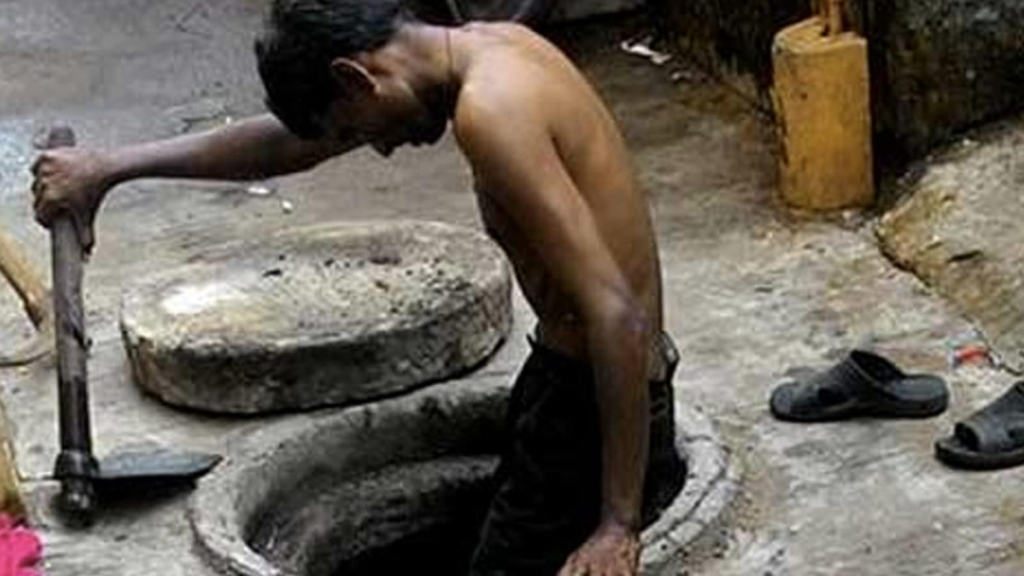
One line in the announcement carries more weight than its engineering register suggests: the project will fund technology to eliminate hazardous manual sewer inspections. Tamil Nadu has more at stake in that sentence than any other state. Parliament has been told that Tamil Nadu has recorded 253 sewer and septic-tank deaths since manual scavenging was banned in 1993 — the highest toll of any state in the country. Nationally, 498 workers died cleaning sewers and septic tanks between January 2019 and June 2026 alone, per data the social justice ministry gave the Lok Sabha. Most belonged to Dalit communities long confined to sanitation work, a pattern Bezwada Wilson, convenor of the Safai Karmachari Andolan and a Ramon Magsaysay awardee, has spent decades protesting. The fix, he insists, is not invention: “technology is already available; India just has to adapt it” to the country’s drains.
BY THE NUMBERS
| 498 | sewer and septic-tank deaths recorded across India, January 2019 – June 2026 |
| 253 | of those deaths were in Tamil Nadu alone — the highest toll of any state |
| 89,915 | sewer and septic-tank workers profiled under the NAMASTE mechanisation scheme |
| 6,000+ | manholes cleaned by Kerala’s Bandicoot robots since 2018, across 19 states |
Sources: Lok Sabha replies via Outlook India; NAMASTE scheme data; YourStory.
The government’s own mechanization drive, the National Action for Mechanized Sanitation Ecosystem, has profiled nearly 90,000 sewer and septic-tank workers since its 2023 launch, funding protective gear, health insurance, and machinery subsidies — but it sets no deadline to end manual entry altogether. The Supreme Court has been more exacting. Its 2023 ruling in Dr. Balram Singh v. Union of India raised compensation for sewer deaths to ₹30 lakh and directed that manual cleaning stop even where municipalities outsource it to private contractors. The National Human Rights Commission has since pressed for state-level pilots deploying robotics on sewer lines — precisely the category of technology Chennai’s project now proposes to fund.
India already has a homegrown answer. Bandicoot, a spider-shaped robot that clears maintenance holes without human entry, was built by Thiruvananthapuram startup Genrobotics and has cleaned over 6,000 maintenance holes across nineteen states since 2018. Its maker now exports the machine to Malaysia and is courting buyers across the Gulf, Southeast Asia, and Africa. “Many developing nations face sanitation challenges similar to India’s,” says CEO Vimal Govind. A technology built to correct a distinctly Indian caste injustice is becoming an export product, even as India’s own cities have struggled to deploy it at the scale their death toll demands.
Chennai’s ring main borrows from an older template. London’s Thames Water Ring Main, an 80-km closed loop completed in 1993, has supplied millions of residents for three decades on the same principle Chennai now plans to use citywide. The engineering leap is real, and the comparison holds. What remains untested is whether the same urgency reaches the sewer side of the network, where it is workers, not water pressure, that carries the risk.
CLIMATE-RESILIENT WATER FINANCING: INDIA AND BEYOND
| Project | Financier | Investment | Reach |
| Chennai Climate-Resilient Water Security & Sewerage Project (2026) | ADB | $230 million | 4.5 million residents; India’s first citywide ring main |
| Tamil Nadu Climate Resilient Urban Development Program (2023) | World Bank | $300 million | 2 million residents across 21 urban local bodies |
| Chattogram Hill Tracts Water & Sanitation Project, Bangladesh (2023) | ADB | $90 million | 3 towns; climate and gender-equity design |
| Meghalaya Community-Based Water-Harvesting Project (2024) | ADB | $50 million | 532 storage facilities across 12 districts |
| Thames Water Ring Main, London (1993) | Thames Water, UK | £248 million | 5.5 million residents; 80-km closed loop |
Sources: ADB; World Bank; Engineering Timelines.
The loan secures the pipes. Whether it also secures the people who are meant to keep them clear is the part of this story that hasn’t been financed yet — and the part Clear Cut will be watching as the project moves from signature to shovel.
Clear Cut WASH Desk
New Delhi, UPDATED: August 25, 2026 18:30 IST
Written By: Yatharth Pathak