
- IIM Calcutta Innovation Park (IIMCIP) has supported over 2,000 start-ups through mentorship, seed funding and market access, with a strong focus on grassroots and underserved entrepreneurs.
- Its programmes support rural women, Northeast India start-ups, social enterprises and cleantech ventures, aiming to create jobs, scale local businesses and advance inclusive entrepreneurship.
Most people picture a business school as a place that produces bankers and consultants. IIM Calcutta has quietly built an incubator that has helped launch more than 2,000 start-ups. Many of them are run by people who have never set foot inside an IIM classroom. The rural women in Jharkhand, tribal entrepreneurs in Meghalaya and 1st-generation founders from Assam and Arunachal Pradesh have all walked through its doors. Since it began in 2014, the IIM Calcutta Innovation Park (IIMCIP) has become India’s busiest engine for turning small, grounded ideas into working businesses.
What IIMCIP Actually Does
IIMCIP is a not-for-profit arm of IIM Calcutta, set up to support entrepreneurs solving real, everyday problems. It offers mentoring, seed funding, and help getting into markets. Of the more than 2,000 start-ups it has worked with, 136 have received direct seed funding. Together, those ventures have raised over ₹2,000 crore in follow-on investment and now have a combined valuation of nearly ₹8,000 crore. The founders behind them work in areas as varied as farming, healthcare, clean energy, and handicrafts.
Reaching Where Other Incubators Don’t
IIMCIP’s real difference shows in where it chooses to work. It runs dedicated programmes for Northeast India, a region most investors overlook. It has launched a three-year incubator with the Jharkhand State Livelihood Promotion Society to support rural women entrepreneurs across all 24 districts and 264 blocks of the state. The organisation says it has already helped create 59 women entrepreneurs it calls ‘Crorepati Didis,’ local women whose businesses have crossed the crore-turnover mark.
A Different Kind of North East Push
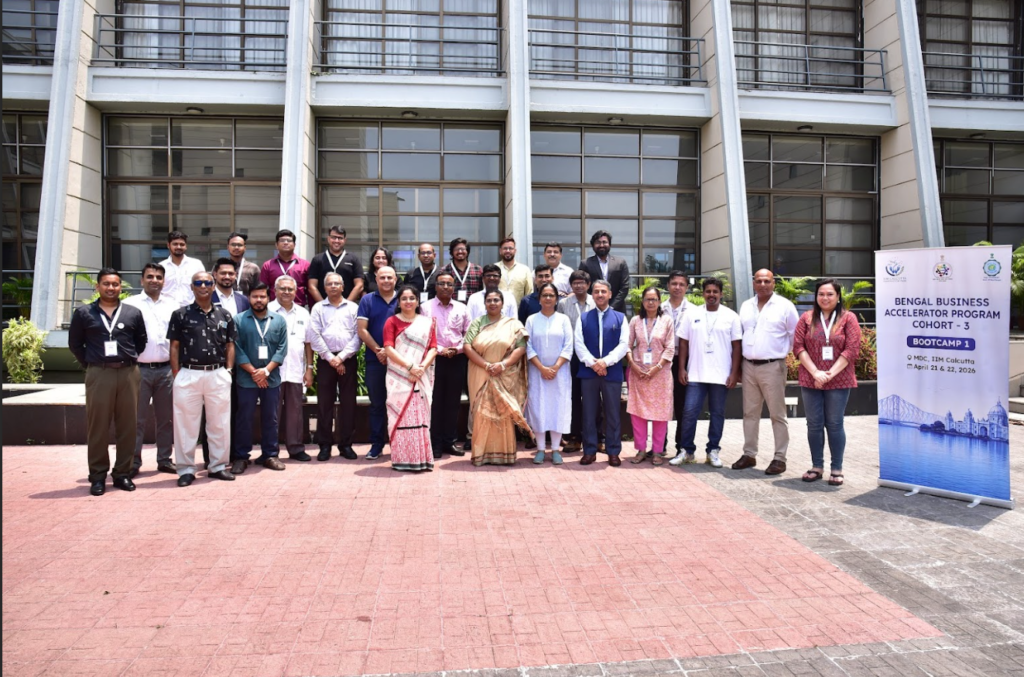
Under its Prakriti Incubation Launchpad- a project with Pernod Ricard India Foundation, IIMCIP has recently supported 12 start-ups of the circular economy across the North East region out of the 36 shortlisted start-ups teams. These start-ups together employ 295 people, including 185 women. On the one hand, these start-ups aim for over 15 crores in total revenue over the next three years; this itself serves as a small but visible sign of the shift of CSR funds from event grants to structured, results-monitored incubation.
Money with a Mission Attached
In 2025, IIMCIP set up a ₹50 crore fund dedicated purely to cleantech and sustainability start-ups, covering clean energy, climate resilience, and waste-to-value ideas. It has also partnered with corporates such as Daimler India Commercial Vehicles to run social impact bootcamps, most recently backing five social enterprises working in electric mobility, the circular economy, and sustainable agriculture with grants of up to ₹20 lakh each.
A Billion-Lives Ambition
Under a sweeping “Mission 2047” to impact 10 billion lives by 2047 (the century mark of Indian independence), IIMCIP has audacious ambitions. This involves growing its women and rural entrepreneurship initiatives, broadening its footprint in the eastern region and the Northeast, raising a greater amount from CSR Funds, philanthropists, and private investors – an ambitious target for an organisation that began with a few mentors in one city.
Why This Model Matters Beyond Kolkata
India has no shortage of start-up accelerators, but very few are built specifically for founders without urban connections or elite degrees. IIMCIP’s own numbers, over 35,000 jobs created and roughly 450 rural enterprises scaled, suggest that a business school’s brand and mentorship network can be redirected toward the country’s most overlooked entrepreneurs, if an institution chooses to do it deliberately rather than by accident.
The Way Forward
The addition of IIM names alone would be sufficient for any incubator to find refuge within the comfortable start-up enclave of Kolkata. Rather, IIMCIP elected the more challenging route: it decided to build first in Jharkhand’s villages and now in the hills of Meghalaya, in the forgotten corners of the country where support for entrepreneurship seldom reaches. The choice is important and deserves further monitoring – and it should be matched with more than just celebrations.
Clear Cut Startups Desk
New Delhi, UPDATED: August 25, 2026 09:00 IST
Written By: Tanmay J. Urs