- Navalt, founded by Sandith Thandasherry, is transforming India’s water transport with solar and electric vessels that reduce diesel use and carbon emissions.
- From the Aditya solar ferry to cargo, defence and fishing boats, the company is expanding clean maritime technology across India.
- Navalt’s next challenge is scaling production and making clean vessels affordable for wider adoption.
Sandith Thandasherry grew up watching diesel ferries cut through Kerala’s backwaters, leaving fuel slicks on water that was otherwise pristine. Years later, as a naval architect trained at IIT Madras, he decided that contradiction was solvable. Today his company, Navalt, builds the solar and electric vessels reshaping how India moves people and cargo across water, without burning a drop of fuel.
From Ship Design to Boat Building
Sandith’s path into maritime tech started in his twenties. After completing his naval architecture training, he spent years working in South Korean shipyards, learning from some of the world’s largest naval shipbuilders. In the late 2000s, he founded Navgathi, a ship design firm aimed at making vessels more fuel-efficient. A chance opportunity through that work led his team toward an entirely new challenge: building India’s first solar boat.
That opportunity became Navalt, which Sandith founded in 2013 in Kochi. He put in roughly three to four crore rupees of his own savings, supplemented by contributions from friends and family, to get manufacturing off the ground. Four years of development followed before the company had something ready to show the world.
Aditya: India’s First Solar Ferry
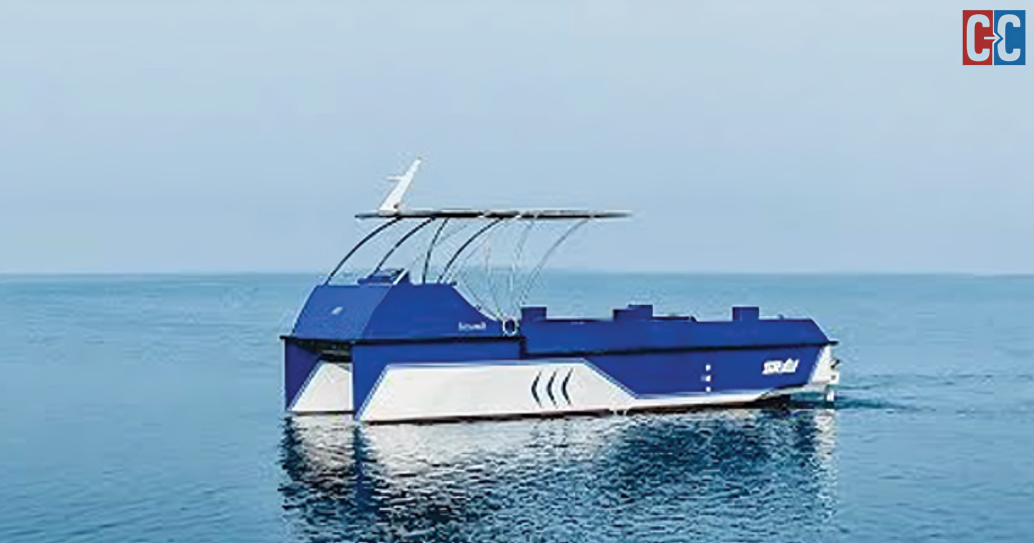
In January 2017, Navalt launched Aditya, India’s first solar-powered ferry, connecting Vaikom in Kottayam with Thavanakkadavu in Alappuzha. The vessel was inaugurated jointly by Kerala Chief Minister Pinarayi Vijayan and then Union Minister for Power and Renewable Energy Piyush Goyal, in partnership with the Kerala State Water Transport Department.
The results were immediate. Within its commercial first year operation, Aditya carried 500,000 passengers across the backwaters, covered 20,000 kilometres, and did all of it without consuming a single drop of diesel. That translated to roughly 35,000 litres of fuel saved and close to 94 tonnes of carbon dioxide avoided in just twelve months. The ferry reached financial breakeven in 2019 and has been generating profit for the Kerala government ever since.
Sandith has framed the achievement in plain economic terms, explaining in his writing that Aditya’s success and the impact it created generated significant interest across the rest of India and in other countries with abundant sunlight. The ferry went on to win the Gussies Electric Boat Award in 2020 for the world’s best electric ferry, recognition that validated what Sandith had been arguing from the start: clean technology and commercial viability are not opposites.
Engineering Built In-House, Partnerships Built Abroad
Navalt did not build its technology in isolation. The company partnered early with the French solar boat specialists Al ten Systems, blending European ma r i n e engineering precision with Indian manufacturing cost advantages. Sandith has noted that aside from imported lithium cells, nearly everything Navalt produces is made in India, a point he returns to when discussing the company’s manufacturing philosophy. The Kerala government has remained a consistent partner through this growth. Sandith has acknowledged that support directly, saying the state government has been very forthcoming about adopting solar ferries, with plans at one stage to introduce thirteen more vessels into its fleet.
Beyond Ferries: RoRo Vessels and Defence
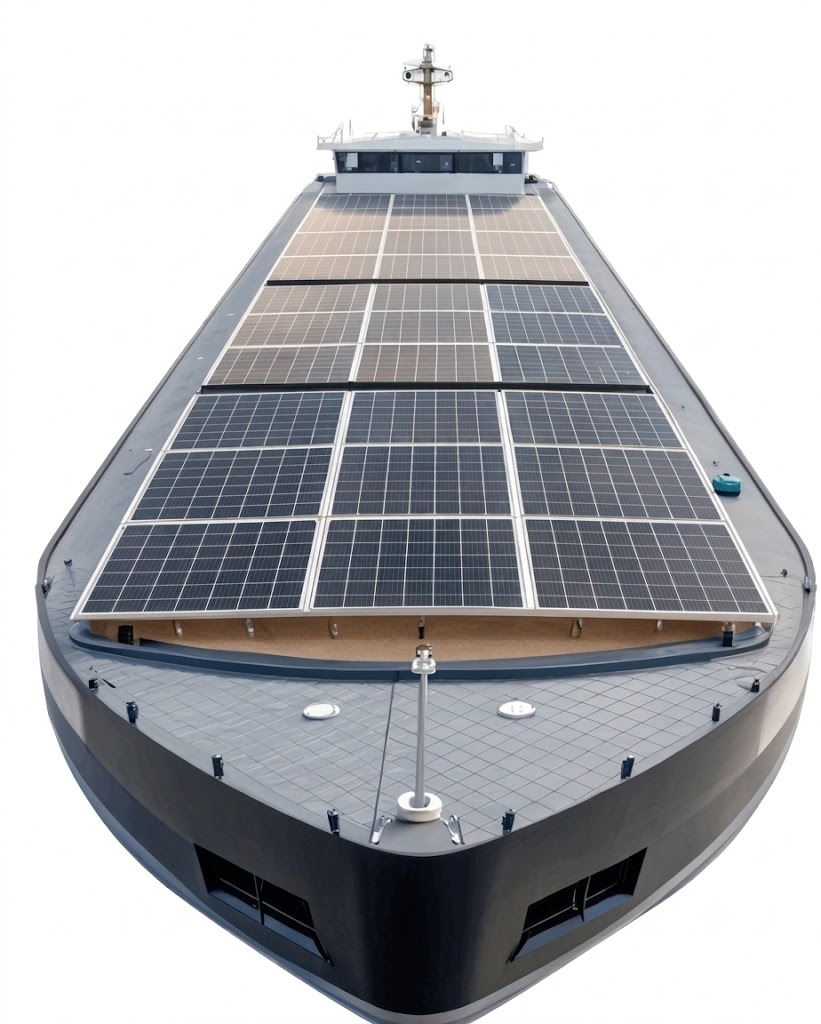
Navalt has not stayed confined to passenger ferries. The company is now building large-format Roll-on Roll-off vessels for Kerala’s State Water Transport Department, each capable of carrying four 40-foot container trucks or 30 cars in a single trip. Sandith has described this as one of the first of the company’s newgeneration vessel categories, explaining that Navalt is moving into sea-going and speed boats capable of 15 knots, with highspeed foiling vessels targeting 35 knots next in line, using hydrofoil technology to cut drag and improve energy efficiency in real-world coastal conditions.
The company has expanded into defence and security vessels as well, alongside cruise boats, fishing boats, water taxis, and dredgers. To date, Navalt has manufactured roughly 80 vessels deployed across 11 Indian states, and has exported boats to Canada, Israel, the Maldives, and Seychelles.
Solving for Fishermen, Not Just Ferries
One of Navalt’s more ambitious bets is on India’s fishing sector, where more than 200,000 diesel vessels currently operate. Sandith has broken down the economics for fishing communities in detail, explaining that a diesel boat typically costs around three lakh rupees, usually pooled from three or four families, while annual diesel costs run another three to three and a half lakh rupees given rising fuel prices. A solar boat, by contrast, carries a one-time cost of about 18 to 20 lakh rupees without subsidy, recoverable within four to five years, with the goal of bringing that price down to 10 to 12 lakh rupees once the sector scales and receives policy support.
That last point points to a recurring frustration for Sandith. Even with international recognition, he has been candid that the company faces real headwinds from the policy side, the kind of regulatory and subsidy gaps that slow the adoption of clean maritime technology even when the economics already favour it.
Funding and Where the Company Stands Today
\Navalt has grown steadily without chasing the kind of headlinegrabbing funding rounds common in India’s startup scene. The company’s investor base includes BanyanTree Finance, Action For India, the Shell Foundation, D Labs, and the Kerala State Industrial Development Corporation. It raised a private equity round in mid-2025, and reported annual revenue of roughly 17 crore rupees for the financial year ending March 2025, with a workforce of around 85 to 125 people depending on the reporting period.
Why Navalt Matters for India’s Tech and Climate Story
Navalt sits at an intersection that India’s tech narrative often overlooks: hardwareheavy, climate-focused, manufacturingled innovation happening the usual outside software and fintech corridors. The company’s bet is straightforward. Clean propulsion does not have to mean a financial sacrifice for operators, and once that is proven at scale, the shift away from diesel becomes an economic decision as much as an environmental one. With the Inland Waterways Authority of India pushing harder on water transit and cities like Varanasi and Kolkata exploring expanded ferry networks, Navalt’s next phase will test whether a Kochi-built solar boat company can become the backbone of a much larger shift in how India moves across its rivers, backwaters, and coastlines.
A Model for Hardware Startups Outside the Metro Bubble
Most of India’s celebrated tech success stories come out of Bengaluru, Gurugram, or Mumbai, built around software, fintech, or consumer internet models that scale through code rather than steel and circuitry. Navalt breaks that mould. It is a manufacturing company, headquartered in Kochi, competing globally in a category that demands deep engineering expertise, regulatory navigation, and patient capital. That combination is rare in Indian entrepreneurship, where hardware ventures often struggle to find investors willing to wait years for a single vessel to prove its economics.
Sandith’s own framing of the company’s ambition reflects that long view. He has compared Navalt’s goal to what Tesla did for road transport, arguing that once a technology demonstrates it can outperform the incumbent on cost and reliability, there is no remaining reason for operators to keep building the old, polluting alternative. For a country with thousands of kilometres of navigable rivers and coastline, much of it still served by ageing diesel fleets, that comparison carries real weight.
The bigger test now is execution at scale. Building one award-winning ferry is a proof of concept. Building hundreds of vessels across passenger transport, cargo, defence, and fishing, while keeping costs low enough for fishing families and state transport departments to adopt without heavy subsidy, is a different challenge entirely. Navalt’s next few years, particularly its push into high-speed foiling vessels and large-scale RoRo cargo ships, will determine whether the company moves from celebrated first mover to the default standard for clean water transport in India and beyond.
Clear Cut Startups Desk
New Delhi, UPDATED: August 23, 2026 16:00 IST
Written By: Tanmay Urs