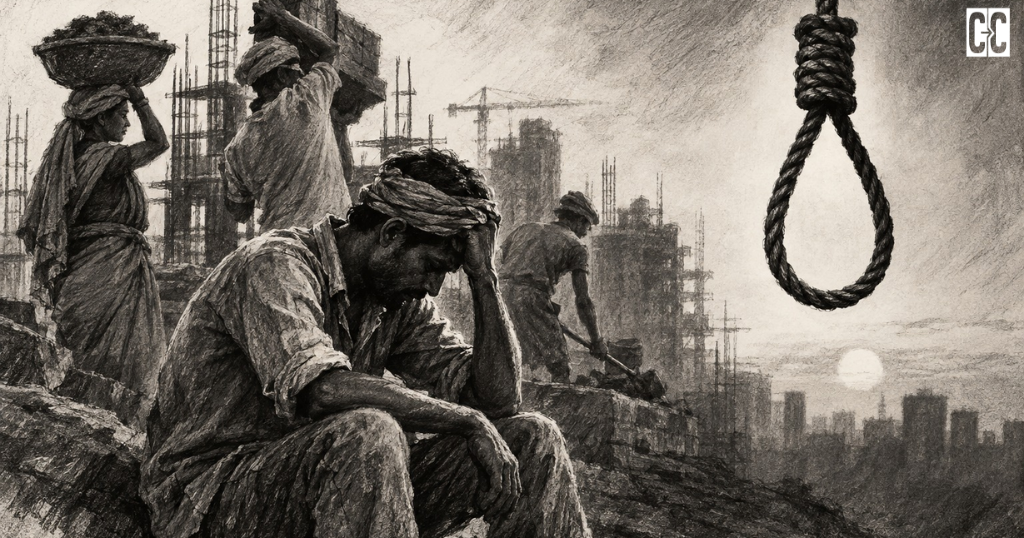

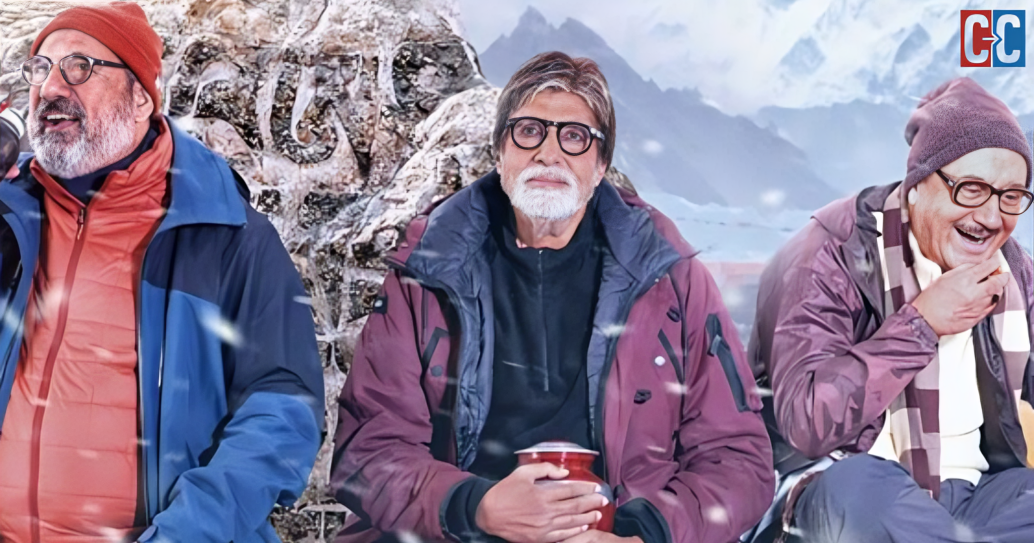
- Uunchai highlights friendship, loss and the importance of continuing to pursue dreams even in old age.
- The article explores the challenges faced by senior citizens in India, including loneliness, health issues, financial dependence and neglect.
- International Senior Citizens Day reminds us to support older people and ensure they do not have to face ageing alone.
On August 21, the world observes International Senior Citizens Day. It is not the kind of occasion that usually dominates headlines. There are no grand celebrations attached to it, no constant reminders on television or social media. It often passes quietly. And perhaps that is precisely why it matters.
India is home to over 150 million people aged 60+ (as of recent estimates), and this number is projected to cross 300 million by 2050. Because somewhere in every neighbourhood, an older person is spending the day much like any other. Maybe they live alone. Maybe their children are in another city or another country. Maybe they are waiting for a phone call that may or may not come. Maybe they have simply grown used to the quiet. It is easy to let days like this remain symbolic. But this year, there is a reason to pause and think about what ageing really means. In 2021, over 10% of India’s population was aged 60+, and this share is rising due to lower mortality and increasing life expectancy.
One film that offers an unusually honest starting point is Sooraj Barjatya’s Uunchai (2022), starring Amitabh Bachchan, Anupam Kher, Boman Irani and Danny Denzongpa.
A Story About Friendship, Loss and One Last Dream
At the heart of Uunchai are four lifelong friends in their late sixties and seventies: Amit Shrivastava, Om Sharma, Javed Siddiqui and Bhupen. They have spent decades together. They have shared jokes, arguments, memories and the ordinary routines that make a friendship last a lifetime. But their lives change suddenly when Bhupen dies.
Before his death, Bhupen has one final dream. He wants to go to Everest Base Camp. When he is no longer able to do it himself, he asks his three friends to carry his ashes there. The request sounds almost impossible.
The three men are not young adventurers. Their bodies have slowed down. Their families worry about them. They themselves are aware of their limitations. Yet, somehow, they decide to go. What follows is not simply a story about reaching a mountain. It is a story about what happens when people who have spent much of their lives fulfilling responsibilities finally ask themselves a question: What do I still want to do for myself?
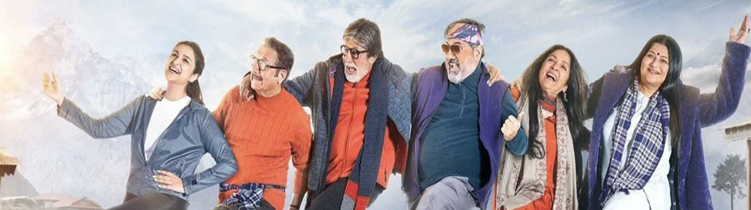
The journey brings them face to face with grief, fear, physical weakness and old memories. Along the way, they are joined by Javed’s wife Sabina and Amit’s old acquaintance Mala. Together, they become part of a journey that is as much about coming to terms with the past as it is about reaching Everest Base Camp.
Interestingly, the idea behind the film had existed for more than sixteen years before it finally reached the screen. Writer Sunil Gandhi had first shared the concept with Sooraj Barjatya in 2006: four friends from Delhi, all above sixty, one of whom dies, leaving the others to fulfil his dream of trekking to Everest Base Camp.
It took years for the story to come alive. And when it finally did, it was led by Amitabh Bachchan, who was himself around eighty when the film was made. Something is fitting about that. A film about ageing, dreams and the refusal to be written off was being brought to life by actors who had spent decades in an industry that often celebrates youth above everything else.
The Reality Behind the Film
It would be easy to watch Uunchai as a feel-good story about three energetic older men climbing a mountain. But the film becomes more meaningful when we look beyond the mountains. Because beneath the humour, the arguments and the beautiful Himalayan landscapes is something many older people experience every day: the fear of becoming invisible. The fear that the world has moved on. The fear that one’s usefulness has ended. The fear of being remembered only as someone’s parent or grandparent, rather than as a person with desires, frustrations, ambitions unfinished dreams.
India is already home to more than 150 million older people, and that number is expected to rise sharply in the coming decades. By 2050, the country’s elderly population could cross 300 million. That means ageing is no longer a concern that can be pushed into the future. It is already a reality for millions of families. Loneliness is one of the most difficult parts of that reality to measure. Studies on ageing in India have found that a significant number of older adults experience frequent loneliness, with the problem becoming even more pronounced among widowed people, live alone, have poor health or lack regular social interaction.
Nearly 19% of elderly women and 5% of elderly men live alone, while around 30% show signs of depression and 8% suffer from major depression. This highlights how loneliness is widespread but often invisible, especially among widowed women and those without regular social contact. Many older adults experience loneliness quietly—eating alone, watching TV all day, or avoiding calls to not seem “demanding.”
The challenges of ageing are often not one large crisis. They are a series of smaller difficulties that gradually become part of everyday life.
The body changes
Arthritis, diabetes, heart disease and other chronic illnesses become increasingly common. Mobility becomes more difficult. A simple visit to the market or a hospital may require planning. For many older people, managing medication itself becomes a daily task. Some are taking several medicines at the same time, each with its own dosage, timing and cost.
More than half (54%) of elderly Indians from two or more chronic diseases like diabetes, hypertension, heart disease, or bone and joint issues. This shows why managing health becomes a daily challenge, with multiple medications, doctor visits, and mobility issues shaping everyday life. Over half (52%) of older people face difficulties in performing basic daily activities.
Financial dependence: Around 70% of India’s elderly are dependent on others, and 65% report feeling financially insecure. Only 29% of elderly Indians access any form of social security like pensions or provident funds, and onethird have no income at all.
Healthcare Inaccessible: Nearly half (48%) of all health spending in India comes out of patients’ own pockets, and 79% of the elderly rely on government hospitals for care. This shows why healthcare is not equally accessible, especially for rural or low-income seniors who face transport, cost, and accompaniment barriers. More than 6% of elderly have reduced meal size due to financial stress, and over 4% have gone an entire day without eating.
Neglect often remains invisible
Financial exploitation, emotional neglect and abuse of older people are frequently under-reported. Many elderly people do not speak about what they are experiencing, either because they fear losing support or because they do not want to create conflict within the family. None of these problems are presented through dramatic speeches in Uunchai. Instead, they appear in quieter ways. A character who becomes irritable.
Someone who withdraws Someone who hides loneliness behind humour. Someone who has lost a partner and is unsure what life is supposed to look like afterwards. These moments feel real because they are ordinary. They are not exaggerated villains or dramatic tragedies. They are the everyday experiences of growing older.
The Mountain Is More Than a Mountain
The trek to Everest Base Camp is the central challenge in Uunchai. But the mountain itself becomes a metaphor for something much larger. Ageing is often treated as a process of reduction.
Less energy. Less mobility. Less independence. Less relevance. Society can quietly begin to expect less from older people. Their lives become organised around what they cannot do anymore.Uunchai challenges idea. It does not pretend that ageing is easy. The characters struggle. They get tired. They argue. Their bodies remind them constantly that they are no longer young.
But the film also asks a simple question: Why should growing older mean giving up on every new dream? The answer is not that every elderly person needs to climb a mountain. The point is that the choice should still belong to them. For one person, the dream may be travelling alone for the first time For another, it may be starting a small business, learning a musical instrument, making new friends, volunteering, returning to education or simply living independently. Ageing should not mean that life stops offering possibilities.
The Journey Continues
The final lesson of Uunchai is not that old age can be defeated. It cannot. The body changes. People we love leave us. Some dreams remain unfinished. There are limits that cannot simply be overcome through determination. But growing old does not mean that a person has reached the end of their journey. There are still roads to take.
People to meet. Memories to make. And, sometimes, mountains to climb. This August 21, perhaps the most meaningful way to observe International Senior Citizens Day is not by posting another message about respecting the elderly.
Perhaps it is by actually reaching out. Call an elderly parent, relative or neighbour. Visit them if you can. Share a meal. Ask them what they have been thinking about. And if they still have a dream, do not dismiss it simply because they are old.
Sometimes, it is simply a steeper part of the same journey. And no one should have to make that journey alone.
Clear Cut Health, Gender Desk
New Delhi, UPDATED: August 29, 2026 09:00 IST
Written By: Muskan Pal
Designation: Communication Manager at Devinsights