- Nadhi-SheForClimate is helping women enter India’s climate and clean energy sector through community-building, skill development, mentorship, fellowships, and career opportunities.
- The platform aims to address women’s underrepresentation in climate leadership by creating stronger professional networks and practical pathways into climate careers.
- Its work also highlights the need for employers and policymakers to track and improve gender representation across India’s climate sector.
At the 29th UN Climate Conference in Baku, only 8 of the 78 world leaders present were women, i.e half as many as the year before. The gap is not unique to global summits. In India’s own climate and clean energy sector, women remain strikingly underrepresented in leadership roles, even though women and girls make up roughly 80 percent of people displaced globally by climate change. Shalini Bharat set out to close that particular gap in February 2024 with Nadhi-SheForClimate, a women-led platform built not as another networking group, but as a structured pathway into climate careers.
Community, capability and careers
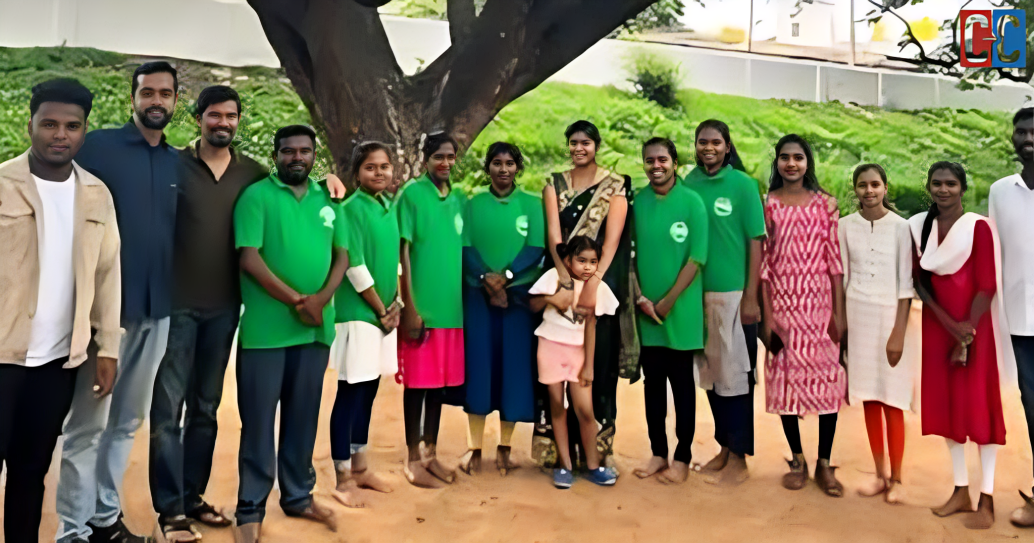
Nadhi describes its own model in three stages: building community through city chapters, building capability through structured learning and mentorship, and finally building careers through fellowships, job connections, and entrepreneurship support. The organisation now runs active chapters in Mumbai, Pune, Bengaluru, Delhi-NCR, and Chennai, with a growing membership that had crossed 900 members by the time of Climate Week India 2025.
Session coverage
Nadhi’s workshops range from the circular economy and ESG reporting to the practical mechanics of entrepreneurship, pitching for funds, validating a product, and taking it to market. It is deliberately less about climate activism and more about climate employability, equipping women who want to work in sustainability with the specific, often technical, skills that hiring managers in the sector actually look for. The organisation is careful to describe its membership as open to women, trans, and non-binary people alike, and free to join, on the reasoning that a cost barrier at the door would undercut the very inclusion the platform exists to build.

Research backing the movement
In partnership with ClimateHires, Nadhi undertook what it describes as the first research effort to map the intersection of women and climate careers in India, covering current participation statistics, what motivates women to enter the field, and the obstacles they run into while transitioning. The findings feed directly back into the organisation’s own programming, rather than sitting as a standalone report nobody acts on.
Part of a wider wave
Nadhi is not working alone in this space. Groups like Women and Climate and WarriorMoms have built parallel communities, the latter reportedly helping a woman in an Odisha village file a formal complaint over coal dust from a passing train affecting her children’s health. Government-level panels, including senior women officials from West Bengal, Bihar, Kerala, and Tamil Nadu, have also begun highlighting how gender-responsive state climate policy translates into concrete results, such as rural women in West Bengal driving the planting of 150 million mangrove saplings.
The isolation women still describe
Founders in this space describe a specific, recurring frustration: women in climate leadership positions often carry the bulk of the work while receiving little of the recognition, and the few who do reach senior roles frequently describe feeling isolated once they get there. “Even if they do most of the work, they get least recognition. They are also missing from leadership roles,” as one climate professional put it. Building a peer network across city chapters, Nadhi’s founders argue, is partly a direct response to that isolation, not just a career-skills exercise.
Future perspectives
The climate sector likes to talk about diversity as a nice-to-have. The data on displacement alone should settle that argument: women bear a disproportionate share of climate change’s damage, yet remain locked out of the rooms where climate decisions get made. Nadhi’s bet is that fixing this requires infrastructure, mentorship pipelines, city chapters, career pathways, not just goodwill statements at conferences. The next step belongs to India’s climate employers and policymakers: publish gender-disaggregated hiring data for climate and sustainability roles, the way BRSR now demands ESG disclosure, and make women’s underrepresentation in this sector as visible, and as accountable, as any other climate metric that gets tracked.
Clear Cut Climate, Gender, Livelihood Desk
New Delhi, UPDATED: August 29, 2026 18:30 IST
Written By: Tanmay J. Urs