- India’s rice fields are crucial for food security but also produce significant methane emissions, making paddy cultivation an important climate challenge, especially in eastern India.
- AWD, DSR and SRI can reduce methane emissions, but wider adoption will require changes in farming practices, subsidies, procurement policies and farmer incentives.
The Rice Paradox
More than one billion people in India depend on rice fields for their sustenance. They also are becoming one of the most intractable climate issues on earth. The same flooded and glistening paddies that contribute to food security and export economics are also extracting a greenhouse gas – one that is 25 times more efficient than CO₂ over a 100-year time frame. Methane doesn’t make the news headlines like carbon dioxide, but it is a growing argument that it’s the fastest lever we must slow up near-term warming, particularly the rice belt in India is on the map, and it has a lot to do with methane.
How Much Methane Are We Talking About?
The figures are hard to pin down but it’s always going up.
In an analysis of published field measurements that looked at the methane emissions from rice cultivated in India, 726 measurements were collected, with the estimate of methane from Indian rice cultivation increasing from 3.7 million tonnes in 1966 to 4.8 million tonnes by 2017. A more recent study in 2025, based on a satellite-based Global Rice Paddy Inventory, published in Earth’s Future, estimated the methane emissions from rice in India in 2022 to be 6.5 (±1.0) million tonnes, as the second largest emitter of rice-related methane in the world after China at 8.2 million tonnes. The five countries make up about 78% of the total global methane emissions from rice cultivation: China, India, Bangladesh, Vietnam and Thailand.
One such widely quoted estimate indicates that India’s paddy emissions, from fields, are estimated to be at approximately 3.9 million tonnes per year, which is nearly the total methane emissions from Germany. The differences in the estimates are not an indication of poor science, but instead reflect a variety of datasets, emission factors and methods, and researchers warn against comparing the estimates directly to determine trends. Whether they’re on the rise or on the decline, one thing is clear: more acres under water, more fertilisers, more unpredictable monsoons and more methane.

India was the third biggest emitter of methane after China and the US, accounting for 31 million tonnes of methane emissions annually, mostly from agriculture including rice and livestock and with crop-residue burning listed as one of the fastest-growing sources of the emissions, a report released by the UN Environment Programme (UNEP) at COP30 in November 2025 but zooming out to the overall picture of India’s methane emissions.
Why Eastern India in Particular?
According to a 2025 study published in the journal Nature Food, GHG emissions from paddy fields around the world have almost doubled since the 1960s and identified eastern India as one of the rising GHG hotspots globally, particularly Odisha. The researchers pointed out that this disturbing trend in soil behaviour has been observed, as the world’s paddy soils became a net carbon sink between 1961 and 1980, sequestering approximately 289 million tonnes of CO₂-equivalent per year. In the 2010s, over a third of the world’s paddy fields were part of a net C source rather than net C sink. Under the study, the annual paddy methane emission is projected to increase by about 25% by 2031 and 31% by 2050 due to the changing climate, given by the temperature rise and the irregular rainfall and higher use of agricultural inputs.
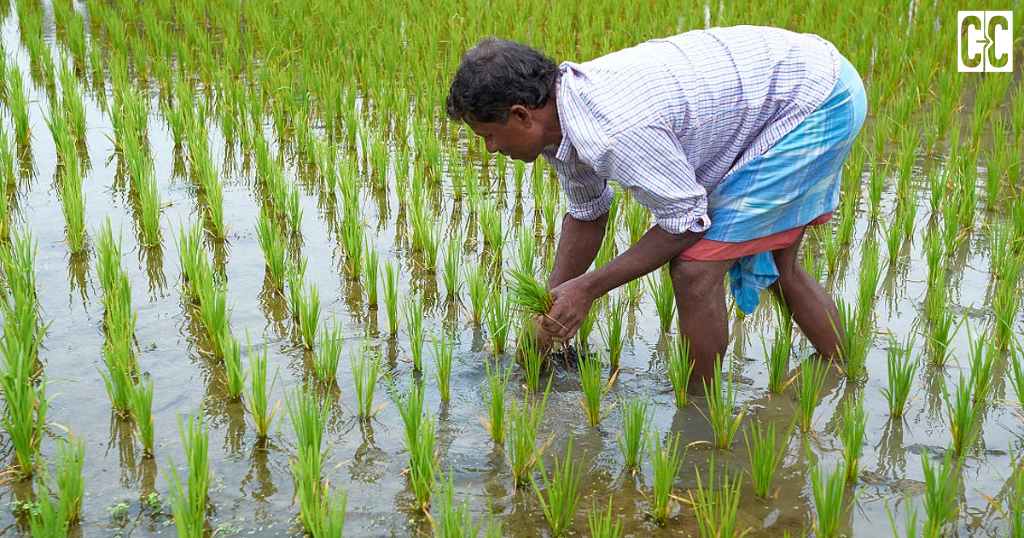
The chemistry is very simple. Rice is cultivated in submerged conditions and flooded ground lacks oxygen. There, the anaerobic conditions allow the methane-producing bacteria known as methanogens to decompose organic material, producing methane as a byproduct which bubbles up through the water and emerges through the rice plants. The more a field is flooded, the more methane is generated – the traditional way that most Indian farmers cultivate.
The Policy Bind
That’s where things get ‘political’. Rice is not just a crop in India; it is the mainstay of Public Distribution System and the National Food Security Act providing subsidised rice to hundreds of millions of people. Due to this, agriculture is intentionally omitted from India’s Nationally Determined Contributions (NDC) mitigation targets under the Paris Agreement, and India has not signed on to the Global Methane Pledge, on the grounds that this will impact the livelihoods of small and marginal farmers who rely on assured purchase, minimum support prices, and subsidized electricity and water — all of which, incidentally, also facilitate continuous flooding instead of water-saving cultivation.
The experts have termed the Indian methane profile as a “survival emission” profile, which means, methane from enteric fermentation of livestock and from paddy cultivation under small farms accounts for the bulk of the emission. Those framing the issue: Any viable mitigation effort must safeguard the incomes of farmers and their food security, not reduce a number.
What Can Actually Be Done
Fortunately, the mitigation toolkit for rice methane is fairly mature — the challenge is scale, not science.
- Alternate Wetting and Drying (AWD): Fields are not continuously flooded but instead dry out for a period before re-flooding. Research has been conducted on AWD and estimates have varied from 30% to 70% reduction in methane emissions, with some meta-analyses suggesting up to 87–93% reductions under optimal conditions, usually without any yield loss and in some situations significant water savings.
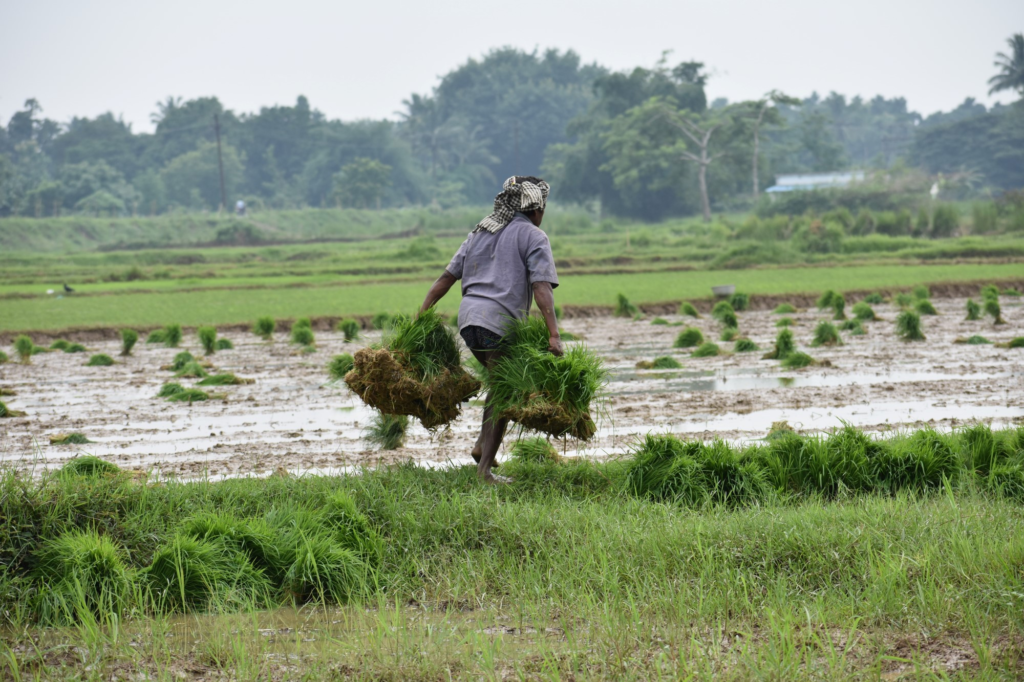
- Direct-Seeded Rice (DSR): Avoiding the transplanting step into flooded fields and direct seeding can cut methane emissions by up to 40% and cut down the irrigation requirement and labour cost.
- In various trials, using SRI (SRI) with wider plant spacing, younger seedlings with an intermittent irrigation system can reduce methane by 40-60% and increase yields by 15-25%.
- Crop diversification schemes: Reducing paddy and substituting it with millets, pulses, oilseeds or maize in areas not adequately suited to paddy cultivation, but adoption rate is low due to the preference for rice cultivation, as reflected in MSP and procurement guarantee.
- Beyond that is a range of tools, including the input management of Nano and neem coated urea, Soil Health Cards, PM-PRANAM scheme, reduced tillage and improved management of straw/biochar, with the newest potential source of financing being the carbon-credit scheme for uptake of AWD.
The catch with almost every one of these is the same: they’re labour-intensive, require training and behaviour change, and run up against subsidy structures that make flood-irrigated paddy the path of least resistance for farmers. Even a full-scale rollout of best practices, researchers note, might only trim global rice methane emissions by around 10% by mid-century — a sobering reminder that this is a slow, structural problem rather than a quick technical fix.
The Bottom Line
India’s paddy fields are a delicate balance between two fundamental necessities for India, without any compromise: feeding its over one billion population and climate commitments. The science is now clear that the rice belt of eastern India is a real hotspot and will only grow hotter. The solutions are available and proven at pilot level (AWD, DSR, SRI), but scaling up to the national level will require a rethink of not only the subsidy regime, but also of procurement incentives and farmer economics. But it is more of a policy and political-economy challenge than a technology challenge and the way India approaches this challenge in the coming decade will have far reaching consequences beyond its own boundaries since India produces a significant proportion of the world’s rice methane.
Clear Cut Climate Desk
New Delhi, UPDATED: September 05, 2026 10:50 IST
Written By: Subhanshu Jaiswal
Designation: Assistant Manager – MLE at Devinsights