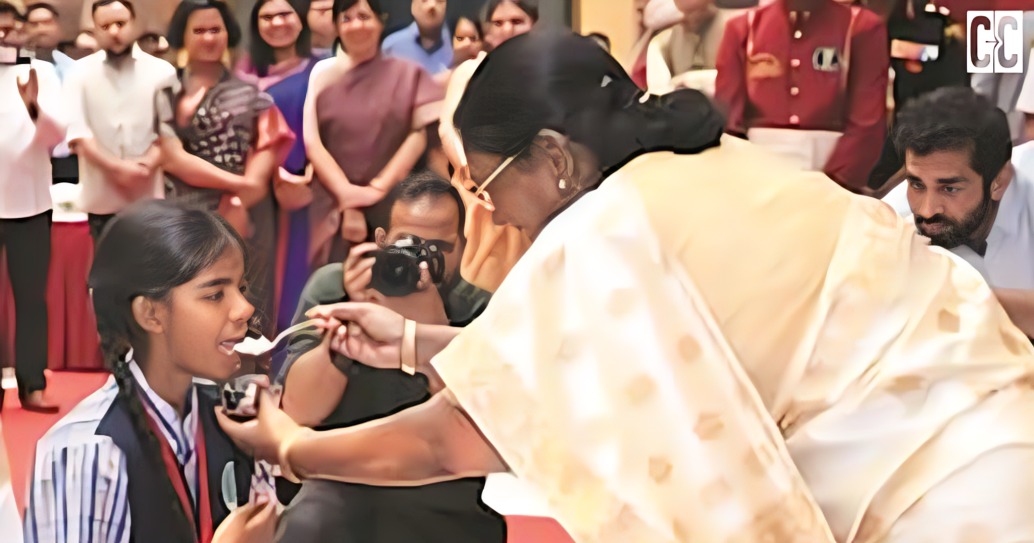


- Tanuj Samaddar’s Action for a Resilient Tomorrow (ART) has positively impacted over 800 students and improved school attendance in rural Kamrup, Assam.
- His work combines community engagement, teacher capacity building and education-focused interventions, showing the potential of youth-led social change.
Most people at 21 are still deciding what to do with their degree. Tanuj Samaddar, at the same age, was already a two-time President’s Awardee, a published author, a Fellow of the Royal Society of Arts, the CEO of a media house, and a Commonwealth Scholar. He was also running Action for a Resilient Tomorrow, or ART, a social impact initiative operating in the field with real students in rural Kamrup, Assam, at a time when most conversations about ‘youth-led change’ remain confined to panel discussions at urban conferences. By 2026, ART had positively impacted over 800 students and demonstrably increased school attendance in communities where it worked.
What ART does in Kamrup
Action for a Resilient Tomorrow focuses on improving educational access in underserved regions of Assam, operating with a combination of in-person community engagement, teacher capacity building, and attendance-focused interventions. The programme specifically targets villages in rural Kamrup where dropout rates and irregular attendance have persisted despite government school infrastructure being technically available. By working with existing school systems rather than building parallel structures. ART’s model is designed to be sustainable without requiring ongoing external management. It is a choice that reflects Samaddar’s explicit interest in institutional resilience rather than donor-dependent programme delivery.
The fellowship that backed it
ART is supported by the Billion Acts Peace Fellowship, an international fellowship programme that backs young social activists working on peace-building, equity, and sustainable development. Samaddar is one of the youngest Indians to have been recognised under this framework. The fellowship provides both funding and mentorship connections, linking young social entrepreneurs with global networks of practitioners and policy advocates who have navigated the same challenges of operating at the intersection of community need and institutional inertia.
A media house as a social tool
Samaddar’s other significant initiative is the media organisation he runs as CEO. It is a platform oriented toward public policy research and social journalism rather than mainstream entertainment content. His India CSR profile notes his background in public policy research, suggesting a deliberate design in which the media house functions as a research and advocacy complement to ART’s on-ground education work. It generates evidence, raises policy questions and reaches audience that on-ground community work alone cannot access. The combination reflects a maturing understanding of how grassroots change and communications infrastructure reinforce each other.
Recognition that came early and why
Being named to The Entrepreneur Bytes Top 30 Under 30 list, being a Fellow of the Royal Society of Arts, and receiving two President’s awards at 21 are unusual enough to invite scrutiny rather than simple admiration. What the record actually shows is an individual who has built a verifiable track record across multiple domains such as field education work, published authorship, institutional fellowship, and media leadership. The Commonwealth Scholarship is competitive and peer-reviewed. The RSA fellowship is awarded on demonstrated contribution. The President’s award criteria require documented achievement. Samaddar’s recognitions are not self-claimed.
The Way Forward
India’s development sector tends to take youth-led change seriously as a slogan and lightly as an operational reality. Funders extend small, time-limited grants to young social entrepreneurs and then expect systemic change before the first monitoring report is due. Tanuj Samaddar’s work in rural Assam is a reminder that the combination of genuine youth energy, intellectual rigour, and fellowship support can produce real, measurable results in the time most organisations are still designing their theory of change. The specific policy asks here is straightforward: India’s CSR framework and its government-run social innovation programmes should both create explicit, multi-year funding pathways for young social entrepreneurs under 25, with patient capital terms that match the timescale of community change rather than the timescale of quarterly reporting cycles.
Clear Cut Education Desk
New Delhi, UPDATED: September 13, 2026 09:00 IST
Written By: Tanmay J. Urs