
- India is ageing rapidly as migration, urbanisation and the shift from joint to nuclear families reshape traditional systems of elderly care.
- Older people, especially women in rural areas, face growing gaps in daily support, companionship and access to care.
- The article examines why India needs a stronger elderly-care ecosystem that protects dignity, independence and wellbeing.
India has the world’s largest youth population, with nearly two-thirds of us under 35. We repeat that statistic often, and we usually stop there. The other half of it is that India is ageing faster than at any point in its history. Indians above sixty numbered 14.9 crore in 2022 and will reach ≈ 35 crore by 2050, more than one in five of us. By 2046, for the first time, India will have more people above sixty than children below fifteen. We are the world’s youngest country and one of its fastest-ageing, and almost all of our attention is on the first half of that sentence.

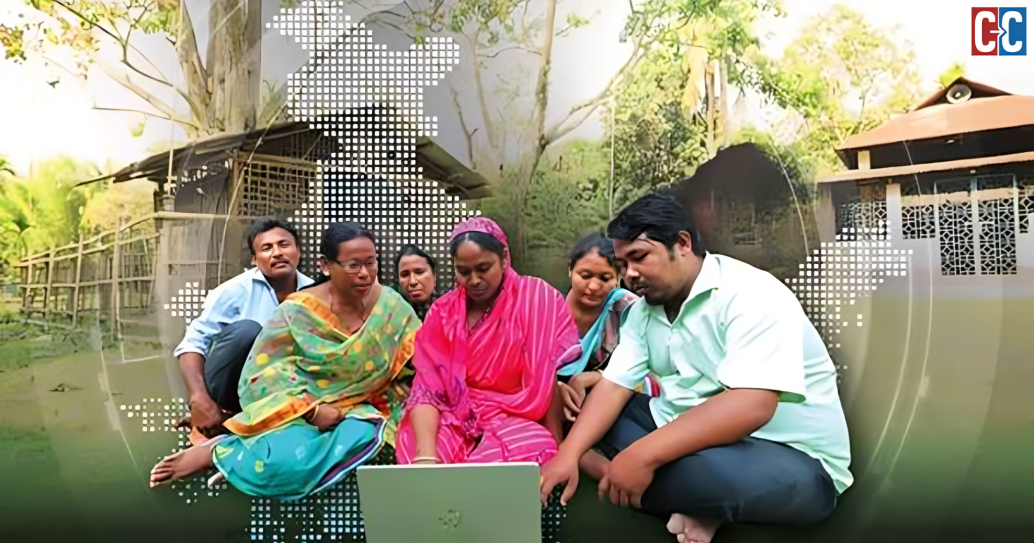
The government has been pushing hard, and rightly, for youth employment and job creation. It is part of every major economic discussion and every election promise. But that push has a social consequence we rarely discuss. Young people are moving out of villages into cities, and increasingly out of the country altogether, chasing opportunities their hometowns simply cannot offer. Moving with them is something older than any economic plan: the traditional Indian household itself, dissolving from joint families into nuclear ones, leaving villages full of elders and empty of the young. Economists call it the ‘ruralisation of ageing’. Over 70% of India’s elderly live in rural areas; the young they raised increasingly do not.
For as long as anyone can remember, growing old in India carried a quiet dignity. The elder was not a dependent to be managed but the moral centre of the household, the keeper of memory, the settler of disputes, the first voice at every ritual. Care did not need to be organised, because it was woven into the day itself. The shift to nuclear families has unwoven that fabric, and it must be said clearly that nobody broke it out of cruelty. The young left because they had to. Their towns could not employ them; the cities could, and increasingly another country offers what no Indian city can. More than 1.8 crore people born in India now live abroad, the largest emigrant population in the world, and behind a great many of them is a pair of ageing parents organising their evenings around a call from another time zone.
I overheard my father saying what my grandfather once said to him: “We were cared for by you, but who will take care of you?” It was not a question about money. He had seen, ahead of the rest of us, what was on the horizon.
What families provide is a collection of small, everyday acts done with love and attention: accompanying a parent to the doctor, noticing a subtle change in health, simply being present in the house and giving it life. Gerontologists call this the informal care layer. Most Indians just call it living together. The need for it is not sentimental. Data from the Longitudinal Ageing Study in India finds that one in four Indian elders needs help with daily activities, and nearly half struggle with tasks like cooking, shopping, managing medicines or handling money.
This is the layer that migration has stripped away, and nothing has been built in its place. The older adult left behind is rarely destitute in the way our welfare schemes imagine. The bank account may be fine, the roof may be solid. What is gone is the human infrastructure of ageing, the witness and the companion. The elderly household has been split into two halves: financial support that may arrive from far away, and daily care that arrives from nowhere.
The cost of that split shows up in places nobody is looking. The same survey finds that close to 30% of India’s elderly show symptoms of depression, and about 8% meet the criteria for probable major depression. Fewer than 1% have ever been diagnosed. More than nine out of ten depressed older Indians carry it unnamed and untreated, because screening for it is nobody’s job and nobody is present to notice.
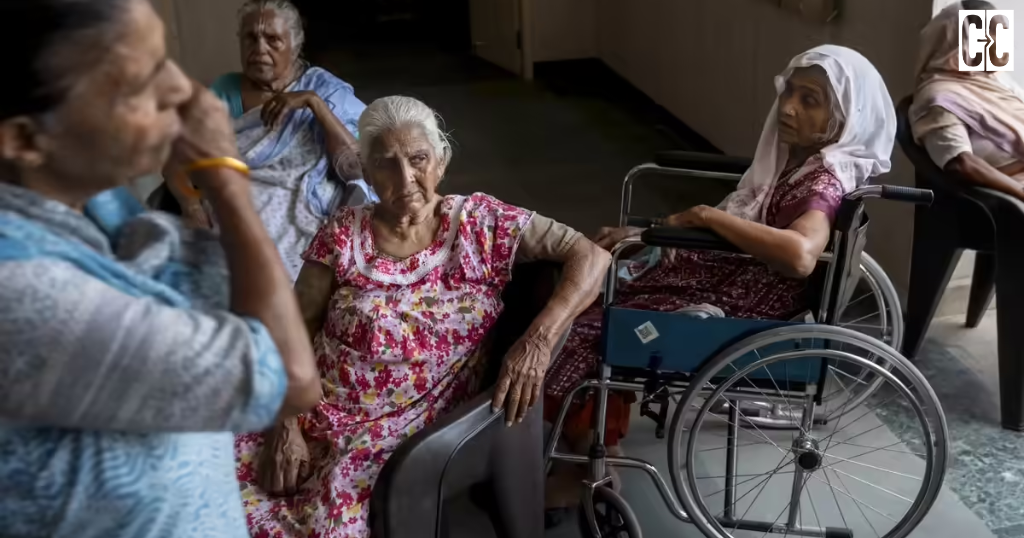
The burden falls hardest on women. Because women outlive their husbands, India’s oldest citizens are disproportionately widowing, around 30% of older women against 10% of older men, and the share climbs steeply with age. Most of them have no income or assets of their own, and their children have left for brighter prospects. The UNFPA’s India Ageing Report calls this the ‘feminisation of ageing’. The loneliest years of Indian life belong, overwhelmingly, to older women.
So, are we keeping up with our own changing society? The honest answer is no. Care in the next generation will not always mean living together, but it will mean emotional availability and decisions that put an elder’s dignity at the centre. That much families can work out for themselves. The rest is a public responsibility, and here technology is not the answer people hope it is. A video call can reduce isolation. It cannot sit in a waiting room, and it cannot notice what an ageing parent has stopped mentioning.
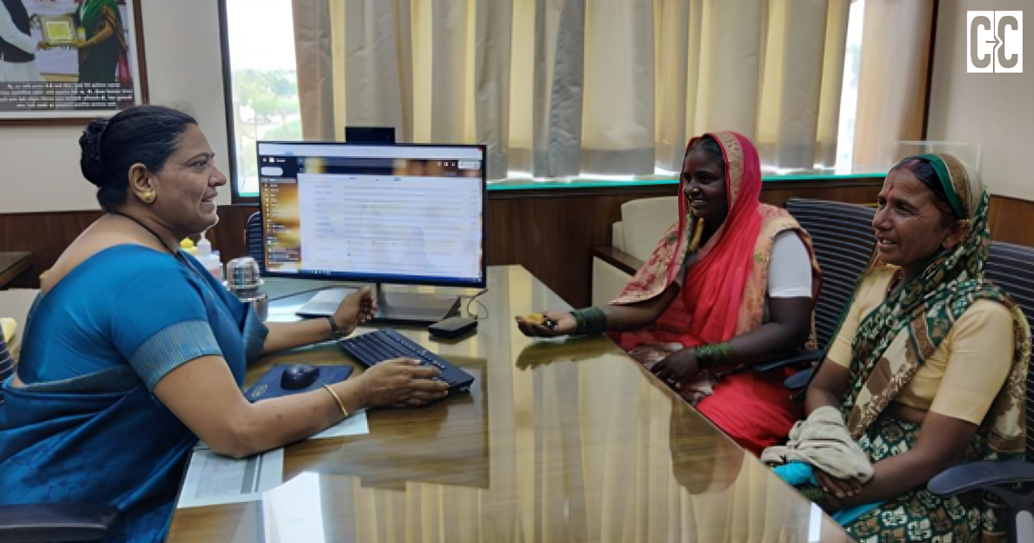
It is not as if the government has turned a blind eye. India does have laws for its elderly, and the Maintenance and Welfare of Parents and Senior Citizens Act is a serious one, making a child legally answerable for a parent’s upkeep and giving many older Indians a way to claim it. But laws of this kind are designed around financial support, which is not where the gap just lies today. What is required now is an ecosystem that allows an elderly person to remain at home and still be looked after: day care within reach, trained caregivers who can be called on, community centres that give the day some shape, and someone whose job it is to check on those living alone. India has not legislated for any of that yet; our national programmes will need far more geriatric depth than they currently carry, and we have no trained care workforce to deliver it.
There is one flicker of recognition, and tellingly, it comes from the state whose population grew old first. Kerala, where one in five people is already over sixty, has created India’s first dedicated department for elderly welfare, with plans for day-care centres, parks and fitness facilities to support independent living, and a statewide survey of its senior citizens. It is a beginning, born exactly where the crisis matured earliest.
The rest of India is a couple of decades behind Kerala demographically. We should not choose to be equally behind its conscience.
Clear Cut Livelihood, Research Desk
New Delhi, UPDATED: September 21, 2026 12:50 IST
Written By: Sankalp Purwar
Designation: Chief Business Officer, CRID India