
Harish Hande’s SELCO India pioneered a financing-first solar energy model, using a social enterprise approach to expand clean energy access in rural and underserved communities. Through SELCO Foundation and its wider ecosystem, the model continues to influence off-grid solar and last-mile energy solutions.
In the early 1990s, Harish Hande was midway through a PhD in energy engineering in the United States when a trip to the Dominican Republic inspired hope and admiration. He saw solar lighting transforming households in communities poorer than most in rural India, and returned home convinced that the same technology, financed the right way, could do more to reduce poverty than most aid programmes he had studied.
Selling light, not charity
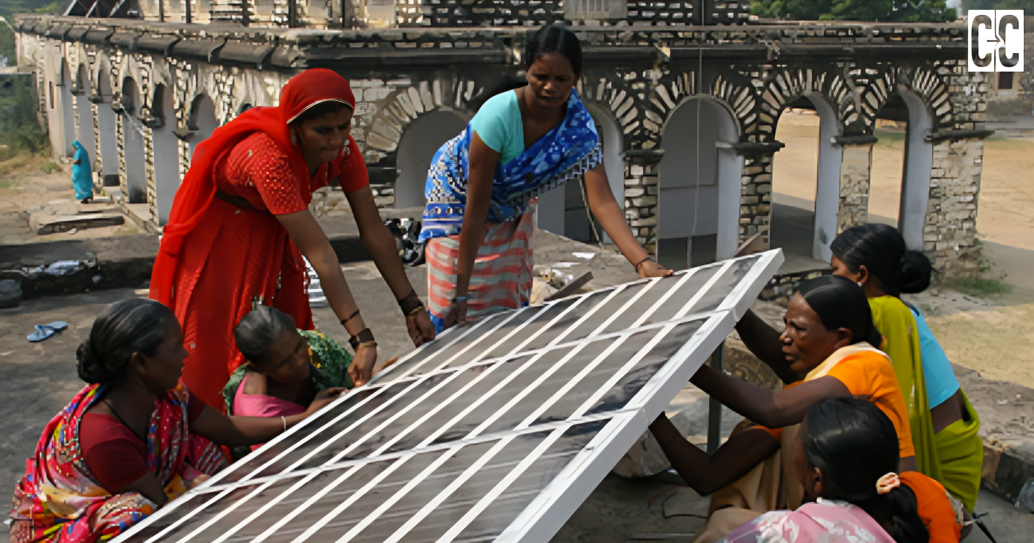
In 1995, Hande co-founded SELCO India as a for-profit social enterprise, deliberately rejecting the charity model. He reasoned that free or donated solar systems tend to go unmaintained, while something a family pays for gets looked after and repaired. He personally installed the first 1,000 home lighting systems himself before SELCO built out a network of local Energy Service Centres that sell, install, and service solar systems, financed through tie-ups with local banks and micro-finance institutions rather than one-off subsidies. This innovative approach aims to build trust and confidence in sustainable solutions for the audience.
From a company to an ecosystem
By 2010, satisfied that the commercial model worked, Hande set up SELCO Foundation as a separate, open-source, not-for-profit platform to spread the underlying approach beyond what one company could deliver alone. The Foundation focuses on integrating solar energy into livelihoods, healthcare and education infrastructure. A subsequent incubation arm, launched in 2012, supports other clean-energy entrepreneurs seeking to reach underserved markets, and an impact fund established in 2016 provides patient capital to last-mile energy enterprises.
The scale is reported in two ways.
Figures on SELCO’s total reach vary depending on which arm of the organisation and which year is being cited, and a fair account should say so plainly. SELCO India’s own account describes installing more than 210,000 solar home lighting systems directly through its commercial arm over roughly two decades. A separate profile compiled for the Skoll Foundation, which awarded Hande its social entrepreneurship prize in 2018, describes SELCO’s direct energy interventions collectively as having reached 7.5 million people. These figures reflect a proud record of sustained growth in off-grid solar access across multiple Indian states, achieved through a financing-first rather than donation-first model, inspiring confidence in the model’s impact.
Recognition and what it signals
Hande’s approach has been recognised well beyond India. He won the Ashden Award twice (2005 and 2007), the Tech Museum Award in 2005, Asia’s Ramon Magsaysay Award in 2011, specifically for putting solar technology into the hands of people with low incomes through a viable business model, and the Zayed Future Energy Prize and the Skoll Award, both in 2018. That breadth of recognition, spanning environmental, entrepreneurship and poverty-focused award bodies, reflects how SELCO’s core insight has resonated across otherwise quite different development fields.
Why the model still matters India’s push toward universal electrification through grid extension has narrowed, but not closed, the case for decentralised solar. Grid connections do not always mean reliable power, and many of the poorest, most remote households remain the costliest and least commercially attractive for utilities to serve well. SELCO’s continuing relevance lies in demonstrating, over the past 30 years, that this “last mile” gap can be closed profitably rather than only through charity or state subsidy. Thus, it is a lesson increasingly being tested by similar enterprises across Sub-Saharan Africa and Southeast Asia, several of which have drawn explicitly on SELCO’s operating playbook.
Clear Cut Livelihood, Climate Desk
New Delhi, UPDATED: September 25, 2026 18:30 IST
Written By: Tanmay J. Urs