
Cities are building toilets from scrap buses and recycled plastic. The harder test is whether dignity reaches the women, transgender persons and informal workers who depend on public sanitation most.
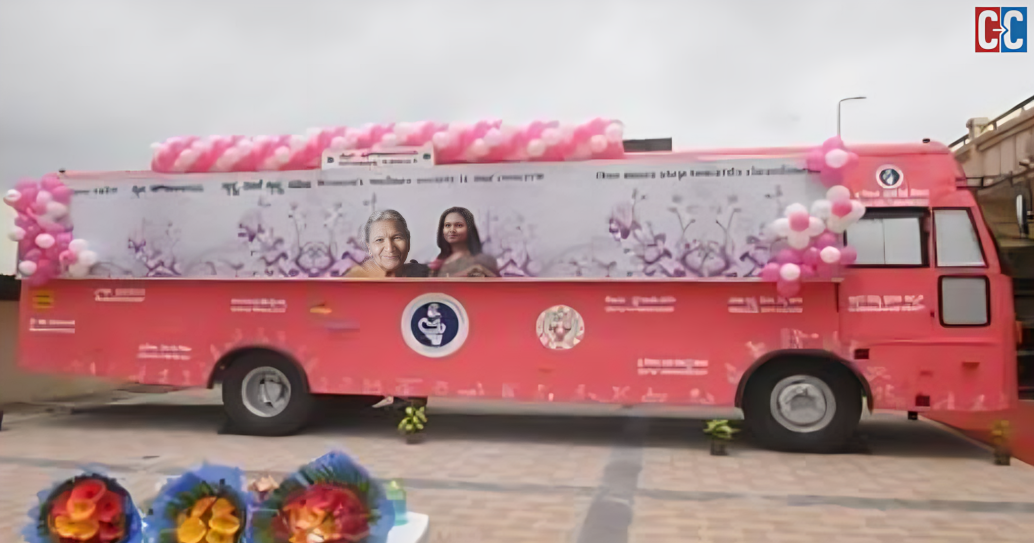
A scrap bus at Bengaluru’s Majestic terminal now serves as a women-only toilet with Indian and Western commodes, a sanitary-napkin vending machine, a burner and a breastfeeding space. In Navi Mumbai, a complex used by 8,000–9,000 people daily is built from 5.3 tonnes of single-use plastic and 11,700 bottles. Both examples are highlighted in a Press Information Bureau (PIB) release titled ‘Dignity by Design‘, illustrating recent efforts to redesign community and public toilets under Swachh Bharat Mission-Urban (SBM-U) and addressing ongoing challenges in sanitation infrastructure.
The scale is considerable. PIB has reported that 6.36 lakh community and public toilets have been integrated under the mission. The focus is now moving from ‘built’ to ‘used’. Toilets 2.0 (begun in 2022) aims to improve quality and experience. We informed Parliament that SBM-U 2.0 also focuses on functionality and maintenance. As given on the mission’s resource hub, the reasoning is: “With the increase in household toilets, a large number of community toilets are either not used or non-functional or misused”.
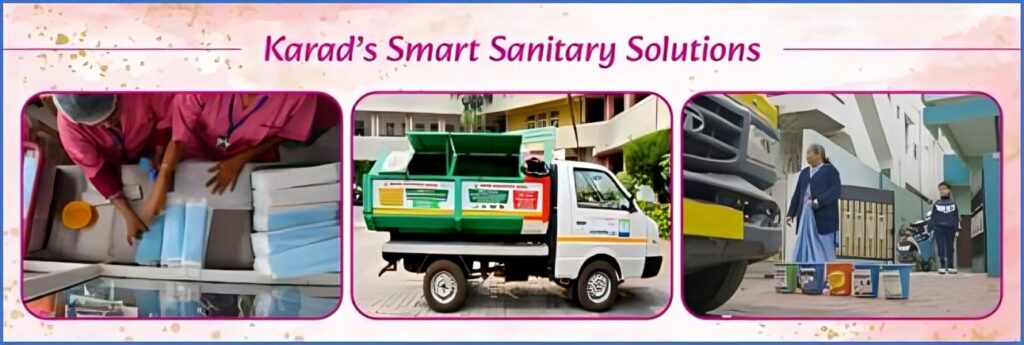
The release examples highlight how inclusive design solutions have been implemented in practice in different locations. Tirupati’s common toilet complex near the railway station caters for men, women, transgender people, Divyang people, and children, with ramps, handrails, and child-friendly fixtures, and 20,000 to 25,000 devotees use it daily. Karad, in Satara district, Maharashtra, shows complete segregation, collection, and processing of around 300 to 350 kilograms of sanitary and biomedical waste daily, with red bins in public toilets, since this is likely to address menstrual waste disposal as a public health concern.
At the Fresh rooms in Bhopal, about 500 to 1,000 tourists pass through each day. They also have touch-free urinals, lockers, and accessible bathrooms. But access to such facilities and funding for their costs can be a concern for policymakers and stakeholders.
The Equity tests
The Sabar Institute, in its 2025 survey with the Azad Foundation, also highlighted that 53% of women find toilets unsafe. This statistic highlights the immediate need for increased safety measures for marginalised communities and to empower women.
Activist Saswati Ghosh told The Wire that women are charged more than men at some facilities. “I have been told it’s because women need water and men don’t,” she said, ironically. The study focused on women in informal work, who are key users of public facilities. Other countries have faced the same design question. After campaigner Xiao Meili’s “Occupy Men’s Toilets” drive began in Beijing in 2012, China’s housing ministry raised the women-to-men ratio of public toilets to 3:2 in 2016, and to 2:1 in densely populated areas. An Asian Development Bank analysis explains the logic: urinals increase men’s capacity, and women take longer, so equal numbers result in unequal waits.
Inclusion can still slip. A 2026 study by Hui Wan and Sarah Dauncey in Social & Cultural Geography found that China’s toilet revolution has often overlooked disabled users, with accessible toilets frequently not a mandatory requirement. Globally, the WHO/UNICEF Joint Monitoring Programme estimates that 3.4 billion people still lack safely managed sanitation.
What to Watch
The total budget for the Swachh Bharat Mission-Urban 2.0 was ₹1,41,678 crore for the period 2021-2026. During the launch, Joint Secretary Roopa Mishra said, “All Indian cities and towns must have functional community and public toilets by 2026 with aspirational toilets located in high footfall areas.” The Toilets 2.0 compendium mentions women-led self-help groups involved in the operation and maintenance of toilets, highlighting the potential and importance of sanitation to women’s livelihoods. In addition, the more instructive indicator of success might not be how many mega-toilets are built, but whether un-ostentatious toilets are provided free or at a price, are safe at night, are easy to get to and are clean. This progress would be harder to gauge – requiring information on tolls, usage, maintenance and cleanliness.
Clear Cut WASH Desk
New Delhi, UPDATED: October 12, 2026 16:10 IST
Written By: Yatharth Pathak