
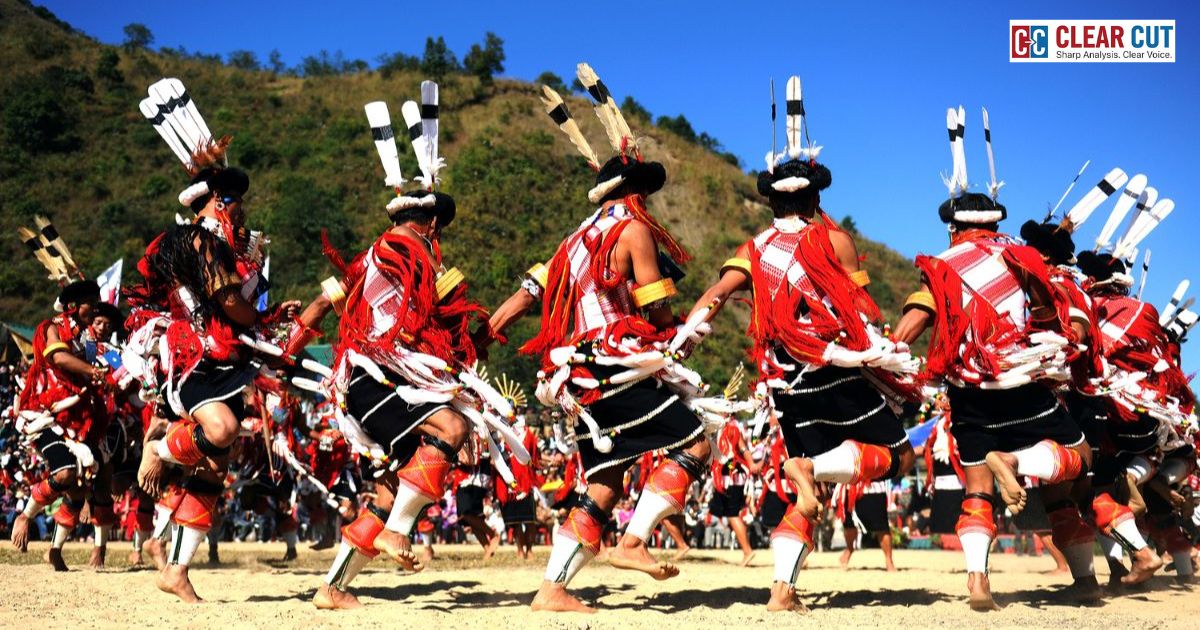
Each year in December, Nagaland’s highlands come alive as different tribal communities, artists, tourists, and entrepreneurs converge into a vibrant ten-day celebration, Hornbill Festival.
It has silently grown to become one of the most important forces for social change in India’s northeast.
Reviving Indigenous Identity and Cultural Dignity
In a rapidly modernizing India, tribal cultures tend to fall from public memory. The Hornbill Festival has become, in a sense, the reclamation of identity. The participation of almost all Naga tribes in merrymaking through their dances, food, handicrafts, and oral traditions revitalizes cultural pride and continuity. Recently, the number of visitors crossed the 200,000 mark, including local residents, students, and increasing numbers of foreign tourists. That level of participation signals that tribal heritage is not just preserved but publicly celebrated.
This active expression of culture creates social cohesion within communities and validates traditions in the broader national narrative. For social-development actors working with indigenous populations, the festival offers evidence that heritage-based programs work not through preservation alone but through participation. When young people from tribal villages see their languages, festivals, and skills valued by thousands of visitors, the message is clear: your culture matters.
Encouraging Foreign Promotion
Foreign government participation has become one of the defining aspects of the Hornbill Festival’s growing international stature. In recent years, missions from countries such as the United States, Germany, Japan, and France have actively engaged through cultural exchanges, exhibitions, and developmental collaborations. The U.S. Consulate in Kolkata and the German Consulate in Kolkata have both supported local entrepreneurship showcases and heritage preservation initiatives during the festival. Similarly, Japan’s cultural mission has promoted traditional art forms and sustainable tourism models, while France has contributed through film and culinary collaborations that highlight cultural inclusivity. These diplomatic efforts deserve praise for going beyond symbolic gestures, creating real partnerships that empower artisans, promote responsible tourism, and generate income opportunities for local communities. Their participation not only strengthens India’s cultural diplomacy but also reaffirms the festival’s position as a global model of how culture can drive social and economic transformation.
Economic Inclusion, Livelihoods and Entrepreneurship
Culture matters, but earning a livelihood is not less important. Here comes the importance of the Hornbill Festival. It brings in good revenue into the economy of Nagaland by linking the tourists with the local artisans, homestay operators, food vendors, craft sellers, and youth performers. Many among them get an entry point into the market. Reports suggest thousands of jobs and good tourist expenditure during the event.
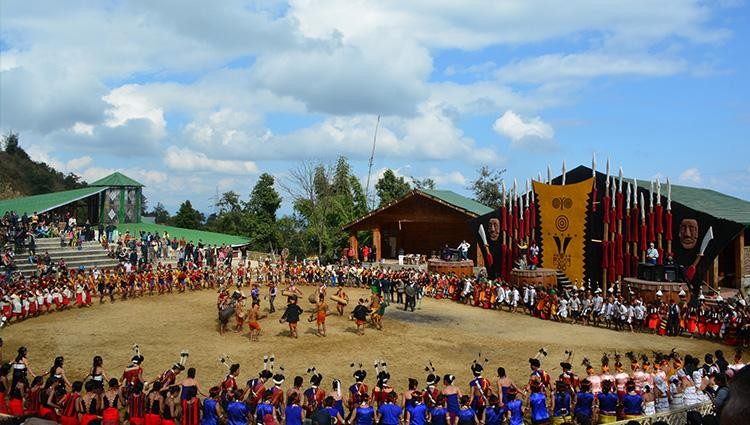
Image Source: Internet
For women-owned crafts cooperatives, for young tribal entrepreneurs managing stalls, and homestay hosts in remote villages, the income spike during the festival opens pathways out of subsistence living. It offers a blueprint for how cultural assets-traditional weaving, bamboo crafts, indigenous food-can transition into entrepreneurial activity. This linkage of heritage to business is of particular significance in social sectors concerned with tribal livelihoods and rural development.
Youth Engagement and Creative Futures
The Hornbill Festival is also a hub for the youth. Workshops on crafts, tribal sports, rock music contests, photography, and storytelling are platforms where youngsters engage actively rather than passively observing. In regions where many youth feel their only future lies in migration, the festival offers an alternative: culture-based enterprise, event-management opportunities, tourism services.
That these experiences happen in the heart of tribal communities means the young people are within their own cultural orbit, not disconnected from their roots. For social-development professionals who are emphasizing skill-building, the festival becomes a model of how to project traditional knowledge into modern contexts and enable young tribal participants to shape their economic futures.
Regional Integration and India’s Social Fabric
The northeast has mostly existed on the fringes of India’s social and economic narrative. The Hornbill Festival changes all that. By hosting thousands of visitors from across India and abroad, and by way of media coverage in which tribal culture is treated as vibrant rather than exotic, it helps knit Nagaland into national and global consciousness.
This works at two levels. It breaks stereotypes and furthers mutual understanding between the northeast and the rest of the country. At another level, it gives tribal communities a visible stake in the national story: their culture, economy and youth matter in India’s future. Social-development thinkers recognize this type of regional empowerment as essential in making any nation truly inclusive.
Challenges: Turning Moment into Movement
There is no automatic transformation. Structural challenges persist within the highly successful Hornbill Festival. A study showed that the majority of tourist arrivals in Nagaland concentrated during December, implying that investments for the rest of the year are not being optimally utilized. Unless diversified, the economic dividends may be short-term rather than long-lasting.
Besides, questions of who benefits persist. Do remote tribal villages receive any income? Are artisans receiving fair prices or crowded out by commercial tourism? Is the festival’s authenticity being threatened by increased consumerism? These issues matter greatly for social sector professionals: if culture is commodified without local control, the gains may be short-lived.
Why This Matters for Social-Sector Work
The Hornbill Festival is a case study in how festivals can go beyond entertainment to become an engine for social development. It shows how heritage can be a foundation for economic empowerment, youth engagement, and regional identity. For practitioners working in tribal welfare, rural entrepreneurship, cultural rights, or tourism-led development, the festival offers a replicable model. At the heart of all this lies a profound lesson: that cultural dignity and social progress may not be in tension; they could actually be reinforcing each other.
Conclusion
From Celebration to Change The Hornbill Festival, set amidst the scenic highlands of Nagaland, shines forth as something more than a cultural event; it’s a social intervention. It shows that progress can be rooted in identity, nurtured by enterprise, and energized by youth. As India strides towards inclusive growth, festivals such as Hornbill remind us time and again that while social transformation often starts with celebration, it must continue with strategy. A festival like this in an age when traditions run the risk of being pushed aside by uniform modernity stands as testimony that cultural heritage can be dynamic, development-oriented, and deeply social.
Clear Cut Livelihood Desk
New Delhi, UPDATED: Nov 04, 2025 04:28 IST
Written By: Janmojaya Barik