


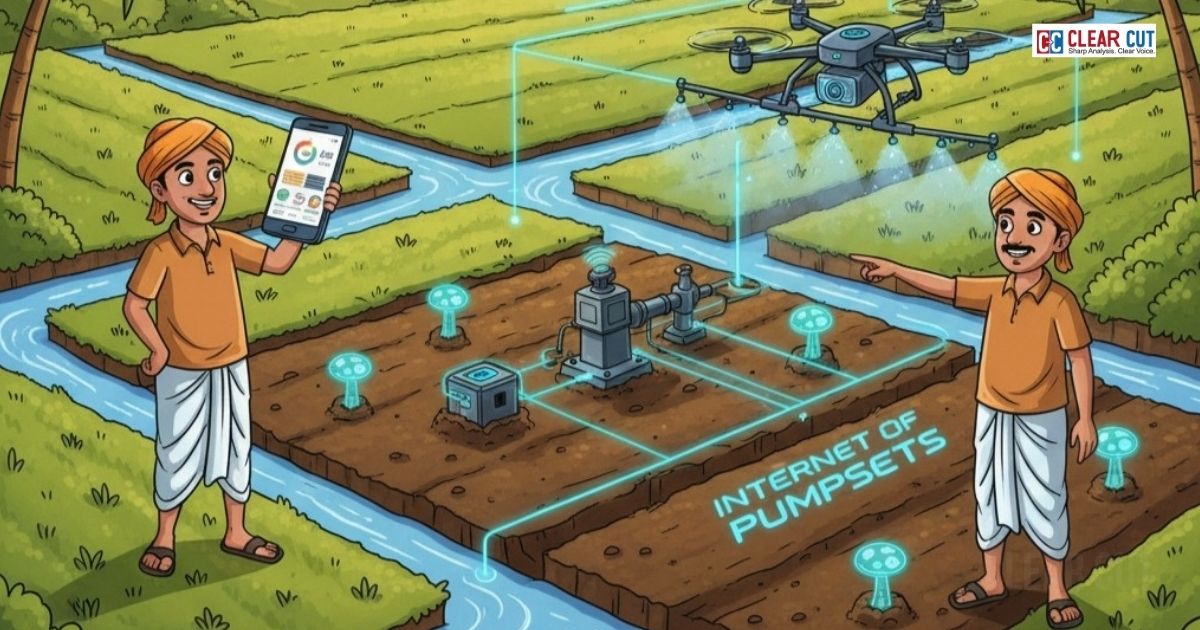
A quiet revolution is taking place in the heart of one of the most agriculture-intensive states in India. Andhra Pradesh, once called the “Rice Bowl of India”, is testing advanced digital machinery in its ag-biosystems sector and this experiment could have implications for the national agrarian landscape.
Based on a recent overview, the government of Andhra Pradesh is running a pilot initiative using, “cutting-edge tech.” This includes AI, drones and IoT (internet-of-things) sensors to monitor crops, optimise inputs and increase yields; this is still developing but the project relates to the wider efforts of the state to digitise agricultural systems and precision-agri approaches.
Why the focus on Andhra Pradesh?
Andhra Pradesh is well placed on metrics of technology adoption; it has multiple agro-climatic zones, a large population of farmers, and an existing policy framework that is open to innovation. In the last few years, Andhra Pradesh has embraced technologies (AI, imagery via satellites, IoT and Block-chain) to modernise agricultural systems. There are also pilot projects noted in government documents including satellite-based estimations of crop area, potential damage, and dashboards for decision-support.
What the pilot aims to do?
The pilot aims to transition agriculture from reactive to predictive practices. Instead of waiting for pests, disease, or drought stress to occur, sensors and AI models will try to detect indicators of impending problems such as water stress or pest invasion, so that farmers can intervene proactively. A related pilot in Andhra demonstrated how a “sowing app” powered by AI assisted groundnut farmers in Kurnool district to increase yields by approximately 30%, with advisories for weather, soil, and planting time.
Additionally, the state has introduced an entirely digital platform – the APAIMS 2.0 (Andhra Pradesh Agriculture Information Management System) which will manage all aspects of farming operations, including seed distribution, subsidies, pest alerts, e-markets, and much more. After Kharif 2025, farmers will not need to complete any offline paper at all in the state.
Technology in the field
Drones: The government has announced it will distribute drones to farmers’ producer organisations (FPOs) with as much as an 80% subsidy. The drones will be deployed to spray fertilisers and pesticides, which can substantially reduce labour and increase speed of operations. For example, spraying an acre takes only about 7 minutes by drone, compared with hours of hand spraying.
IoT & Sensors: Projects have begun to connect sensors to pumpsets (the “Internet of Pumpsets” project) in order to manage water and energy use more effectively for irrigation.
Satellite & AI: Satellite images, drones, and analytics are being used to advance crop-monitoring, damage assessment, and early warning systems, with a hope of moving beyond manual crop-cutting and late damage predictions.
The potential benefits are higher yields, shown in the 30 % increase observed in the groundnut pilot; savings on labour, fertiliser, and water; less waste and faster response; and better engagement in markets using digital platforms. As the Invest India blog on digital agriculture says: there is a national mission (Digital Agriculture Mission 2021-25) that emphasises AI, blockchain, IoT+.
Challenges Ahead
Adoption, however, is not instantaneous. Research suggests that the acceptance of new technology by farmers depends on factors such as cost-benefit analysis, trust, training, ease of use, and access. In a state context, a larger share of small and marginal farmers, the digital divide, low literacy, connectivity challenges, and upfront investment are challenges to overcome.
In Andhra, although many “hi-tech” practices have been started, the NABARD document states uptake has been slower than expected, especially related to post-harvest management and value-addition.
At the policy level, the state achieves real time data on sowing, crop health, inputs used, and yield. That could mean better planning, a more efficient approach to subsidy deployment, and more rapid response to acute stress events such as drought or pest attacks.
Looking ahead
If the trial is successful, Andhra Pradesh may create a model for other states. The combination of digital infrastructure, an agriculture base and government commitment makes it primed for success. The next seasons will be important to observe. Will the platform scale smoothly, especially with APAIMS 2.0? Will farmers across the state actually adopt the technologies or only the early adopters? Will small-holder farmers realize enough of a cost-benefit ratio?
It is also important that the ecosystem (training centers through service providers (drones, sensors, apps) will be developed in a timely and sustainable way. The technology must remain affordable, relevant to farmers locally and resilient to the realities of farming in India (monsoons, small plots, mixed cropping, leaky land titles).
Clear Cut Livelihood Desk
New Delhi, UPDATED: Nov 10, 2025 02:41 IST
Written By: Antara Mrinal
A unique piece of work by Antara!
Written wonderfully! Diagnosed thoroughly all aspects of drone technology in the best possible manner for use in agriculture.
I am much impressed by the conclusion part as it opens the platform and shows the ways for adoption of the technology
Thankyou for your kind words.