
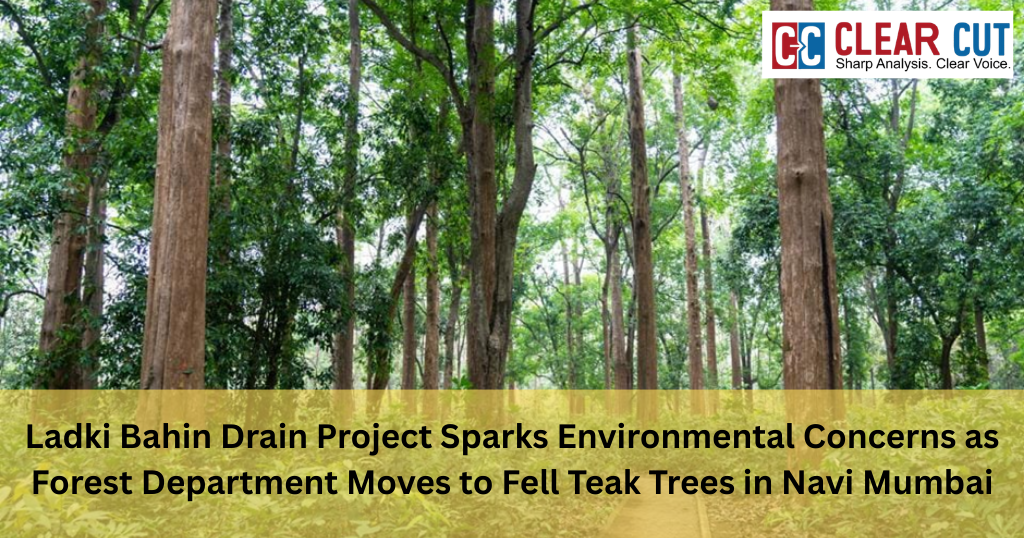
The Ladki Bahin Drain Project in Navi Mumbai aims to improve stormwater drainage and prevent flooding, but requires felling valuable teak trees, raising environmental concerns over green cover and urban ecology.
Key Highlights
• Drainage work under the Ladki Bahin scheme requires felling of teak trees in Navi Mumbai.
• Forest Department initiated tree-cutting process following project clearance.
• State minister Ganesh Naik defended the infrastructure project.
• Environmentalists raised concerns over loss of green cover and ecological balance.
• The issue highlights tension between urban development and environmental protection.
The Ladki Bahin drain project in Navi Mumbai has triggered a fresh debate over development versus environmental conservation. The project, which aims to improve stormwater drainage and prevent flooding, reportedly requires the felling of several teak trees within forest or green belt areas. This has led to criticism from environmental groups and local residents.
In simple terms, the government is constructing a drainage system to improve water flow and prevent waterlogging in parts of Navi Mumbai. However, this construction requires cutting down teak trees managed by the Forest Department. The decision has raised questions about whether infrastructure projects should come at the cost of valuable green cover.
What Is the Ladki Bahin Drain Project?
The Ladki Bahin drain project is a stormwater management initiative designed to improve drainage infrastructure in Navi Mumbai. Officials stated that the project aims to reduce flooding during monsoon seasons and enhance water flow in vulnerable zones.
Urban flooding has become a recurring problem in Mumbai Metropolitan Region due to rapid urbanisation, concretisation, and inadequate drainage networks. Authorities argue that without expanding and modernising drains, residential and commercial areas face serious risk during heavy rainfall.
According to statements made by Maharashtra minister Ganesh Naik, the project serves a public purpose and addresses long-standing drainage challenges.
Why Are Teak Trees Being Felled?
The Forest Department reportedly identified teak trees that fall within the alignment of the proposed drain. Since the drainage channel must pass through certain green belt areas, tree removal became necessary for project execution.
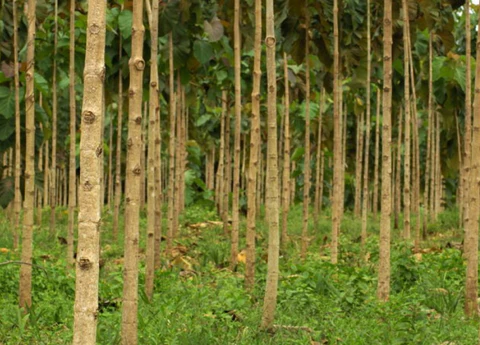
Teak is a valuable hardwood species known for durability and ecological importance. Environmental groups argue that such trees contribute significantly to urban biodiversity and carbon absorption.
Officials clarified that the felling process followed necessary administrative approvals. However, environmental activists question whether alternative alignments or mitigation measures were fully explored.
Environmental Concerns Raised
Urban environmental experts warn that tree loss in already congested cities intensifies several problems:
• Increased urban heat island effect
• Reduced carbon sequestration capacity
• Loss of habitat for birds and small wildlife
• Decline in air quality buffering
Mumbai’s per capita green cover remains below recommended urban planning standards in several zones. Environmental advocates argue that removing mature trees for infrastructure may worsen ecological imbalance.
Some citizen groups have demanded detailed environmental impact assessments and compensatory afforestation transparency.
Development vs Environmental Protection
The controversy reflects a larger policy dilemma. Cities require improved infrastructure to handle climate change impacts, especially extreme rainfall events. At the same time, climate resilience depends heavily on maintaining urban green cover.
Infrastructure projects often face trade-offs between:
• Flood mitigation
• Urban expansion
• Environmental conservation
• Public safety
Officials argue that drainage infrastructure protects thousands of residents from waterlogging and disease outbreaks during monsoons. Environmental groups respond that tree loss may create long-term climate vulnerabilities.
Balancing these priorities remains a key governance challenge.
The Social Dimension: Who Is Affected?
Flooding in Navi Mumbai affects middle-class housing societies, informal settlements, and small businesses. Waterlogging disrupts livelihoods, damages property, and increases public health risks such as water-borne diseases.
From this perspective, improved drainage supports vulnerable communities.
However, environmental degradation also affects public health. Reduced tree cover can increase temperatures, worsen respiratory conditions, and limit natural cooling.
Thus, both development and conservation directly impact citizens’ quality of life.
Legal and Administrative Process
Infrastructure projects involving forest land require permissions under environmental and forest laws. Authorities must obtain clearances and follow procedural safeguards before felling trees.
The Forest Department’s involvement suggests formal review occurred. However, critics argue that public consultation must remain transparent.
Urban planning experts recommend that authorities publish:
• Environmental clearance documents
• Tree census data
• Compensatory plantation plans
• Monitoring timelines
Transparency strengthens public trust.
Climate Context and Urban Planning
Mumbai has experienced increasingly intense rainfall events in recent years. Climate scientists link these events to broader climate change patterns.
Stormwater drainage upgrades form part of urban climate adaptation strategies. Yet, sustainable planning requires integrating grey infrastructure (drains, roads) with green infrastructure (trees, wetlands).
Experts advocate hybrid solutions such as:
• Nature-based drainage systems
• Wetland preservation
• Green corridors
• Rainwater harvesting
Such models reduce flood risk without excessive ecological damage.
Political Reactions and Public Debate
Minister Ganesh Naik defended the project, emphasizing its necessity for public welfare and urban resilience. He stated that development projects sometimes require difficult decisions.
Environmental groups countered that authorities should prioritise minimal ecological disruption.
The issue has sparked local discussions about urban governance priorities in Maharashtra.
What Needs to Happen Next?
Authorities should conduct transparent environmental assessments and disclose compensatory plantation details. If trees are removed, officials must ensure adequate replantation in suitable zones.
Urban planning must integrate sustainability principles at the design stage rather than as an afterthought.
Community engagement remains crucial. Residents deserve clarity on how projects affect both safety and environmental health.
Conclusion
The Ladki Bahin drain project highlights the complex relationship between infrastructure development and environmental conservation in rapidly growing cities like Navi Mumbai.
While improved drainage can protect residents from flooding and disease, cutting down teak trees raises legitimate ecological concerns.
Governments must adopt balanced planning that protects both public safety and natural resources. Sustainable urban growth requires careful decision-making, transparency, and long-term environmental responsibility.
The debate surrounding this project reflects broader challenges facing Indian cities as they navigate climate change, urban expansion, and ecological preservation.
Clear Cut Climate, Research Desk
New Delhi, UPDATED: March 03, 2026 01:06 IST
Written By: Samiksha Shambharkar