


- India has revised the base year of the Index of Industrial Production (IIP) from 2011–12 to 2022–23 to better reflect the current structure of the industrial economy and emerging sectors like electronics, pharmaceuticals, and specialty chemicals.
- The new framework updates the item basket, industry weights, and data sources, including GST-based data, making industrial output measurement more accurate and representative.
- This revision will help policymakers, investors, and institutions make better decisions by providing a clearer picture of India’s industrial growth and economic transformation.
The Number That Measures Everything Else
In the summer of 2023, a mid-sized electronics manufacturer in Noida expanded its production line for printed circuit boards, adding capacity for a new category of consumer device that had not existed in any significant volume five years earlier. When this expansion showed up in India’s monthly data, it was mapped into an Index of Industrial Production framework whose base year was 2011-12. This was the same year when those electronics sub-sector was too small to have a standalone weight in the index. The expansion was measured. But its weight in the national industrial production picture was systematically underestimated.
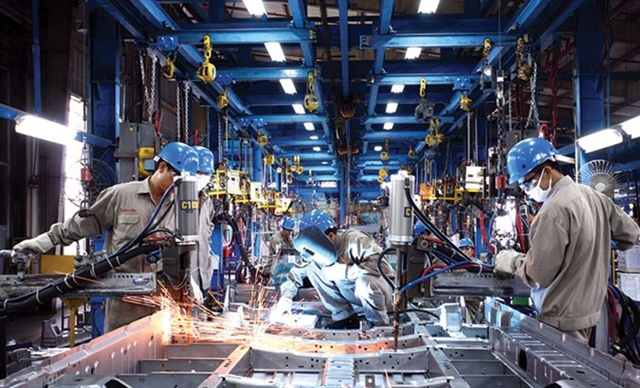
On May 26, 2026, India’s Ministry of Statistics and Programme Implementation released the report of its Technical Advisory Committee on Base Year Revision of the All-India Index of Industrial Production, shifting the base year from 2011–12 to 2022–23. This is not a minor administrative adjustment. It is a fundamental revision of how India’s industrial economy is seen, counted, and understood.
Why Base Year Revisions Matter
India’s IIP base year shifts from 2011-12 to 2022-23. This revises the item basket, industry weights, and data sources to reflect the current structure of India’s industrial economy. Last revision: 2011-12 (from 2004-05). GDP growth FY2025-26 estimated at 7.4% (nominal 10% for FY26-27).
[MOSPI / PIB, May 26, 2026 / 2026 Union Budget]
The Index of Industrial Production measures month-to-month changes in industrial output across three broad sectors: manufacturing, electricity, and mining. The Reserve Bank of India uses it to inform monetary policy decisions, by the government to assess the impact of industrial policy, by international investors to evaluate India’s economic trajectory, and by rating agencies to calibrate sovereign credit assessments. When the base year is outdated, the index’s representation of the economy’s actual structure becomes increasingly distorted.
The 2011–12 base year predates several structural shifts in India’s industrial economy: the dramatic rise of electronics manufacturing under PLI schemes, the decline of certain heavy industries as environmental compliance costs increased, the emergence of specialty chemicals and pharmaceuticals as significant industrial categories, and the compositional changes brought by the GST regime which fundamentally altered how formal and informal sector activity is reported. A 2022–23 base year captures an economy after all these changes have occurred.
What Changes in the New Framework
The Technical Advisory Committee’s report recommends updating the item basket to include new products and remove obsolete ones, revising the weights assigned to different industries to reflect their current contribution to industrial value added, updating data sources to leverage new administrative datasets. This particularly involves GST filing data and Annual Survey of Industries results that provide more granular and right production tracking than the older sample surveys and improving the geographic and enterprise size coverage of the index.
The practical implications are significant. Growth rates calculated under the new index may differ from those under the old one for the same actual change in economic activity. This does not mean the economy has grown more or less than previously thought. It means the measurement is more accurate. The revision is also likely to capture India’s informal-to-formal sector migration more accurately, as GST-based tracking picks up enterprises that previously flew below the radar of industrial surveys.
The Policy Dimension
Accurate industrial statistics are the foundation of evidence-based policy. If the IIP systematically underweights high-growth sectors like electronics, specialty pharmaceuticals, or advanced manufacturing, policymakers targeting support to strategic industries may be directing resources based on a distorted picture of where the economy is. The PLI scheme’s impact, for example, should show up more clearly in a 2022–23 based IIP than in one anchored to 2011–12 industrial structures.
A Visionary Conclusion: Count Accurately to Govern Honestly
The electronics manufacturer in Noida will now be more accurately represented in India’s industrial statistics. The specialty chemical plant in Gujarat that grew from nothing in 2014 to a significant exporter will carry more proper weight. The pharmaceutical manufacturer whose API production has become strategically critical will be properly counted. This is what statistical accuracy looks like in practice: not exciting, not headline-generating, but essential.
India’s ambition to be a USD 5 trillion economy by the end of the decade requires that the measurements used to track that ambition are honest and current. The base year revision delivers that honesty. Now ensure that the revised series is published on time, that historical back-series comparisons are made available to researchers, and that the RBI and the Finance Ministry align their analytical frameworks with the revised index without delay. Good governance starts with good data.
Clear Cut Research Desk
New Delhi, UPDATED: June 02, 2026 01:00 IST
Written By: Tanmay J Urs