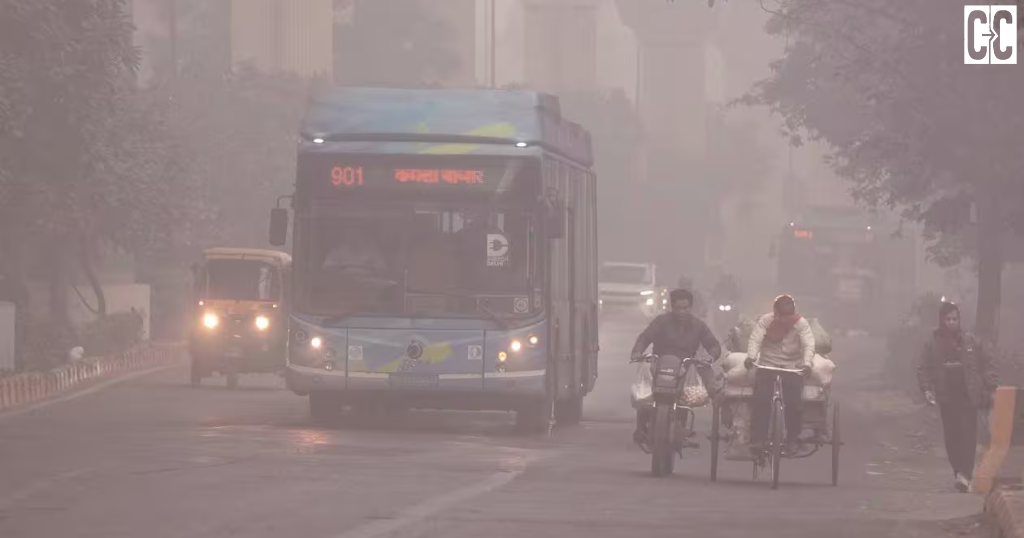

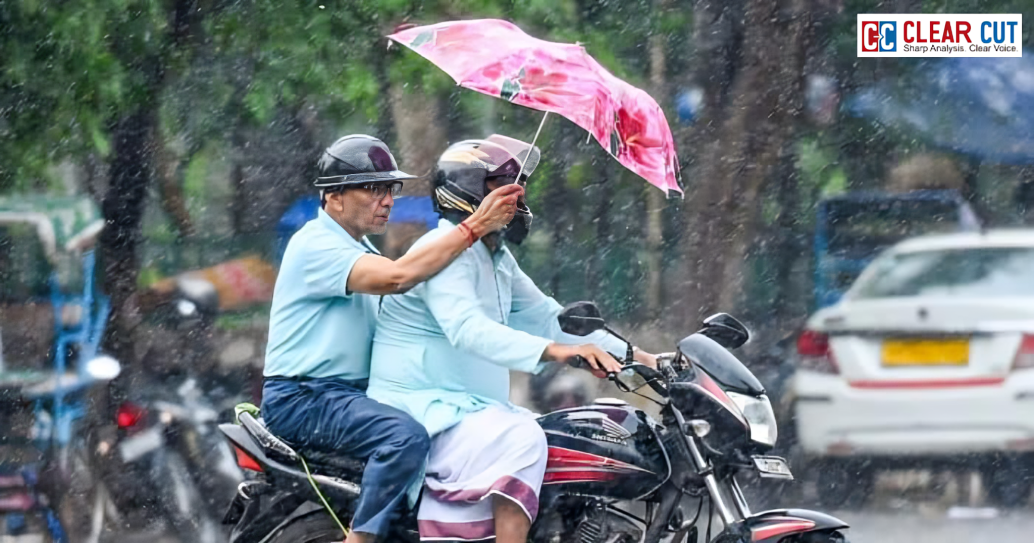
An Orange Alert warning of thunderstorms, lightning, rainfall, and gale-force winds has been declared in Gautam Budh Nagar. It is important to note that such alerts highlight the growing danger caused by adverse weather conditions and the significance of being alert through early-warning systems, such as Damini and Sachet.
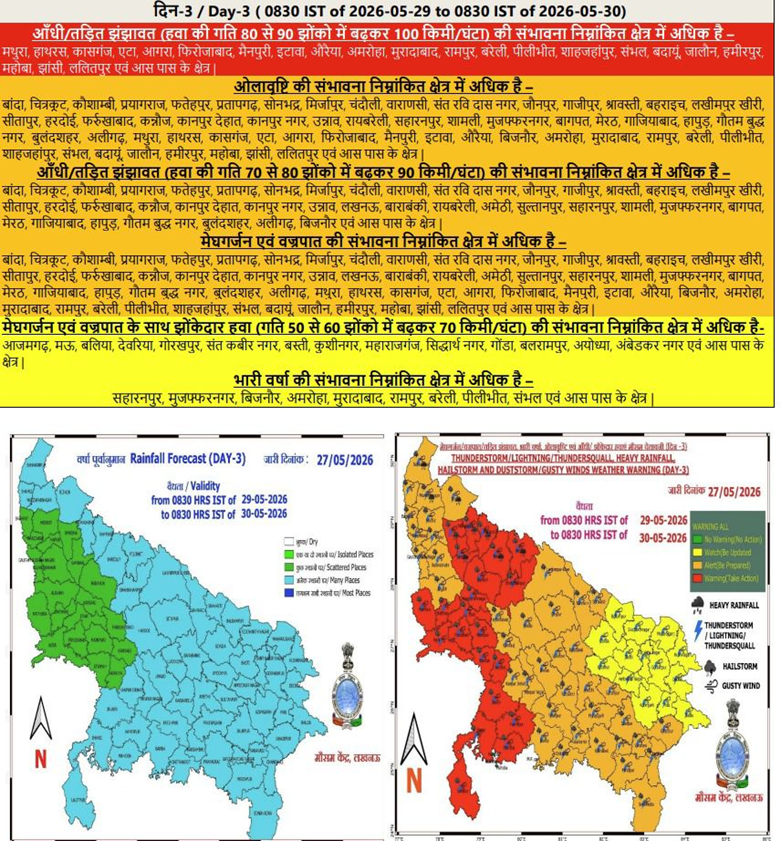
There is an announcement from Gautam Budh Nagar authorities advising people to prepare themselves for strong winds, thunderstorms, heavy rains, and lightning in North India as it braces itself for extreme weather. There is a red alert due to expected winds at a speed of 80 to 90 km per hour, and gusts of up to 100 km per hour in Gautam Budh Nagar, according to the weather forecast by the India Meteorological Department (IMD). To keep track of weather alerts in real-time, people are advised to remain vigilant, exercise caution and use early alert technology such as Damini and Sachet mobile applications.
As per the forecast of India Meteorological Department (IMD), the District Disaster Management Authority has issued an advisory and asked people to stay alert from May 28 to May 31. [India Meteorological Department]
A Growing Threat Beyond Seasonal Weather
While thunder and lightning may be viewed as frequent events during a particular season, studies reveal that these two are currently among the most dangerous weather threats in India.
Between 2002 and 2022, over 50,000 people died from lightning strikes in India, accounting for an estimated 46 per cent of all weather-related fatalities over the same period, as highlighted by an article in the Natural Hazards journal . Lightning is one of the most dangerous natural calamities in India, where there have been 2,560 deaths in a single year, 2023, recorded by the National Crime Records Bureau.
It is becoming evident through recent scientific studies and reports from disaster management experts that the incidence of lightning is being influenced by changing climatic conditions such as high temperatures and atmospheric instability. High wind speed, rainfall, and lightning are among the phenomena associated with severe thunderstorms due to extreme temperatures.
Lightning, however, has now emerged as the primary killer among all types of weather fatalities in India. The study shows that lightning caused 50,358 deaths in India from 2002 to 2022, representing about 46 per cent of all weather-related fatalities during the same period. In other words, it translates to an average of seven fatalities per day for twenty years (Source: Singh et al., Natural Hazards, 2024).
Nevertheless, the threat remains equally severe today. Based on data provided by the National Crime Records Bureau (NCRB), lightning resulted in 2,560 deaths in 2023. Indeed, lightning proved even more lethal than many other types of natural calamities and contributed almost 40 percent of 6,444 total deaths due to natural disasters in the country (Source: NCRB Accidental Deaths & Suicides in India Report, 2023).
| Lightning Fatalities in India | Data |
| Deaths due to lightning (2002–2022) | 50,358 |
| Share of weather-related deaths | 46% |
| Lightning deaths in 2023 | 2,560 |
| Total natural hazard deaths in 2023 | 6,444 |
| Average annual lightning deaths (2002–2022) | ~ 2,400 |
Those who live in rural areas, farmers, construction labourers, and others who work outdoors pay most of the price. According to several studies, many lives have been lost because individuals are caught in the open fields, hiding under trees, or simply lack early warnings about the weather.
Why Early Warnings Matter
The importance of the early warning system is one of the key issues highlighted in the advisory issued for Gautam Budh Nagar. The two mobile applications, Damini and Sachet, both designed to provide timely warnings related to hazardous weather, have been recommended by authorities to be downloaded by the local people.
Damini, developed by the Indian Institute of Tropical Meteorology (IITM), enables users to take shelter ahead of storms by alerting them through lightning warnings up to a radius of 20-40 kilometres. On the other hand, the NDMA has developed Sachet, which provides location-wise timely alerts on various kinds of disasters, including storms, floods, cyclones, landslides, and lightning.
These applications will become increasingly important as India becomes proactively prepared against disasters instead of remaining reactive to them.
Safety Measures Can Save Lives
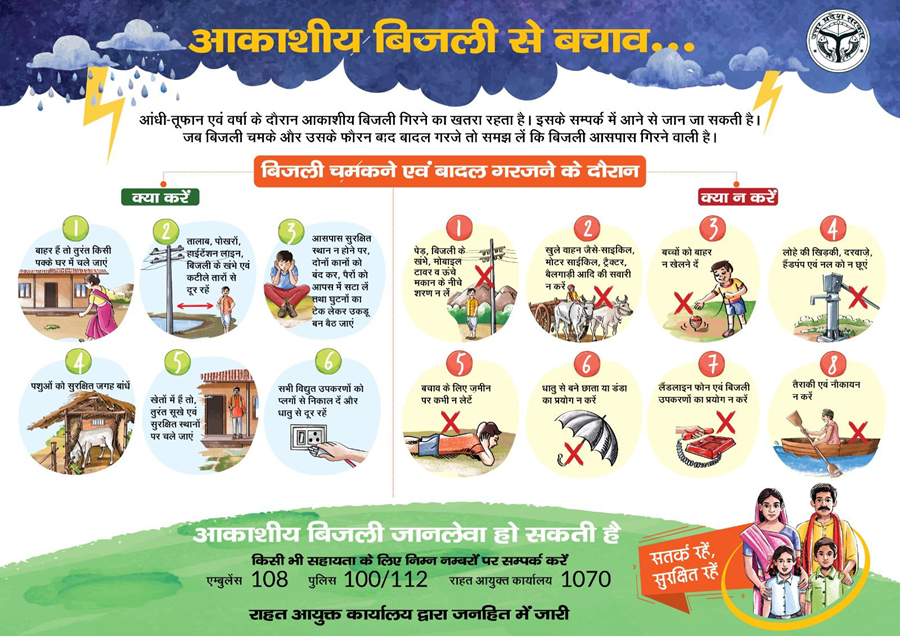
In case of any thunderstorms, it is recommended by the district administration that people do not take refuge under tree shade or next to mobile towers or next to tall buildings.
Children must be kept indoors during thunderstorm weather, and farmers and outdoor workers need to take immediate shelter in case of thunderstorms. In case there is no safe shelter available anywhere around, then it is recommended by the standards for disaster management to get into a huddled position on the ground with the feet together.
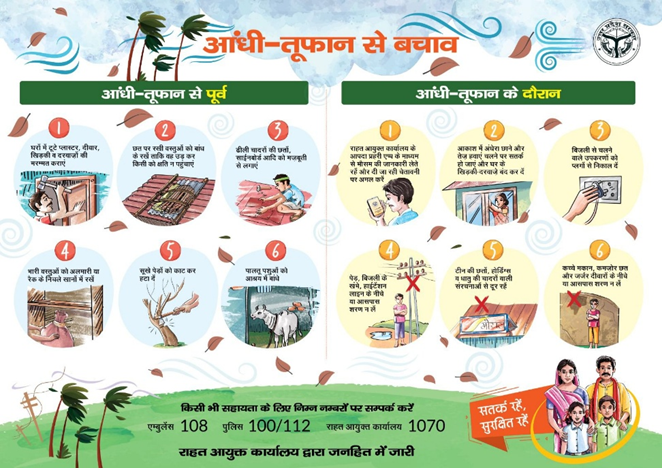
Creating a Pre-Safety Culture
This message reflects a shift in the general attitude towards disaster management in India. The focus is shifting from post-disaster measures and efforts to disaster preparedness, community awareness, and early warning systems.
It is argued by experts that public awareness may be equally important as the prediction itself, as natural calamities increase in frequency. It is only through public awareness that the warnings could possibly help in saving lives.
Short incidents of weather can prove highly destructive, as illustrated by the notice of Gautam Budh Nagar. In a country where lightning accounts for the majority of deaths due to natural events, public cooperation, quick communication, and preparedness continue to be some of the best methods to reduce the risk of a disaster.
Clear Cut Climate Desk
New Delhi, UPDATED: June 02, 2026 05:00 IST
Written By: Muskan Pal