India ne rural aur urban water supply mein significant progress ki hai through Jal Jeevan Mission aur AMRUT 2.0, lekin water quality issues, groundwater depletion, aur untreated sewage abhi bhi bade challenges hain. Sustainable future ke liye Integrated Water Resources Management (IWRM) aur strong governance reforms zaroori hain.
Imagine a world where the simple act of turning on a tap yields life-giving water, clean, safe, and abundant. Water is not merely a substance; it is the crucial elixir that birthed life itself, nourishing ecosystems, species, and human societies alike. Blanketing approximately 71% of Earth’s surface, our “blue planet” thrives because of its abundance of water.
However, the distribution of freshwater on Earth is not uniform. Approximately 97.5% of the water on Earth is saline and is found in the oceans and seas. Only about 2.5% is freshwater, with much of it trapped in glaciers, ice caps, or inaccessible aquifers, leaving less than 1% available for our needs.
India, blessed with the monsoon and major river basins, nevertheless faces acute stress from population growth, urbanisation, and intensive agriculture. According to the World Bank, India has 18% of the world’s population but only 4% of its water resources.
Ensuring Water for All in Urban and Rural India
Safe water isn’t a luxury; it’s a fundamental human right, as affirmed by the UN’s Sustainable Development Goal 6 (SDG 6): Clean Water and Sanitation. India’s government has long recognised water’s vital role, launching ambitious programs to ensure safe drinking water reaches every corner.
In rural areas, the flagship program under the Ministry of Jal Shakti, specifically the Department of Drinking Water and Sanitation’s Jal Jeevan Mission (JJM), launched in 2019 by Prime Minister Narendra Modi, aims for “Har Ghar Jal” (tap water in every home). JJM targets to provide functional household tap connections (FHTCs), providing 55 litres per capita per day (lpcd) of safe water. As of January 2026, the official JJM dashboard reports 81.52% coverage, 15.78 crore out of 19.36 crore rural households connected through FHTCs, up from a 16.72% baseline in 2019, marking a 64.8 percentage point increase.
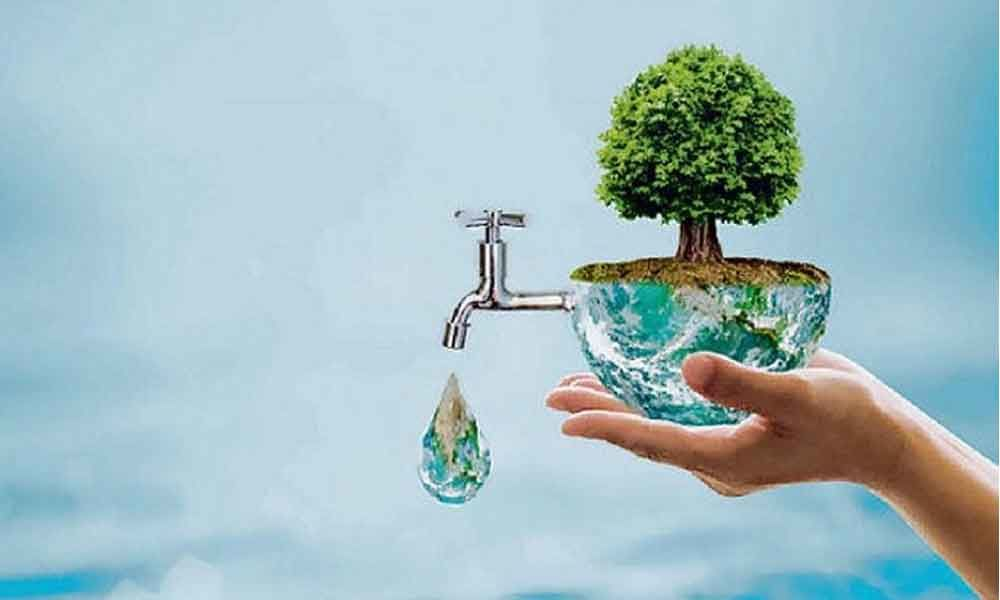
Similarly, for urban India, the Atal Mission for Rejuvenation and Urban Transformation (AMRUT), launched in 2015 and upgraded to AMRUT 2.0 in 2021, focuses on water supply, sewerage, and septage management in 500 cities. The mission aimed to achieve universal water supply by providing 1.39 crore household tap connections and to increase sewerage/septage coverage from 31% to 62% through 1.45 crore new connections. AMRUT has delivered 1.12 crore tap connections and 87 lakh sewer connections,
alongside the creation of sewage treatment capacity of 1,800 MLD, of which 907 MLD is currently reused. With ₹2.99 lakh crore allocated, it has provided 2.68 crore new tap connections and aims for 100% coverage by 2026. These programs reflect a holistic WASH approach. Yet, some gaps remain in both JJM and AMRUT.
The Shadows Behind the Progress
An in-depth examination of the Parliamentary Standing Committee on Water Resources (2024–25) Report highlights the following critical gaps in the JJM:
- Financial vs. Physical Performance Gaps and Underutilisation of Funds: The scheme has faced inconsistent fund absorption, leading to delays in physical targets. For FY 2024-25, the Budget Estimate (BE) was ₹11,711 crore, but the Revised Estimate (RE) dropped to ₹10,911 crore, with only 65% utilization (₹7,092 crore released vs. ₹10,911 crore allocated). This mismatch has resulted in a slippage of 15 – 20% in annual targets across 10 states, with central assistance of ₹2,000 crore unspent in FY 2023-24 due to delays in state-level execution.
- Restoration of Public Infrastructure: Ageing rural water infrastructure remains a bottleneck, with inadequate restoration leading to frequent breakdowns. The report notes that only 40% of pre-existing public taps (estimated 5 lakh units) have been restored under JJM, despite a target of 100% by 2024. Allocation for restoration was ₹500 crore in FY 2023-24, but actual expenditure was ₹320 crore (64% utilization), contributing to a 15% increase in water supply disruptions (affecting 8,000 villages quarterly).
- Water Quality Issues in Rural Areas: Contamination persists as a major hurdle, with 50% of rural water sources failing quality standards. As per the report, 2.17 lakh rural habitations (out of 5.5 lakh total) are affected by water quality issues (e.g.,1.5 lakh with excess fluoride/iron/salinity, impacting 11 crore people).
- Sustaining Water Availability/Sources of Water for JJM: Long-term source sustainability is challenged by over-extraction and climate variability, with 60% of schemes relying on depleting groundwater. The report indicates that only 35% of water sources (e.g., 1.5 lakh springs/rivers) have been augmented against a target of 4 lakh, leaving 65% of schemes (12 crore connections) vulnerable; in drought-prone areas, 22 states report a 20-30% decline in yield (e.g., 1.8 billion cubic meters shortfall annually). Funding for source sustainability was ₹2,500 crore in FY 2024-25, but only ₹1,800 crore was utilised, resulting in 18% of FHTCs (2.7 crore) facing intermittent supply (less than 55 lpcd).
- Operational and Maintenance (O&M) Work: Post-installation maintenance is severely underfunded and unmanaged, leading to high non-functionality rates. Nationally, O&M allocation is just 6% of total JJM funds (₹700 crore in FY 2024-25), but expenditure is only 45% (₹315 crore), affecting 25% of installed connections (3.75 crore FHTCs non-operational).
- Water Quality Monitoring and Surveillance: Surveillance is fragmented, with community participation low. The report states that only 20% of villages (1.2 lakh out of 6 lakh) have active water quality monitoring committees, and surveillance covers 40% of sources (2.2 lakh). Similar to JJM, AMRUT continues to face several gaps that need to be addressed to fully achieve its intended targets and objectives.
- Slow Progress and Delays in Project Implementation: As per a 2025 Parliamentary Standing ommittee
report, only about 25% of approved projects under AMRUT 2.0 (₹48,050 crore out of ₹1.90 lakh crore) have been completed, with delays attributed to bureaucratic hurdles, land acquisition issues, and weak coordination between states and Urban Local Bodies (ULBs). A World Bank report on urban resilience highlights that funding for civic services under AMRUT, Smart Cities, and Swachh Bharat grew from ₹10,000 crore in 2015–16 to ₹50,000 crore in 2025–26, yet gaps in water supply coverage affect 20–30% of urban households in backward cities. - Limited Role and Capacity of Urban Local Bodies (ULBs): Dominance of state government and Special
Purpose Vehicles (SPVs) over ULBs is a critical gap, with ULBs handling only 30–40% of project execution despite being the primary implementers. Weak revenue generation, ULBs collect tariffs covering just 50–60% of O&M costs, leading to asset deterioration, with a shortfall in skilled staff like water engineers (shortage of 20–30% in many states). - Increasing Reliance on RO Water Connections in Urban Areas: A key indicator of AMRUT’s gaps
in delivering safe tap water is the surge in Reverse Osmosis (RO) water purifier adoption in urban India, driven by persistent water quality issues. Residential RO connections have seen explosive growth, with the market valued at USD 682.32 million in 2024 and expected to hit USD 1,670 million by 2030 (CAGR 16.2%), as urban households (over 50% in metros like Delhi and Mumbai) opt for private solutions amid intermittent supply and contamination risks. From 2020 to 2026, urban RO penetration rose from 20–25% to 35–40% of households, fuelled by groundwater pollution and AMRUT’s incomplete coverage. This trend underscores AMRUT’s failure to ensure 100% safe water, pushing costs onto citizens (average RO unit: ₹10,000–20,000) and wasting 50–70% of water in RO processes. - Absence of integrated urban water management systems: In India, septic tank cleaning trucks often illegally dump collected faecal sludge directly into rivers or open drains due to the absence of treatment facilities. This practice compounds pollution, with the Central Pollution Control Board (CPCB) estimating that urban sewage generation reaches 72,368 million litres per day (MLD),
yet only about 28% is treated, leaving over 70% (around 52,000 MLD) discharged untreated into water bodies. A stark example occurred in Indore in late 2025–early 2026, where pipeline leaks mixed sewage with potable water, resulting in at least 10–17 deaths and over 200–3,500 illnesses from diarrheal outbreaks in affected areas. This isn’t isolated; similar outbreaks hit Bengaluru (2025 cholera spike from contaminated borewells) and Delhi (2024 Yamuna foam crisis affecting taps).
These issues highlight systemic deficiencies in wastewater handling, infrastructure upkeep, and enforcement, severely polluting rivers and threatening public health nationwide.
From Infrastructure to Integrated Water Security
The challenges identified in the JJM and AMRUT reflect a broader transition problem: India has largely succeeded in infrastructure creation, but now faces the more complex task of ensuring safe, reliable, and
sustainable water service delivery. Addressing these gaps requires a shift from scheme-centric implementation to an Integrated Water Resources Management (IWRM) approach, endorsed by the
World Bank, UN-Water, OECD, and widely adopted across successful global water systems.
- Align Financial Flows with Physical and Service Outcomes: Introduce performance-linked fund
releases similar to the World Bank’s Program-for-Results (PforR) financing model. The World Bank’s Urban Water Sector Reform Program (Vietnam) linked funding to service delivery benchmarks, leading to improved fund absorption and a 20% reduction in project delays. - Prioritise Asset Management and Infrastructure Renewal: Shift from ad hoc repairs to Asset Management Plans (AMPs) at village and city levels. For example, Australia’s National Water Initiative institutionalised asset management planning, significantly reducing service disruptions in rural and peri-urban systems.
- Strengthen Water Quality Governance, Not Just Infrastructure: Move from input-based mitigation
(plants, filters) to risk-based water safety planning, as recommended by WHO. For example, Bangladesh’s arsenic mitigation programme, combining well-switching, testing, and public disclosure, reduced arsenic exposure by nearly 60% without massive new infrastructure. - Secure Water Sources through Climate-Resilient Planning: Scale nature-based solutions, rainwater
harvesting, recharge structures, watershed restoration through convergence with MGNREGA
and urban development funds. Promote treated wastewater reuse for non-potable purposes to reduce freshwater stress, especially in AMRUT cities. For example, Singapore’s “Four National Taps” strategy, including recycled water (NEWater), now meets 40% of national demand, and Israel’s reuse of over 85% of treated wastewater has insulated agriculture and cities from water scarcity.
Conclusion: From global scarcity to local triumphs like JJM’s 81.52% coverage, progress is evident. Yet, challenges like Indore’s tragedy remind us: safe water is every person’s right. By bridging gaps with innovation, community spirit, and global wisdom, India can quench its thirst, fostering health, equity, and prosperity while walking on the path of Viksit Bharat. After all, in water’s gentle flow lies the power to heal and unite. Let’s commit to making “Har Ghar Jal” a reality for all.
Clear Cut WASH, Health Desk
New Delhi, UPDATED: March 05, 2026 09:00 IST
Written By: Swarnalata Wankhede