


India’s Biopharma Shakti under Budget 2026 invests Rs 10,000 crore to expand NIPERs, establish 1,000 clinical trial sites, boost biosimilars, and train 1.5 lakh caregivers, aiming to transform India into a global pharmaceutical innovation hub.
India is making its most ambitious bet yet on becoming a global biopharma powerhouse. Finance Minister Nirmala Sitharaman, presenting the Union Budget 2026–27 in Parliament on February 1, unveiled the Biopharma SHAKTI programme, an acronym for Strategy for Healthcare Advancement through Knowledge, Technology, and Innovation. The initiative carries an outlay of Rs 10,000 crore over five years. At its core are three bold moves: building new pharmaceutical institutions, supercharging clinical research, and training a workforce for an ageing India.

A New Chapter for Pharmaceutical Education
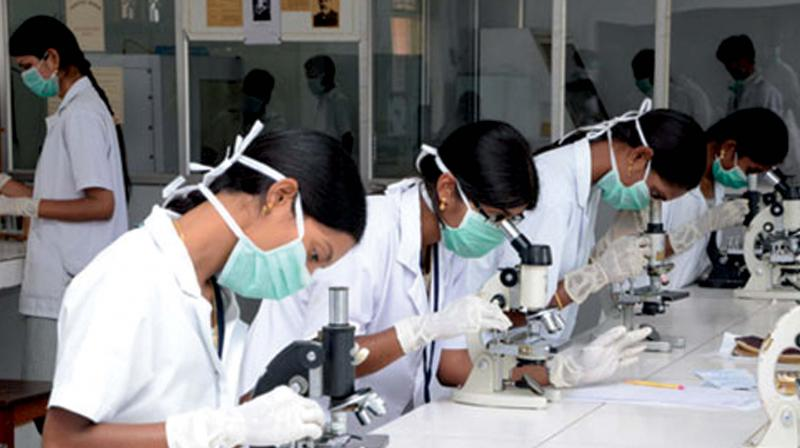
The government will establish three new National Institutes of Pharmaceutical Education and Research, known as NIPERs, with a specific focus on biopharma science and skills. Seven existing NIPERs will also be upgraded to bolster advanced research, industry collaboration, and talent development.
This is a significant structural shift. India currently operates nine NIPERs, and the government has declared all of them Institutes of National Importance. Their mandate includes imparting quality education in pharmaceutical sciences, promoting innovative and translational research, and enabling national and international collaborative research and industry linkages. The new additions will expand that network into territories and specialisations that India has historically underserved.
Announcing the plan in Parliament, Sitharaman said, “The strategy will include a biopharma-focused network with three new National Institutes of Pharmaceutical Education and Research, popularly known as NIPERs, and upgrading seven existing ones.”
Satish Reddy, Chairman of Dr. Reddy’s Laboratories, called the move well-timed. “The Rs 10,000-crore Biopharma Shakti programme will be a key enabler for India’s journey from volume to value leadership, helping the country move from being a global supplier of quality medicines to becoming a global innovator,” he said.
Building a Clinical Trial Ecosystem from the Ground Up
India has long been seen as a missed opportunity in global clinical research. The country has the patient numbers, the disease diversity, and the scientific talent. What it has lacked is accredited, globally aligned infrastructure.
The Union Budget has announced plans to establish a network of over 1,000 accredited clinical trial sites across India. This is not a marginal improvement. It is a structural reboot of India’s capacity to test and validate new medicines at scale.
Seema Pai, President of the Indian Society for Clinical Research, said the Biopharma SHAKTI initiative directly addresses long-standing gaps in trial readiness, skilled clinical research manpower, and globally aligned regulatory practices. She expects the initiative to significantly elevate the quality and speed of clinical research in India.
Sudarshan Jain, Secretary General of the Indian Pharmaceutical Alliance, also welcomed the move. He said the “Budget aims to take forward India’s pharmaceutical ecosystem by creating a network of over 1,000 accredited India Clinical Trials sites, investing in scientific talent through upgrading NIPERs, and augmenting the drug regulator to meet global standards and approval timelines through dedicated scientific review cadre and specialists.”
The clinical trial network also feeds into a larger regulatory reform. The government plans to strengthen the Central Drugs Standard Control Organisation, or CDSCO, by hiring specialised scientists and syncing approval timelines with international benchmarks.
The Biosimilars Opportunity
Behind these moves is a hard economic calculation. Around $300 billion worth of pharmaceutical patents are expiring by 2030, and India wants to move decisively into biologics. A single percent of the global biosimilars market, officials note, could generate an annual opportunity of Rs 2 lakh crore for India.
Despite having over 95 approved biosimilars in the domestic market, India held only about 3.2% of the global biosimilars market in 2025. Biopharma Shakti is the government’s attempt to close that gap fast.
Kiran Mazumdar Shaw, Chairperson of Biocon Group, put the stakes plainly. “As India’s disease burden shifts toward cancer, diabetes, and autoimmune disorders, biologics and biosimilars will be central to improving longevity and quality of life. Biopharma Shakti initiative spanning manufacturing scale-up, global-grade regulation, new NIPER institutions and a nationwide clinical trials network can firmly position India as a global biopharma manufacturing hub,” she said.
Union Minister J.P. Nadda, speaking separately on the programme’s objectives, was equally pointed. “It is essential to strengthen institutions like NIPER by integrating them more closely with talent and skill development. Developing 1,000 clinical trial sites across the country will enhance research capacity and innovation,” he said.
Training Caregivers for an Ageing Population
Beyond biopharma, the budget addresses a quieter but equally urgent challenge. India’s elderly population is growing fast, and the health system is not ready.
Nearly 70 percent of India’s senior population lives with chronic illnesses. Diabetes alone affects 14 percent of the elderly, while 23 percent contend with multiple co-morbidities.
To respond, the government proposes training 1.5 lakh caregivers in programmes aligned with national skill standards, directly strengthening elderly care support systems. This is a workforce-first approach to a demographic crisis that is expected to deepen over the next two decades.
What Industry Is Watching
Industry reaction has been broadly positive, but experts are quick to add that delivery will define the initiative’s real value.
Antony Prashant, Partner at Deloitte India, said the announcement puts the pharma industry in the right trajectory. “The Rs 10,000-crore Biopharma Shakti puts the industry in the right trajectory focused on creating a bio-pharma hub, new NIPER facilities, 1,000 accredited clinical sites and enhancing CDSCO to meet global standards as well as expediting approvals,” he said. He added that the industry is well-poised to reach USD 130 billion in the next three to four years.
Satish Reddy of Dr. Reddy’s Laboratories said the thrust on life sciences is a welcome step as the Indian life sciences sector looks at building capabilities for leadership and growth in the future.
The message from New Delhi is clear. India wants to stop being the world’s generic drug factory and start becoming its innovation engine. The Biopharma Shakti programme, with its new NIPERs, its thousand clinical trial sites, and its caregiver training push, is the government’s most concrete attempt yet to make that shift real. Whether execution matches ambition will be the defining question of the next five years.
Clear Cut Health, Education Desk
New Delhi, UPDATED: March 06, 2026 01:20 IST
Written By: Ayushman Meena