

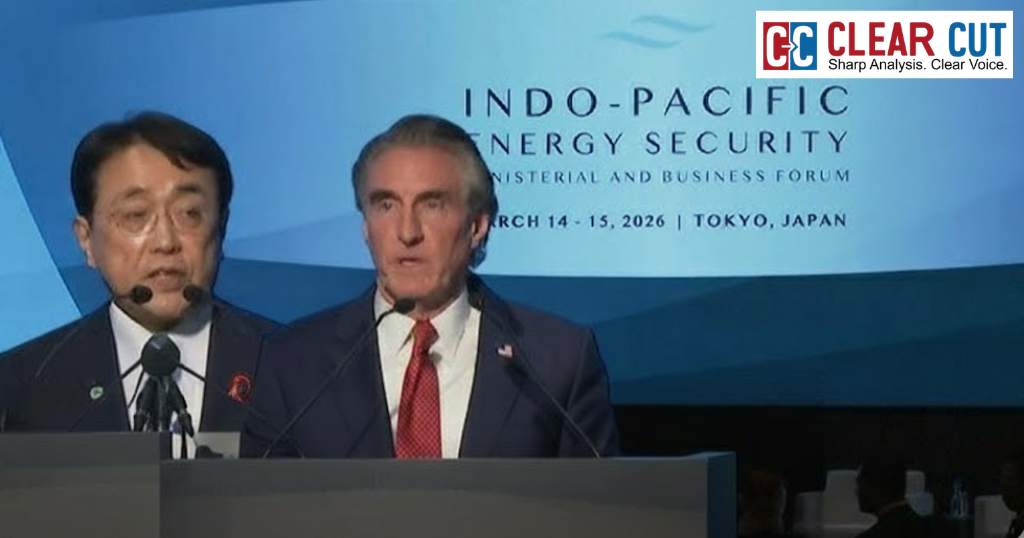
Tokyo hosted the first Indo-Pacific Energy Security Ministerial, bringing together regional leaders and businesses to strengthen energy partnerships and secure supply chains across the Indo-Pacific. The United States used the forum to advance its energy diplomacy, expand LNG exports, and counter the growing influence of China and Russia in the region.
Tokyo is at the centre of global energy diplomacy today. The inaugural Indo-Pacific Energy Security Ministerial and Business Forum (IPEM) opened on March 14, bringing together ministers, CEOs, and senior policymakers from across the region. The two-day event runs through March 15 and signals a significant shift in how the United States approaches energy as a tool of foreign policy.
IPEM brings together government and industry to advance trusted partnerships, unlock investment, and strengthen resilient, secure energy supply chains across the region. It is co-hosted by Japan’s Ministry of Economy, Trade and Industry and the United States National Energy Dominance Council, and sponsored by the U.S. Trade and Development Agency in partnership with the Departments of State, Interior, Energy, and Commerce.
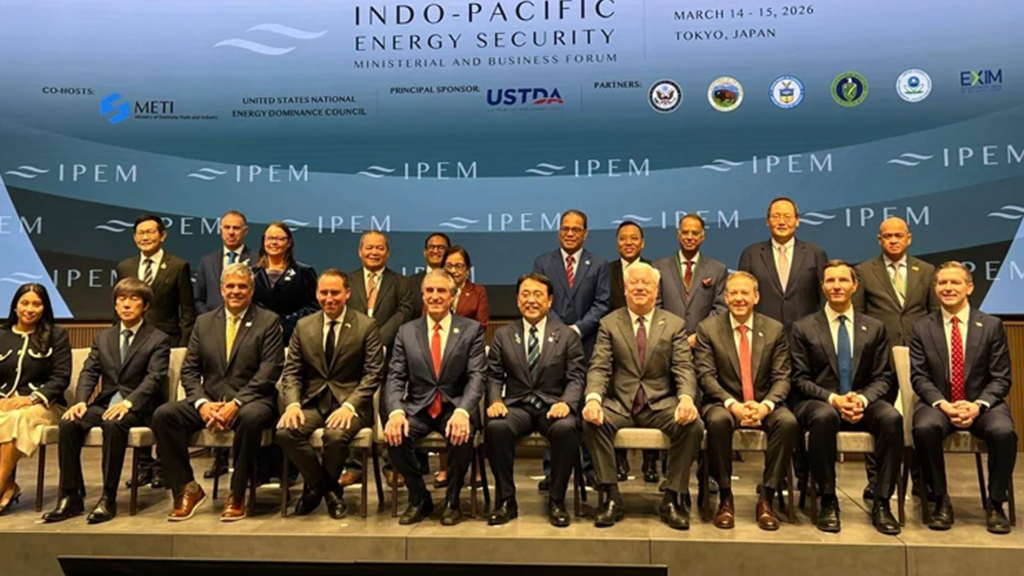
Who Is in the Room
The U.S. sent its most senior energy officials. Delegates include Interior Secretary Doug Burgum, who chairs the National Energy Dominance Council, Energy Secretary Chris Wright, and EPA Administrator Lee Zeldin. Representatives from nearly a dozen Indo-Pacific countries are expected alongside business leaders from the energy, infrastructure, industrial, and financial sectors. The forum runs two tracks. The two-day program includes a public-facing Business Forum and a closed-door Ministerial Session, designed to deliver real-world impact at a critical moment for the region.
Energy as Diplomacy
The U.S. has been explicit about its intentions. This is not just a trade event. It is a geopolitical statement.
U.S. Secretary of Energy Chris Wright framed the forum’s purpose directly. He said, “Energy plays a central role in President Trump’s diplomacy. When America exports our energy to our allies, the world is safer and lives are improved. In a region expected to experience the fastest energy demand growth, the United States stands ready to be a reliable partner.”
Secretary of the Interior Doug Burgum echoed that message with sharper language. At the opening of the event, he declared, “The United States of America has the ability to deliver freedom of navigation and free supplies. We have effectively displaced two-thirds of the Russian gas in all of Western Europe. Whether it’s a geographic strait in the Middle East or whether it’s control of supply, we’ve got to have reliable, affordable, and secure supply, meaning from partners you trust.”
Countering China and Russia
The forum’s subtext is impossible to ignore. The region’s energy supply chains run through contested waters and depend on suppliers with competing interests.
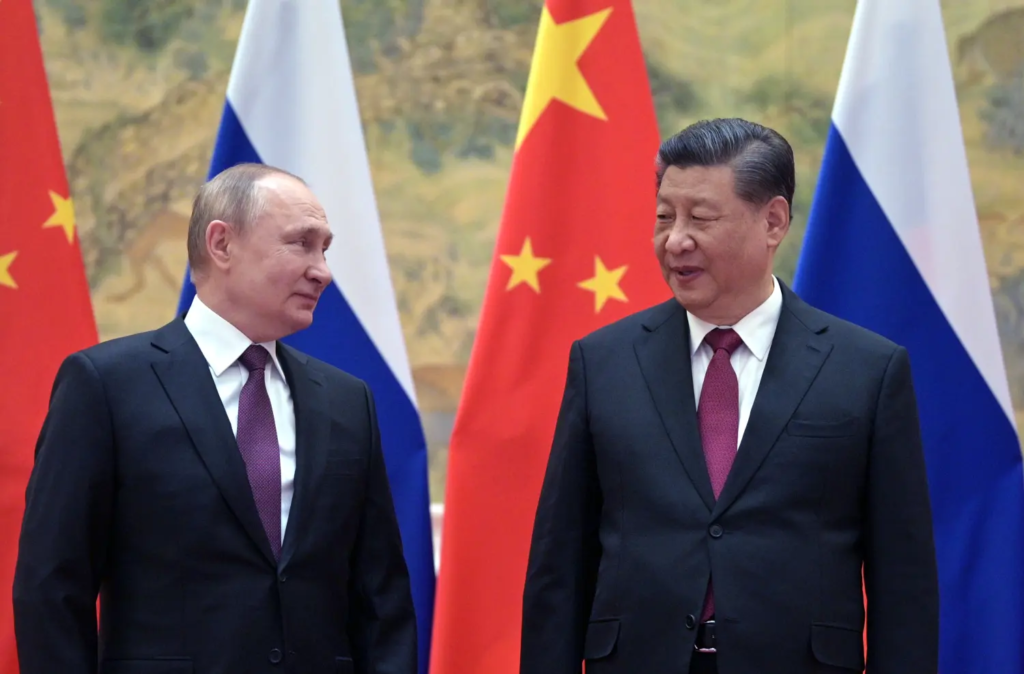
Burgum stated clearly that the U.S. delegation arrived in Tokyo with a strategic mandate. Members of the National Energy Dominance Council will use a whole-of-government approach to strengthen energy security, expand U.S. energy exports, and counter the coercive influences of China and Russia. The goal, he said, is to align U.S. policy leadership with private-sector capability to secure a future where American energy dominance delivers peace and prosperity at home and abroad.
Alaska LNG in the Spotlight
Secretary Burgum made a key stop in Anchorage before flying to Tokyo. He used the occasion to underline Alaska’s central role in the U.S. energy export strategy.
Burgum said his team plans to discuss agreements at the Tokyo conference for companies to buy gas from the proposed Alaska LNG project, a pipeline that would transport natural gas from the North Slope to the Kenai Peninsula. He described the project as needed more than ever, saying, “Energy dominance is about energy abundance. Alaska can play a huge role in that, and that’s going to be great for Alaskans, great for America, and great for the world.”
Commercial Deals on the Table
Beyond the diplomatic messaging, IPEM is designed to produce tangible commercial outcomes. The business forum aims to facilitate the announcement and advancement of major commercial energy deals, investments, and cooperative frameworks that will grow the U.S. economy, invest in American energy workers, and secure energy dominance across the region.
EPA Administrator Lee Zeldin reinforced the forum’s whole-of-government character. He said, “As a member of President Trump’s National Energy Dominance Council, I’m committed to advancing U.S. energy dominance and expanding our partnerships to achieve that goal. I’m proud to co-host the Indo-Pacific Energy Security Ministerial and Business Forum alongside DOE, DOI, USTDA, and other Administration officials.”
Why the Indo-Pacific Matters Now
The region’s energy story is one of the most consequential of this decade. Rapidly growing economies across Southeast Asia, South Asia, and the Pacific are consuming more power every year. Supply chain disruptions, Middle East tensions, and the ongoing war in Ukraine have all pushed energy security to the top of every government’s agenda.
IPEM integrates energy security and national security objectives through high-level dialogue and actionable outcomes,making it one of the few forums where those two goals sit side by side in the same room.
The first day’s agenda has set a confident tone. Whether the deals announced over the next 48 hours match the ambition on display in Tokyo’s opening sessions will determine whether IPEM becomes the defining energy diplomacy platform of the decade.
Clear Cut Climate Desk
New Delhi, UPDATED: March 16, 2026 01:00 IST
Written By: Ayushman Meena