
Tropical glaciers are vanishing at unprecedented rates, threatening water systems and livelihoods across vulnerable regions. The crisis highlights a deep imbalance between responsibility and impact in climate change.
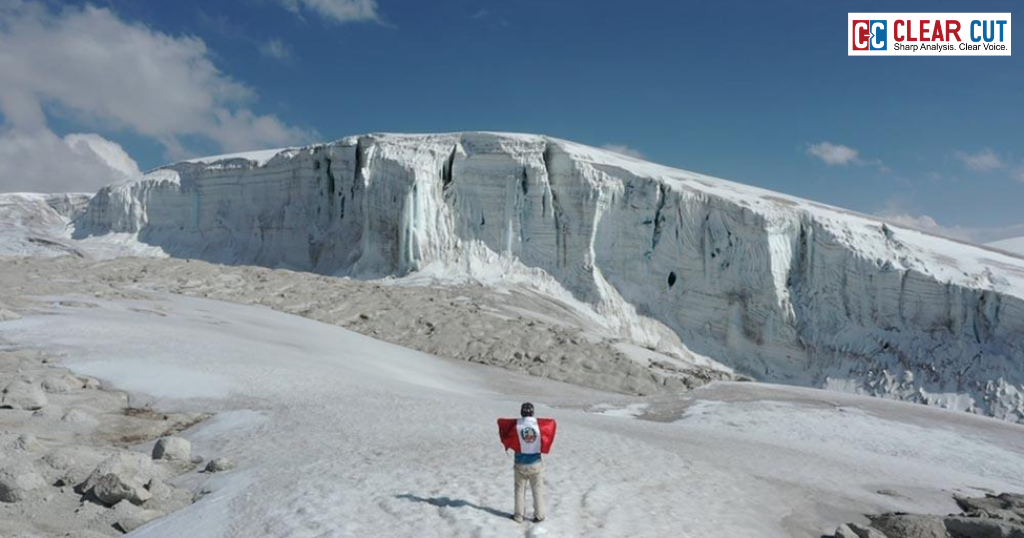
The Quelccaya ice cap in Peru, the world’s largest tropical glacier is melting at a pace that glaciologists say has no precedent in at least the last 1,600 years. Lonnie Thompson at Ohio State University has led most of the research, and his ice core data stretch further and deeper than anyone else’s on Andean glacial change. Since 1978, Quelccaya has lost about 30% of its area. That’s not just a statistic; it’s a collapse you can see from NASA’s satellites. If this keeps up, Quelccaya will be gone within a few decades.
The story’s the same on other mountaintops near the equator. On Mount Kenya, the Lewis Glacier, which is probably the most closely studied glacier in East Africa, has shrunk by over 90% in volume since 1900. If you move further east, the glaciers on Puncak Jaya in Papua New Guinea are dwindling fast and are expected to vanish completely before 2030.
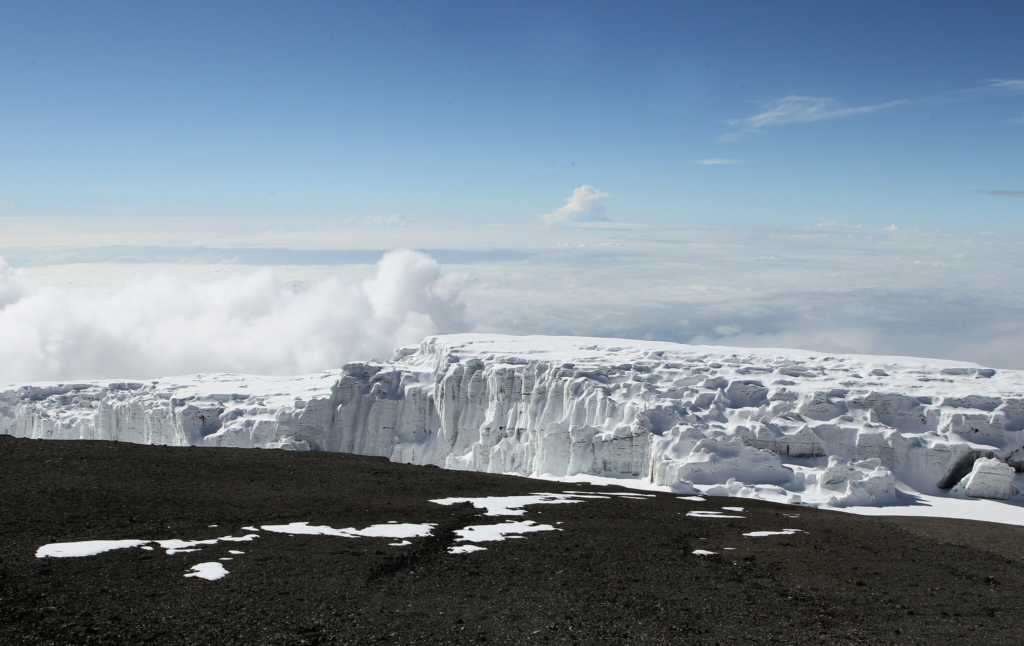
This isn’t some remote physical process with no impact on us. These glaciers act as water towers. They feed rivers and underground aquifers, providing drinking water, irrigation, and even electricity through hydropower for millions across the Andes, East Africa, the Himalayas, and the Pacific. When glaciers melt, communities downstream get a brief window of increased water , what hydrologists call “peak water” but it doesn’t last. Ultimately, the flow shrivels as the glacier passes a point of no return. People in Peru’s Cordillera Blanca have already lived through this shift, and in some valleys, that surge is long gone. The rivers are drying up.
Who Lives Below the Ice
Here’s the tough irony: The people who rely most directly on these glaciers aren’t the ones causing them to disappear. Indigenous Quechua communities in Peru, farmers in Uganda and DRC’s Rwenzori foothills, rural highlanders in Papua New Guinea, these people have tiny per capita carbon footprints. Compared to the wider world, their emissions are almost negligible. Yet they’re losing their water, their food security, and, in many cases, their cultural connection to the ice. Most of the heat forcing these changes comes from somewhere else.
The Intergovernmental Panel on Climate Change nailed the reality in its Sixth Assessment Report (2022): “The most vulnerable people and systems are observed to be disproportionately affected.” If you depend on glaciers or snowmelt, you’re staring down a mix of threats: water shortages, farming disruptions, and a higher risk of disaster if glacial lakes burst through their fragile dams. We’ve seen glacial lake outburst floods kill and destroy in Peru, Nepal, and Pakistan. The Pakistan floods in 2022 linked in part to glacial melt in the Karakoram killed over 1,700 people and displaced 33 million. This happened in a country responsible for less than 1% of the world’s greenhouse gas emissions.
The Accountability Gap and Its Price Tag
At international climate talks, this issue is no longer sweepable under the rug. The Loss and Damage Fund, first settled at COP27 and made operational at COP28 marks a formal admission: some losses from climate change can’t just be fixed with adaptation plans. They demand real compensation. By early 2025, the fund had collected about $700 million. This sounds like a windfall, but when you compare it to the estimated $400 billion to $1 trillion in annual loss and damage facing vulnerable countries, it’s a drop in a bottomless bucket. Depending on which number you believe, the money on hand covers no more than 0.07–0.175% of the need.
Meanwhile, the corporate world is barely in the conversation. ESG (environmental, social, and governance) disclosure rules don’t require any major company to account for how its historical emissions link to actual glacial retreat, much less spell out what it owes to people harmed by that loss. Even the Taskforce on Nature-related Financial Disclosures, currently the most detailed framework out there, doesn’t map corporate emissions to specific downstream community impacts like vanishing glaciers. Companies can buy carbon offsets, but these don’t replace disappearing water or safeguard farmers whose lives are thrown into chaos as the climate shifts beneath their feet.
Conclusion
The last tropical glacier in Papua New Guinea will vanish before 2030 if nothing changes. Quelccaya, the biggest of them all, is retreating faster than anything glacial history in the Andes can show. The people living below these glaciers have all but no responsibility for the rising emissions melting their lifelines, yet they’re left to manage the aftermath almost entirely on their own. The Loss and Damage Fund offers $700 million for a crisis whose costs run into hundreds of billions each year. The ESG rules meant to keep big polluters honest don’t reach nearly far enough. Meanwhile, the ice isn’t going to wait for international frameworks or corporate reports to catch up. It just goes
Clear Cut Climate, WASH Desk
New Delhi, UPDATED: May 01, 2026 03:00 IST
Written By: Jay