
India is tackling its doctor shortage by expanding medical colleges, increasing seats, and offering incentives for rural service, while reforming medical training to improve healthcare access in underserved areas.
India is taking serious steps to fix one of its most persistent healthcare challenges. The country faces a critical shortage of doctors, particularly in rural and remote areas. The government has now outlined a multi-pronged plan to address this gap. The push includes new medical colleges, financial incentives for rural doctors, and curriculum-level reforms.
Union Minister of State for Health and Family Welfare Prataprao Jadhav shared these details in a written reply in the Lok Sabha on March 27, 2026.
Where India Stands Today
According to data from the National Medical Commission (NMC), there are 13,88,185 registered allopathic doctors and 7,51,768 registered AYUSH practitioners in India. Assuming 80% availability across both systems, the doctor-population ratio stands at 1:811.
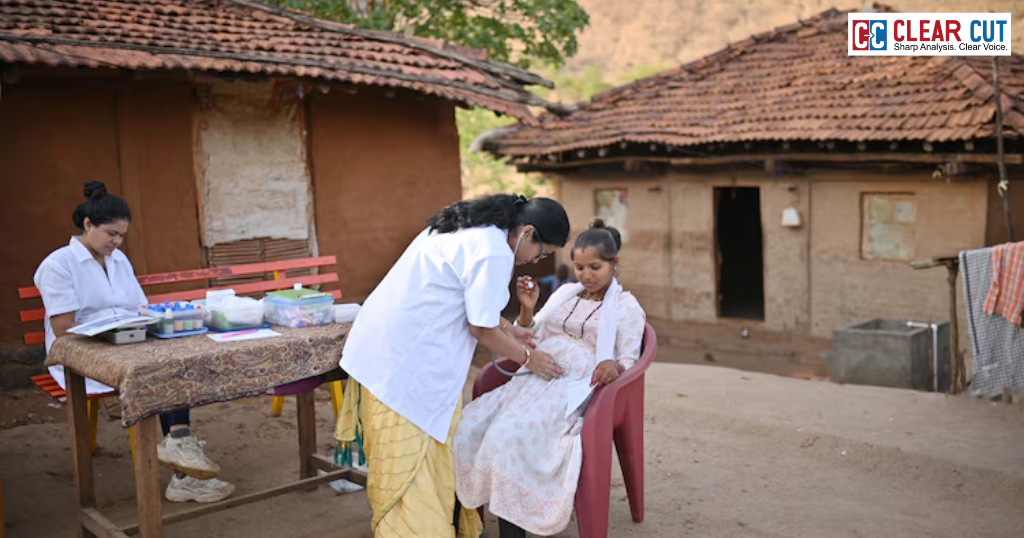
This figure looks better on paper than on the ground. The “State of Healthcare in Rural India 2024” report, released by NGO Transform Rural India and Development Intelligence Unit, puts the doctor-patient ratio at approximately 1:1,456. This falls significantly below the World Health Organization’s recommended ratio of 1:1,000. The situation is far worse in rural areas, where doctor vacancies run deep.
Chhattisgarh has the highest vacancy of doctors at 71%, followed by West Bengal at 44%, Maharashtra at 37%, and Uttar Pradesh at 36% in Primary Healthcare Centers.
The global benchmark adds more pressure. According to BMC Public Health, the WHO recommends 44.5 doctors, nurses, and midwives per 10,000 people. India’s national density currently stands at just 20.6 per 10,000.
Expanding Medical Education Fast
The government is responding with a sharp increase in medical seats. For the 2025-26 academic year, the central government approved 43 new medical colleges. It also added 11,682 MBBS seats and 8,967 postgraduate medical seats. Union Minister of State for Health Anupriya Patel confirmed these numbers in a written reply in the Rajya Sabha on March 10.
The NMC moved quickly on approvals. NMC Chief Dr. Abhijat Sheth announced the addition of 10,650 new MBBS seats for the 2025-26 session across 41 newly established and upgraded medical colleges. This expansion aligns with Prime Minister Narendra Modi’s vision of creating 75,000 additional medical seats over the next five years, as announced on Independence Day 2024.
India recorded the largest single-year expansion in MBBS seats, with the total count reaching 1,29,026 seats for the 2025-26 academic year, according to the final MBBS seat matrix released by the NMC.
Pulling Doctors Into Rural Areas
Creating more doctors alone is not enough. Keeping them in underserved areas is the real challenge. The government is using both money and policy to make rural postings more attractive. Under the National Health Mission (NHM), specialist doctors serving in remote areas receive hard area allowances and residential quarters.
Gynecologists, pediatricians, and anesthetists get additional honorariums for conducting procedures like cesarean sections in rural settings.
States can also offer negotiable salaries through a flexible model called “You Quote We Pay.” Non-monetary benefits include preferential admission to postgraduate medical courses for doctors who serve in difficult areas.
At the National Arogya Fair 2026, Minister Prataprao Jadhav emphasized the growing role of Ayush in addressing lifestyle disorders and described it as a movement for social transformation and rural empowerment. He has also underscored that India’s healthcare ecosystem has evolved into a dynamic and integrated system, combining advanced clinical capabilities, digital health innovation, and a growing network of institutions committed to global engagement.
Curriculum Reforms That Reach Villages
Two new programs embedded into medical training are changing how young doctors connect with rural India. The Family Adoption Programme now forms part of the MBBS curriculum. Medical colleges adopt nearby villages. Students adopt families within those villages. They then follow up on vaccinations, nutrition, hygiene, and medication adherence. The District Residency Programme, notified by the NMC, mandates a three-month compulsory posting for postgraduate medical students at district hospitals. It strengthens healthcare delivery in areas that otherwise struggle to attract trained professionals.
The Road Ahead
A scoping review published in BMC Public Health found that India has a persistent shortage and inequitable distribution of health workers, with rural expert cadres facing the most severe shortfall. Researchers recommend that the health department establish a productive recruitment system to achieve long-term solutions.
A PricewaterhouseCoopers study projects that India will need to add 30 lakh doctors and 60 lakh nurses over the next 20 years to meet rising healthcare demand. The government’s current pace of expansion is a meaningful start, but the scale of need remains enormous. New colleges, better incentives, and reformed curricula form the foundation. Whether this translates to doctors actually staying in villages will define India’s healthcare story for the next decade.
Clear Cut Health Desk
New Delhi, UPDATED: March 31, 2026 01:00 IST
Written By: Ayushman Meena