

The gender pay gap persists globally despite gradual progress, driven by structural inequalities, occupational segregation, and the motherhood penalty. While corporate transparency and policies can help, meaningful change requires deeper systemic reforms beyond equal pay measures.
Gender pay disparity continues to be one of the most quantified, most contested, and most persistently pervasive phenomena in corporate social responsibility (CSR). The Pew Research Center conducted a study in 2024 estimating that the average earnings of American women on an hourly basis, whether full- or part-time workers, are around 85% compared to men. Worldwide, the unadjusted gender pay gap, the ratio between earnings in all industries irrespective of any job category was estimated to stand at 83 cents per dollar in 2024, according to data collected by Statista using information from PayScale. Meanwhile, the projected timeline of closing this economic participation gap, according to the World Economic Forum in its Global Gender Gap Report 2024, is 134 years into the future.
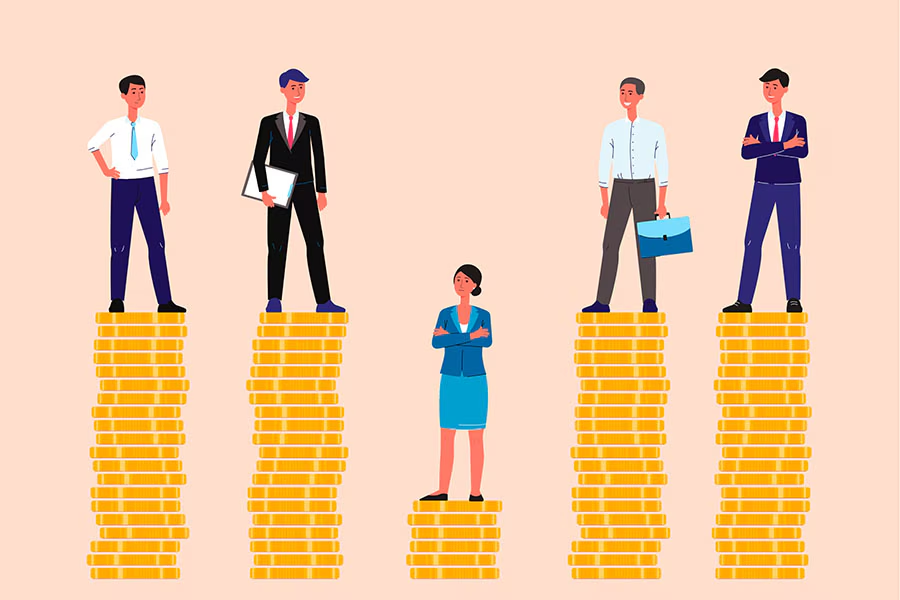
The statistics reveal slow but notable improvements. While in 2003 the unadjusted gender pay gap in the U.S. was 81 cents, it improved only to 85 cents in 2024. Furthermore, for workers between the ages of 25 and 34, the gender pay disparity is at 95 cents per dollar. However, it is not the closing disparity among younger workers that suggests the removal of these barriers; rather, it is more likely a symptom of how long the barriers are accumulating over the course of a working lifetime.
What the Data Does and Does Not Show
Public discussions about the gender wage gap are often inaccurate. The three ways to calculate the gap based on both data and type of analysis are by not controlling for factors such as experience and education (the uncontrolled gap), by controlling for job type while not controlling for experience (the controlled scientific gap), and by controlling for both job and experience (the fully controlled scientific gap).
The PayScale data for 2026 shows that the uncontrolled wage gap is $0.82 on the dollar. This means that on average, women earn 18% less than men, while the fully controlled wage gap is $0.99. Critics of gender pay equity policies use the controlled wage gap to suggest that the issue is mostly resolved, but this argument is flawed.
The reason for the uncontrolled wage gap, is the result of structural inequalities that create an inequitable labor market. Women are generally concentrated in lower-skilled, lower-paying jobs (such as caregiving and education). This creates a wage gap when women and men are compared but doing similar work. The uncontrolled gap also reflects the motherhood penalty.
According to Columbia University’s research referred to by Payscale in its 2026 report, women’s wages decline almost 50% following the birth of a child and remain depressed for many years afterward. For example, mothers earn $0.74 for every dollar earned by fathers, when the analysis excludes unobservable variables from the data.

Corporate Disclosure and the Transparency Problem
In the United States, there are no federal requirements for gender pay gap disclosure. Research published in Accounting, Organizations and Society in June 2025 found that companies voluntarily disclosing their gender diversity performance actually showed wider pay gaps than those that did not disclose. The researchers, from Harvard Business School and the University of Texas at Dallas, concluded that voluntary disclosure is more likely to function as reputation management than as genuine accountability. Companies talk more about equity when their internal numbers are worse, not better.
The United Kingdom has taken a more structured approach. Since 2017, all employers with 250 or more employees have been required to publish their gender pay gap annually. The UK’s 2024 mandatory reporting data, published in early 2025, documented a mean gender pay gap of 7.3% at HM Treasury Group illustrating that even institutions with explicit equity commitments maintain measurable disparities. Across the broader UK economy, the median gender pay gap has narrowed since reporting was introduced, suggesting that mandatory disclosure, while imperfect, is more effective than voluntary disclosure.
Corporate Responsibility in Practice
The corporate responsibility dimension of the gender pay gap extends beyond individual salary decisions. It encompasses hiring and promotion structures, the distribution of high-paying roles by gender, flexible working policies, parental leave equity, and the transparency of pay bands. A company can technically pay men and women the same base salary for the same role while still maintaining a large gender pay gap through concentration of women in lower-paid grades and men in senior and bonus-eligible positions.
Evidence-based approaches include publishing disaggregated pay data by gender and grade, setting binding targets for gender balance at senior levels, equating parental leave entitlements for all genders, and integrating pay equity reviews into annual compensation cycles. Several major corporations including Salesforce, Adobe, and Unilever, have implemented regular, company-wide pay equity analyses and publicly reported results. These are not universal practices. They are exceptions that demonstrate what structural commitment, rather than symbolic commitment, looks like.
References
Pew Research Center. (2025). Gender pay gap in US has narrowed slightly over 2 decades. Pew Research Center Short Reads. https://www.pewresearch.org/short-reads/2025/03/04/gender-pay-gap-in-us-has-narrowed-slightly-over-2-decades/
Payscale. (2026). 2026 Gender Pay Gap Report. https://www.payscale.com/featured-content/gender-pay-gap
World Economic Forum. (2024). Global Gender Gap Report 2024. WEF. https://www.weforum.org/reports/global-gender-gap-report-2024
Lu, S., & Huang, J. (2025). Gender diversity performance and voluntary disclosure: Mind the (gender pay) gap. Accounting, Organizations and Society, 114. https://www.library.hbs.edu/working-knowledge/more-talk-less-action-companies-touting-gender-equity-often-have-larger-pay-gaps
Statista / Payscale. (2024). Global gender pay gap from 2015 to 2024. https://www.statista.com/statistics/1212140/global-gender-pay-gap/
HM Treasury. (2025). 2025 Gender Pay Gap Report. UK Government. https://www.gov.uk/government/publications/hm-treasurys-gender-pay-gap-report-2024-to-2025/2025-gender-pay-gap-report
Clear Cut CSR, Gender Desk
New Delhi, UPDATED: April 18, 2026 05:00 IST
Written By: Tanmay J Urs