NITI Aayog’s newly launched CPO Portal aims to improve real-time coordination between field officers, districts, and ministries. While the platform could reduce bureaucratic delays, its success will ultimately depend on accountability and institutional follow-through.
When field reports arrive too late
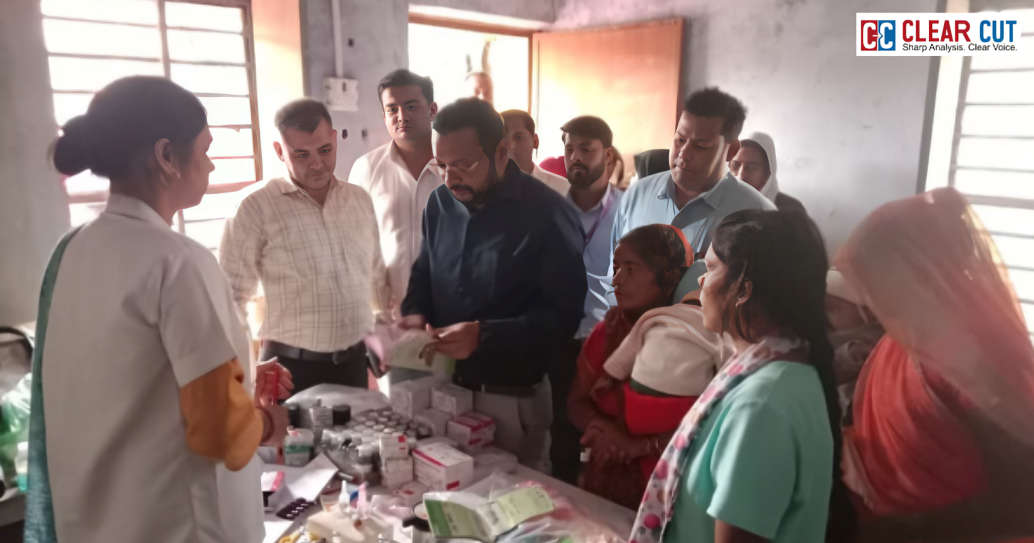
Earlier this year, a District Magistrate in Khunti, Jharkhand — one of the districts covered under India’s Aspirational Districts Programme — received a field report from a central government officer. The report pointed out major infrastructure gaps in three primary health centres. Two of them reportedly did not have functional equipment for maternal and child healthcare.

The issue was not that the report was wrong. The issue was that it was already six months old by the time it reached the district administration.
By then, the observations had moved through multiple layers of review, approvals, and official communication. In districts already struggling with weak public health systems, delays like this can have real consequences for people on the ground.
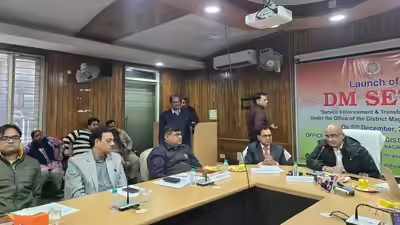
This is the kind of governance gap the newly launched Central Prabhari Officer (CPO) Portal by NITI Aayog is attempting to reduce. According to the NITI Aayog statement reported on May 6, 2026, launched on May 6, 2026, the portal is designed to improve coordination between field officers, district administrations, state governments, and central ministries. The broader idea is simple: if problems are identified in the field, governments should be able to respond quickly instead of waiting months for reports to move through the system.
How the CPO Portal Is Supposed to Work
The platform allows Central Prabhari Officers to upload observations directly through a mobile application while they are in the field. Once a report is submitted, district administrations can immediately access it, review the issue, and update the action taken within the same system. (Source: NITI Aayog statement reported on May 6, 2026.)
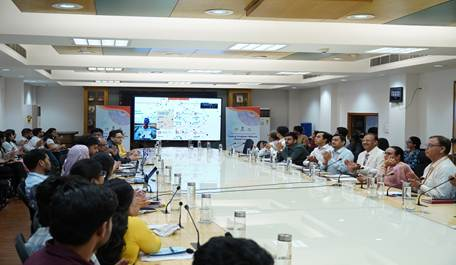
State Planning Secretaries can monitor developments across districts, while central ministries and NITI Aayog receive a broader view of recurring implementation gaps. (Source: NITI Aayog statement reported on May 6, 2026.)
Officials involved in the rollout described the portal to reduce delays in governance and create faster communication between different levels of administration. Training sessions for officers have also been planned to help ensure that the platform is used effectively rather than becoming another underused government dashboard. (Source: NITI Aayog statement reported on May 6, 2026.)
The logic behind the system is difficult to argue with. In many cases, governments are already aware of problems at the local level — the real challenge is how slowly information travels through the bureaucracy.
Why the CPO Portal Matters
The portal becomes more important when viewed in the context of India’s larger development programmes. The Aspirational Districts Programme (ADP), launched in January 2018, identified 112 underdeveloped districts across 27 states for focused improvement in areas such as health, nutrition, education, agriculture, financial inclusion, and infrastructure. (Source: NITI Aayog; National Health Mission.)
According to NITI Aayog, district performance under the programme is tracked through 49 Key Performance Indicators across five sectors, with rankings updated through the Champions of Change dashboard.
On January 7, 2023, the government expanded the same approach through the Aspirational Blocks Programme, extending targeted monitoring and development efforts to 500 blocks across 27 states and 4 Union Territories. (Source: National Health Mission; Aspirational Blocks Programme overview.)
These initiatives have produced measurable progress in several districts, as reflected in official reporting and independent assessments. But they have also exposed a persistent weakness in India’s administrative system: field-level problems are often identified much earlier than they are resolved.
The role of Central Prabhari Officers was originally intended to bridge this gap. Officers were expected to regularly visit districts, document issues, and connect local realities with policymaking at higher levels. The problem was not the idea itself — it was the speed of follow-up and the lack of a real-time communication system. That is where the new portal could make a meaningful difference.
The Real Test Will Be Accountability
At the same time, technology alone cannot fix governance problems. India has seen several government portals launched with strong public messaging, only to lose momentum once the initial attention faded. The concern is not whether the CPO Portal can technically function. It probably can. The more important question is whether officials will use it honestly and whether institutions will act on what is reported.
A field officer who documents that a health centre has lacked medicines for months is effectively pointing to administrative failure somewhere in the system. In bureaucratic structures, that can create discomfort.
There is always the possibility that reports become overly cautious or softened to avoid conflict. If that happens, even a well-designed platform risks becoming another digital archive instead of a tool for accountability.
To its credit, the portal does attempt to create tracking mechanisms. District responses are recorded, state governments can monitor unresolved observations, and central ministries can see whether flagged issues remain pending for long periods. But dashboards alone cannot guarantee accountability.
A portal may show that a medicine shortage was reported in January and remained unresolved in April. What it cannot guarantee is whether anyone is actually questioned about that delay. That still depends on political and administrative will.
What the Government Should Do Next
The launch of the CPO Portal is a useful step, but it should be seen as the beginning of a process rather than a complete solution. If the system is expected to improve governance in aspirational districts, a few things are necessary.
First, some level of public transparency would help. Aggregate district-level observations, without exposing sensitive information, should eventually be accessible to researchers, journalists, and civil society organisations. Public visibility often creates pressure for faster action.
Second, districts with repeatedly unresolved observations should trigger mandatory review by the relevant ministry along with time-bound corrective measures.
Third, Central Prabhari Officers should not be evaluated only on the number of reports submitted. Their effectiveness should also depend on whether their observations led to measurable improvements in local conditions.
Ultimately, governance is not about how quickly data is uploaded to a portal. It is about whether conditions improve after problems are identified.
The District Magistrate in Khunti should not receive a field report six months after it was written. She should receive it almost immediately. More importantly, the missing equipment and medicines should reach the health centres soon after. That is what real-time governance is supposed to mean. The portal is now live. The real challenge is making sure it delivers beyond launch day.
Clear Cut Child Research, CSR Desk
New Delhi, UPDATED: May 09, 2026 05:00 IST
Written By: JAY