
Delhi’s waste crisis in Ward 42 highlights how decades of unequal urban planning and poor sanitation continue to impact low-income colonies like Mangolpuri and Sultanpuri. Overflowing dhalaos, weak waste segregation, and failing civic infrastructure have turned a sanitation issue into a major public health and social development concern.
When Delhi’s MCD staff visited Ward 42 in Rohini Zone on May 4, 2026, they discovered overflowing dhalaos and flooded roads. What they may not have anticipated was a social development emergency that had been building for five decades.
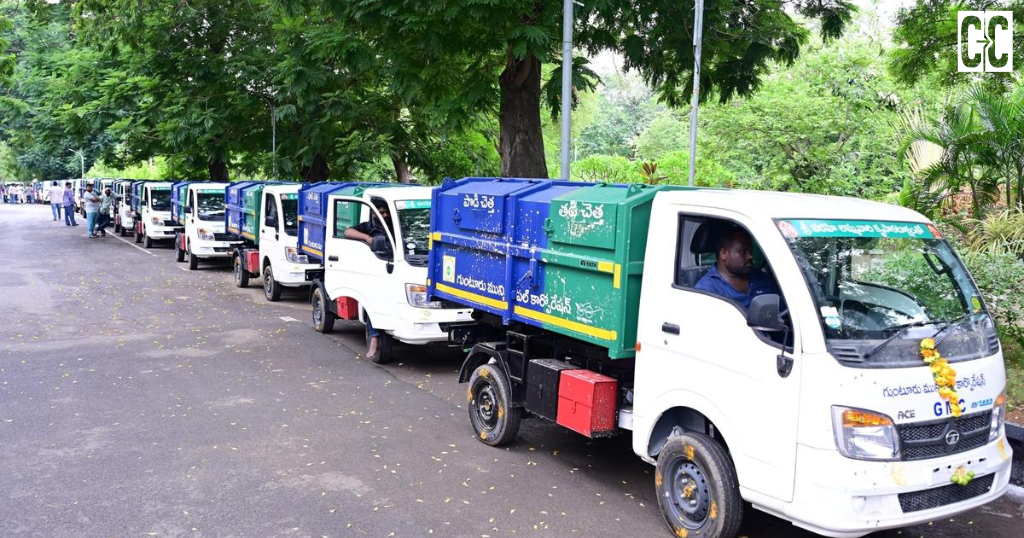
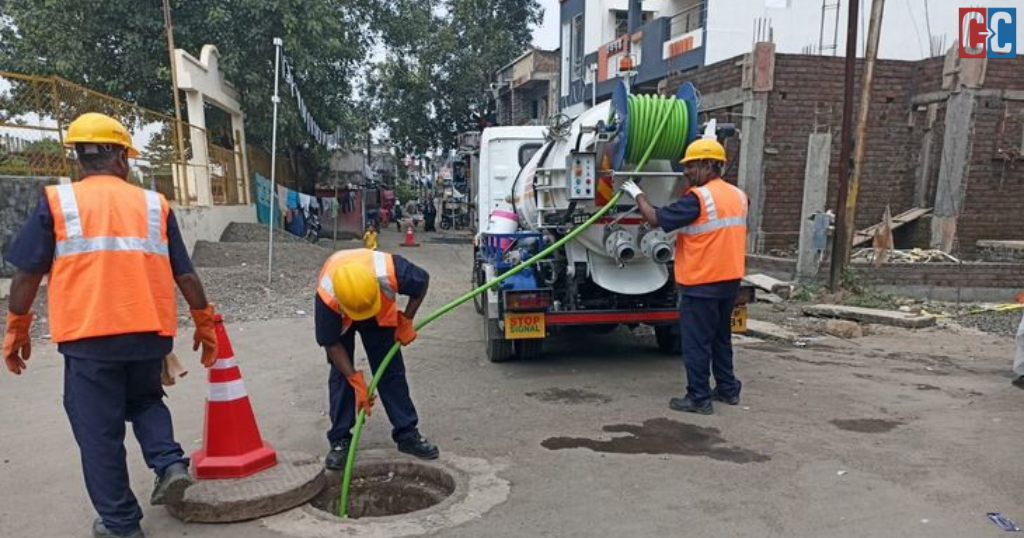
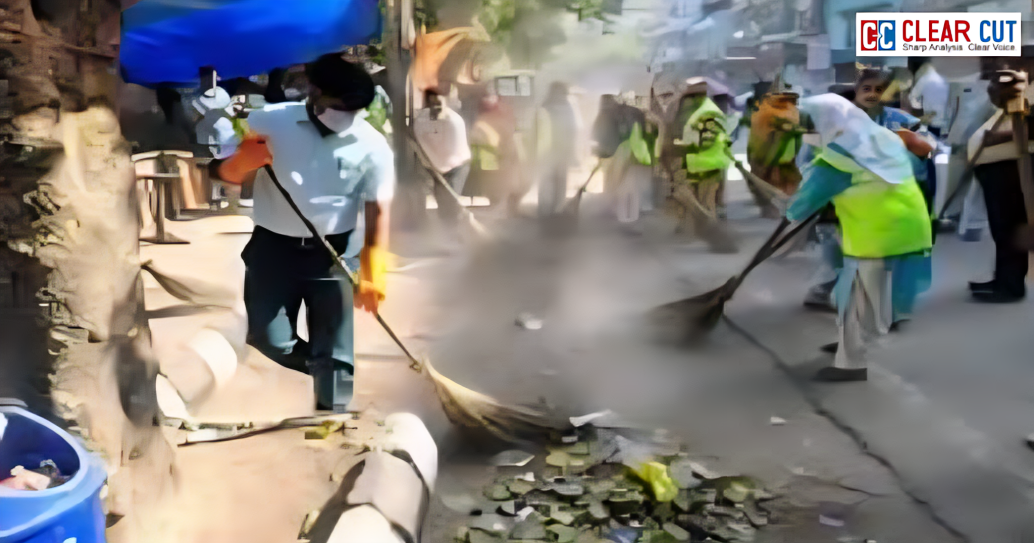
On a Monday afternoon of May 4, authorities from the Municipal Corporation of Delhi’s Rohini Zone conducted a standard on-the-ground inspection. The Deputy Commissioner, along with MCD staff, toured Ward 42, which includes Krishan Vihar, Sultanpuri, Mangolpuri, and Pitampura West, to “review sanitation and civic conditions.” Geotagged and time-stamped photographs were shared to X (previously Twitter). Directions were issued. Strict enforcement was guaranteed. Eight hundred and twenty-one individuals saw the tweet.
The colonies that became invisible
Sultanpuri and Mangolpuri are not random slums that sprouted up on Delhi’s outskirts. They are deliberate constructs by the Indian state.
These resettlement colonies, established in 1977 after many citizens were forcibly relocated from downtown Delhi during the Emergency, are among India’s oldest and largest. The Delhi Development Authority (DDA) transferred thousands of residents from the inner city to what was then barren terrain on Delhi’s northwestern outskirts, offering 25-square-yard plots and little else. Residents reported being “thrown here with just allotted plots,” with no stores, drinking water, schools, bathrooms, or access to the city from which they had been banished.
Over five decades, the colonies have become crowded, noisy, and commercially engaged. A metro station currently links Peeragarhi to the rest of Delhi. Markets have sprouted. Schools and hospitals are nearby. However, beneath this surface-level expansion, civic infrastructure has never kept up with the population or its needs.
The Dhalao Problem: A City Generating Waste It Cannot Manage.
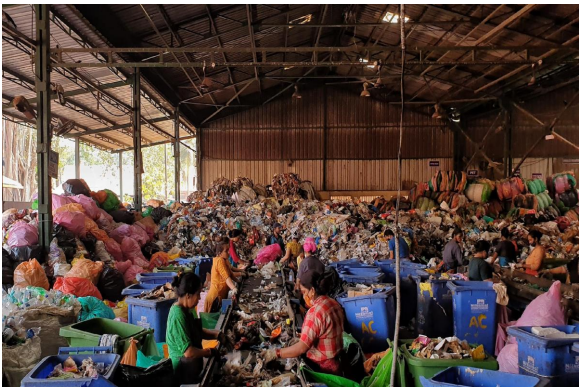
The MCD tweet notably specifies “prompt garbage removal from dhalaos and open sites.” Dhalaos – communal rubbish collecting structures, have become the most apparent symbol of everything wrong with urban waste management in Delhi’s low-income wards. The scale of the problem is astonishing.
According to data from the Delhi Pollution Control Committee (DPCC), Delhi generates 11,144 tonnes of municipal solid trash every day, making it one of the biggest in India. However, the city’s trash processing infrastructure cannot keep up: as of 2020-21, less than half of Delhi’s daily garbage output (5,139 tonnes out of 10,990 tons) was properly treated. The remainder was deposited in already-saturated landfills.
The inequity is not just quantitative, but also spatial. Residents of planned, affluent colonies receive waste collection at their doorstep. In congested, low-income neighbourhoods like Ward 42, the system is based on dhalaos. When collection is delayed, which happens frequently in these wards, the dhalao overflows onto the street. Open areas near them become secondary dumping grounds.
The waste segregation statistics are considerably more terrible. According to the 2024 EAC-PM working paper, as reported by the Times of India, only 12 of Delhi’s 250 Municipal wards have achieved 100% of garbage segregation waste at source. In contrast, segregation rates in East Delhi’s 55 wards averaged only 30%. Wards with low-income inhabitants are disproportionately affected by poor segregation, as they lack the infrastructure and institutional assistance necessary to segregate waste at the source.
The MCD recently allotted Rs 48 crore for garbage and sanitation management across different zones in 2026-27. This is welcome news. However, inhabitants of Krishan Vihar and Sultanpuri will be asking the same question they have for years: will the money reach the alleyways where they live?
Women and Children: The Victims of Civic Neglect
Women and girls are particularly burdened by the lack of proper sanitary facilities, according to research conducted by the Centre for Policy Research (CPR) with a focus on Mangolpuri. Only seven of Mangolpuri’s eighteen community toilet complexes (CTCs) have been confirmed to be operational; the others have deteriorated into garbage-filled constructions. Women who don’t have access to secure, private restrooms are compelled to use public restrooms, usually before dawn or after midnight, which exposes them to assault and harassment.
According to the Delhi government’s Mission Convergence Survey (2012), 56% of children in the city’s unauthorised colonies and settlements defecate in the open. This is an infrastructure failure rather than a behavioural one. Additionally, it has quantifiable, direct effects: research on Delhi’s low-income colonies has shown a clear correlation between the prevalence of diarrhoea in children and the absence of secure excreta disposal facilities.
The risks are substantial. One of the leading causes of death for children under five in India is diarrhoea, a condition that is nearly completely avoidable with proper sanitation. According to government data presented in the Lok Sabha, water-borne illnesses such as typhoid, cholera, viral hepatitis, and diarrhoea alone accounted for 60% of the 10,738 deaths that occurred in India over a five-year period till 2017. According to a PubMed study, diarrheal illnesses caused 18% of all fatalities among Indian children between the ages of 5 and 14, with girls dying from diarrhoea at a rate that was about 50% greater than that of boys. One Mangolpuri resident told CPR researchers, “This is the only colony with such low levels of services.” “We have a really bad toilet and water situation.”
City of Unequal Citizens
The trend that the Ward 42 scenario exhibits is what distinguishes it as a social development concern rather than just an administrative error.
There are eight official settlement classifications in Delhi, including resettlement colonies (RCs), jhuggi-jhopri clusters (JJCs), and planned colonies. The degree of municipal services provided to each category varies and is quite unequal. Despite being legally planned and established by the state, research has repeatedly demonstrated that resettlement colonies frequently receive services like those found in informal settlements.
This is clearly reflected in the waste segregation difference. The affluent central parts of the city are governed by the New Delhi Municipal Corporation, which recorded a 90% trash segregation rate. The South Delhi Municipal Corporation achieved an 80% waste segregation rate in 13 of its wards, which includes the three “model wards” it designated in accordance with a 2019 National Green Tribunal order that required full compliance with Solid Waste Management. Meanwhile, segregation rates are still much lower and overflowing dhalaos are still common in the low-income north and northwest zones where Ward 42 is situated.
This is the central conundrum of Ward 42. Mangolpuri and Sultanpuri are not prohibited. The people that live there are not intruders. The state placed them here. Nevertheless, fifty years later, to guarantee that trash is removed from their streets, an MCD official must issue a “strict enforcement” directive.
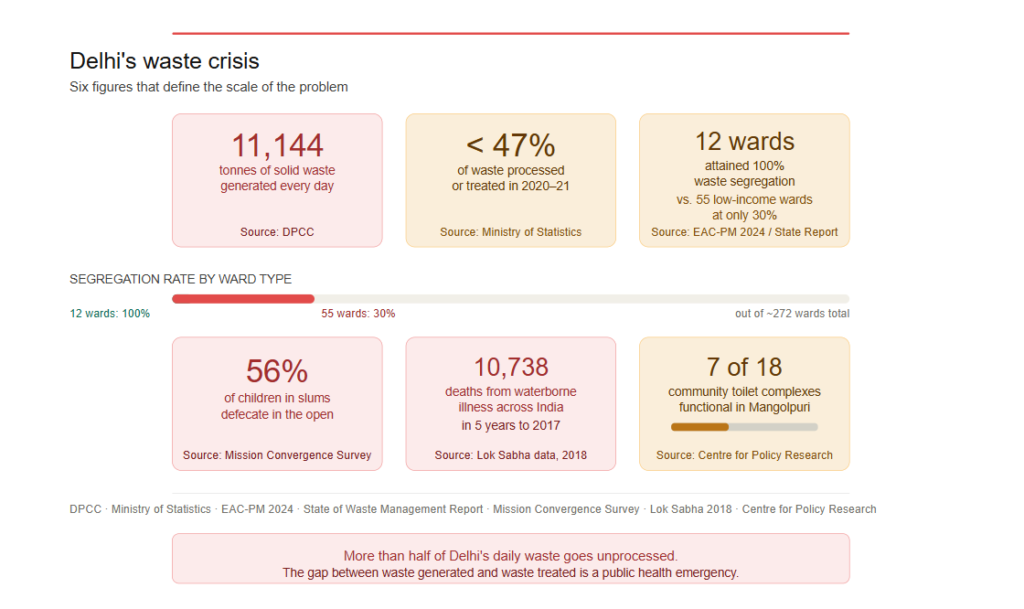
Data Box: Figures of Delhi’s Waste Crisis
- Delhi produces 11,144 tonnes of solid trash every day (DPCC)
- According to the Ministry of Statistics, less than 47% of daily trash was processed or treated in 2020–2021.
- According to the Times of India and EAC-PM (2024), just 12 wards in Delhi have attained 100% trash segregation.
- 55 low-income wards have a segregation rate of 30% (State of Waste Management Report).
Clear Cut WASH, Health Desk
New Delhi, UPDATED: May 08, 2026 01:00 IST
Written By: JAy