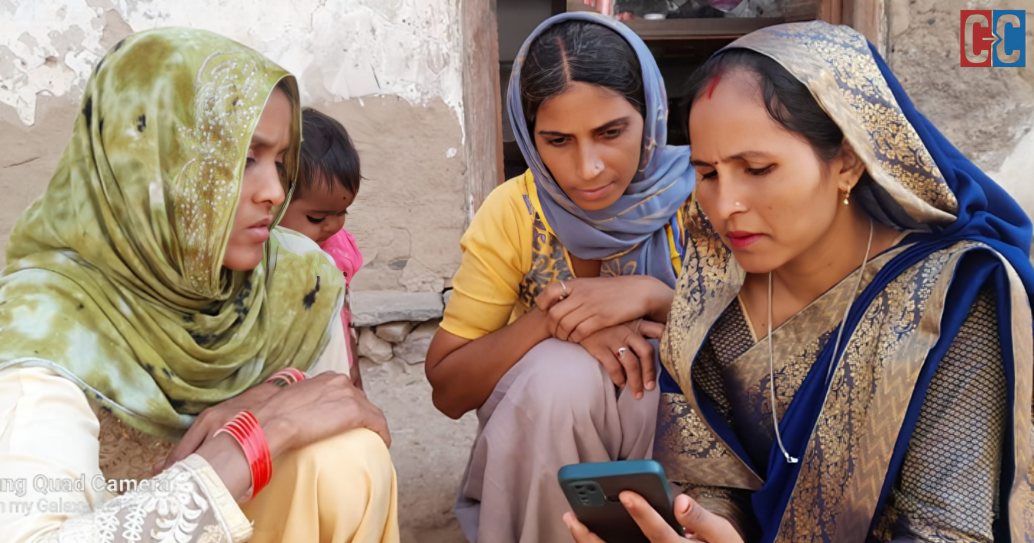


- The article highlights how marital rape remains a hidden and normalized issue in many Indian marriages, where consent is often misunderstood or ignored.
- It explores the emotional and psychological impact on women while emphasizing that marriage does not erase bodily autonomy or the right to say “no.”
- The piece calls for awareness, open conversations about consent, and a shift toward relationships built on respect, dignity, and mutual choice.
In many Indian homes, behind closed doors and polite smiles, there exists a silence that is rarely questioned. It is the silence of women who are told that once married, their bodies are no longer entirely their own. We grow up believing that marriage is sacred—a bond built on love, trust, and companionship.
Weddings are celebrated with grandeur, promises are made in front of families, and two lives are expected to become one. But what happens when that promise of togetherness turns into something one-sided? What happens when intimacy becomes an obligation?
Marital rape is one of those realities we don’t talk about enough. Not because it doesn’t exist, but because acknowledging it forces us to question deeply rooted beliefs about marriage, gender roles, and consent. MP High Court observed that under IPC Exception 2, marital sexual acts by a husband are not considered rape, though other allegations like cruelty or violence can still be prosecuted.
The Invisible Reality
Data tells a story we often choose to ignore. According to the National Family Health Survey (NFHS-5, 2019–21), nearly 30% of married women in India have experienced spousal violence. This includes physical, emotional, and sexual abuse. While the numbers are alarming, they still don’t capture the full picture.
Even the Supreme Court has emphasized that a woman’s dignity, autonomy, and right over her own body do not end with marriage, recognizing bodily autonomy as a fundamental right (Justice K.S. Puttaswamy v. Union of India, 2017). Why? Because many cases go unreported. Many women don’t label forced sex by a husband as “rape.”
In fact, global research published in The Lancet shows that intimate partner sexual violence is among the most common forms of abuse faced by women worldwide (Sardinha et al., 2022).
But in India, the problem is not just prevalence—it’s perception. For many, the idea of marital rape feels contradictory. How can something forced exist within something as “pure” as marriage? This very question is what keeps the issue buried.
The Conditioning We Don’t Notice
From a young age, girls are often taught to adjust, compromise, and prioritize family harmony over personal comfort. Marriage, in this context, becomes less about partnership and more about responsibility.
Phrases like “shaadi ke baad sab normal hai” (everything is normal after marriage) or “patni ka farz hota hai” (it’s a wife’s duty) are casually repeated, but their impact runs deep. They quietly erase the idea that a woman can say no.
This conditioning doesn’t impact only women it also influences how men perceive relationships. Many are raised learning how to take responsibility and assert control, but not how to understand consent, respect boundaries, or accept a “no” without question.
The result is a dangerous misunderstanding: that marriage implies permanent, unquestioned consent. But consent isn’t a lifetime contract signed on a wedding day. It is a conversation—ongoing, mutual, and essential.
When Silence Feels Easier Than Speaking
One of the most painful aspects of marital rape is the silence surrounding it. Unlike other forms of violence, this one often doesn’t leave visible marks. It hides in everyday life, making it harder to recognize and even harder to speak about.
Women who experience it often find themselves trapped in a web of emotions: Confusion: “Is this really wrong, or am I overreacting?” Guilt: “Maybe I should have just agreed.”
Fear: “What will happen if I speak up?” Isolation: “No one will understand.” There is also the weight of societal expectations. Marriage is not just a personal relationship in India—it is a family institution. Speaking against a husband can feel like going against an entire system. For many women, staying silent feels easier than facing judgment, disbelief, or blame.
The Emotional and Psychological Impact
Marital rape is not just a physical act it deeply affects mental and emotional well-being. The trauma is often long-lasting and complex.
Women who experience it may struggle with:
- Anxiety
- constant fear
- Depression
- emotional numbness.

Loss of self-esteem and identity. Difficulty trusting others. A sense of helplessness within their own homes. Imagine living in a space where you are expected to feel safe, yet constantly feel violated.
The person who is supposed to be your partner becomes a source of distress. Over time, this can erode not just the relationship but the individual’s sense of self. And because the abuse is normalized or dismissed, many women don’t seek help—believing that this is simply part of married life.
Why Awareness Matters
The biggest barrier to addressing marital rape is not just denial it is normalization. When something is normalized, it becomes invisible. That’s why awareness is so important. Not just in terms of knowing that marital rape exists, but in understanding why it is wrong. At its core, this issue is about autonomy, respect, and dignity.
A healthy relationship cannot exist without mutual consent. Love cannot coexist with force. Respect cannot survive in the absence of choice. Changing this mindset requires us to rethink what we have been taught about marriage.
Starting Conversations That Matter
Real change often begins with small, uncomfortable conversations. Talking about consent shouldn’t be limited to schools or campaigns; it should happen at home, among friends, and between partners. It should be part of how we understand relationships. Parents can teach their children that respect is more important than authority.
Friends can challenge jokes or comments that normalize coercion. Couples can learn to communicate openly about comfort, boundaries, and expectations. These conversations may feel awkward at first, but they are necessary. Because silence is what allows the problem to continue.
Supporting Without Judging
For those who may know someone going through this, support matters more than solutions. Listening without judgment, believing their experience, and offering emotional support can make a significant difference. Often, survivors are not looking for advice—they are looking to be heard. Creating a safe environment where people feel comfortable speaking up is one of the most powerful steps toward change.
Consent doesn’t end with marriage; respect and choice must exist in every relationship. Awareness begins when we question silence and recognize what we were taught to ignore.
Because Marriage Is Not Ownership
At its heart, this issue comes down to one fundamental truth: Marriage does not grant ownership over another person’s body. A relationship—no matter how sacred or long-standing—does not erase the need for consent.
“No” is still “no.”
- Even after marriage.
- Even after years together.
- Even in love.
Until we begin to understand this, not just as an idea but as a value we practice, the silence around marital rape will continue. But silence is not permanent. It can be broken—through awareness, empathy, and the courage to question what we have always accepted without thought. Because real change begins when we stop asking, “How can this happen in a marriage?” And start asking, “Why have we allowed it to go unnoticed for so long?”
Clear Cut Gender Desk
New Delhi, UPDATED: May 18, 2026 04:00 IST
Written By: Nihal Verma