
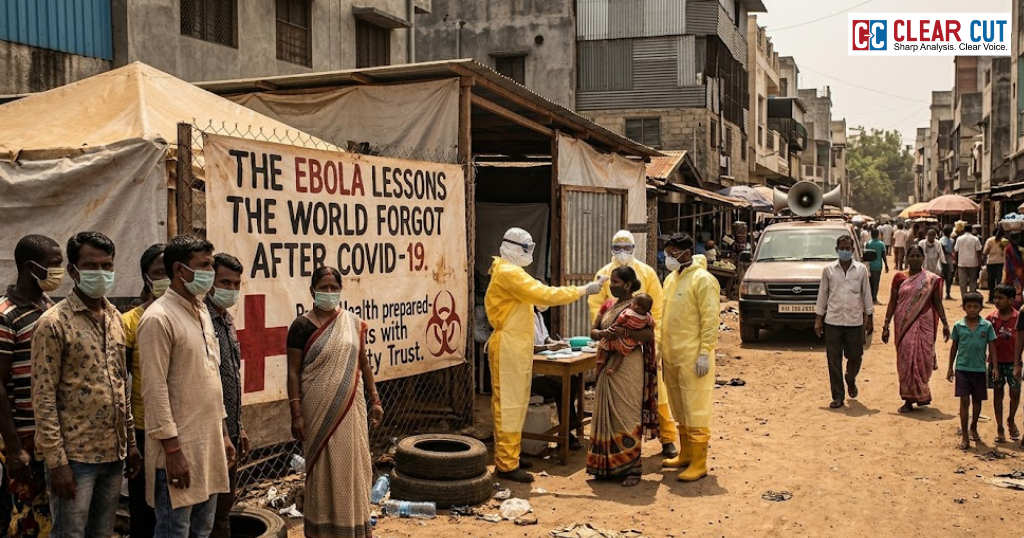
- The recurring Ebola outbreaks in Africa show that many of the lessons from COVID-19 — including the need for strong surveillance, public trust, healthcare preparedness and global cooperation — still remain unlearned.
- Misinformation, weak health systems and delayed international responses continue to worsen epidemic control, especially in vulnerable regions affected by conflict and poverty.
- The crisis highlights that global health security depends on continuous investment in public health infrastructure, not temporary emergency reactions after outbreaks begin.
After COVID-19 gripped the world in 2020, health systems, governments and international institutions everywhere vowed we’d ‘never be unprepared again’. Yet, the pandemic’s wake revealed crumbling health systems, lax surveillance, misinformation issues, healthcare inequities – and it seems that many of these lessons have not yet been fully grasped in a handful of African nations experiencing recurrent outbreaks of Ebola.
Recent Ebola outbreaks in Uganda and in the DRC prove that infectious diseases will once again overwhelm health systems if preparedness, public trust and international coordination erode. As the WHO warns that the current Ebola epidemic in the DRC is currently spreading faster than our health systems can control, the suspected cases continue to rise.
Though the two illnesses have drastically different transmission methods, scale of devastation and mortality, Ebola and COVID-19 share some uncanny similarities regarding the way that societies face health crises-both are failures in surveillance, misinformation, the decline of public trust, healthcare systems’ preparedness, and the constraints of international cooperation.
It is a tragedy not that epidemics exist, but that humanity is doomed to repeat the same mistakes.
Surveillance Systems: Early Warning Still Comes Too Late
The most obvious lesson from COVID-19 has been the necessity of robust disease surveillance in real-time. Countries that identified infections, traced contacts and communicated information openly were able to contain the disease whereas delayed detection provided the virus the time to spread unchecked. The same is true in Ebola epidemics. The WHO reported that delay in identifying cases in the DRC permitted the ongoing outbreak to spread beyond initial containment before intervention mechanisms were initiated. Surveillance is notoriously difficult in conflict ridden areas with inadequate testing infrastructure and reporting mechanisms and in areas where populations have been displaced. This is not a new problem; delayed reporting was responsible for spread of virus across the region during the 2014 West African epidemic, an epidemic that resulted in more than 11,000 deaths in Guinea, Sierra Leone and Liberia alone. COVID-19 should have been the impetus to invest in real-time surveillance, genomic surveillance, local testing infrastructure, and community-based reporting systems throughout the world; while such systems exist, in wealthier countries, there remain major gaps in the capacity of low-income countries to detect disease outbreaks in a timely manner. Digital surveillance systems studied during Ebola and COVID-19 demonstrated fragmented communication channels between communities and central authorities which would slow down outbreak response, confirming that not only do technologies exist to help us track diseases, we also need the infrastructure, trust and local participation to facilitate their success. Surveillance must begin long before it is internationally recognized. By the time that the world notices an epidemic, it has already been spreading undetected for an extensive period. The Ebola epidemic serve as a stark reminder that epidemic preparation must become the normal business of public health not an emergency measure.
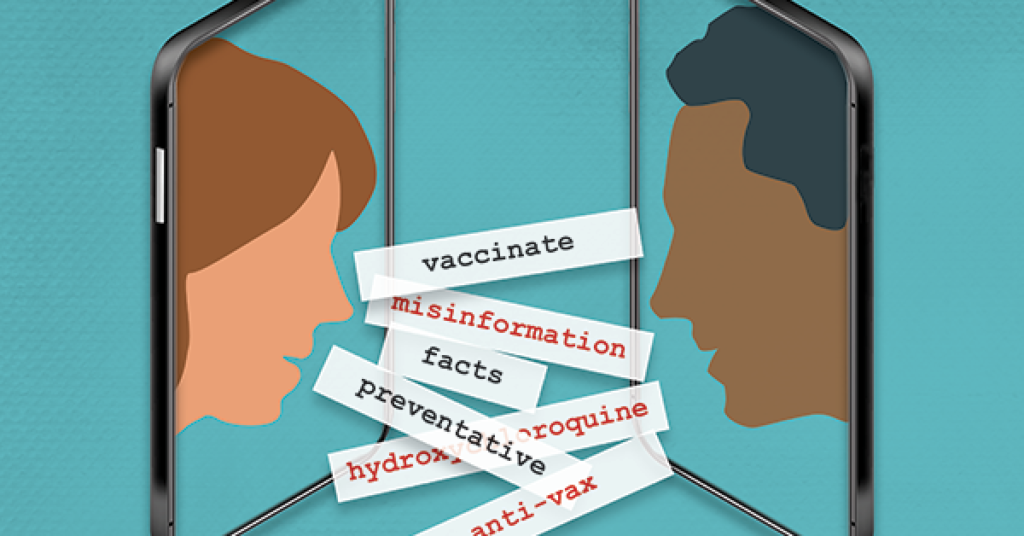
Misinformation: The “Infodemic” Never Ended
The COVID-19 pandemic demonstrated nothing clearer than the speed with which health misinformation spreads. This includes claims about unproven cures, conspiracy theories surrounding the illness, arguments against vaccines, and mistrust of the scientific community; all of which are hindering responses to the current outbreak of the virus Ebola in the Democratic Republic of Congo. Online accounts of the disease have rapidly accumulated conspiracy theories claiming that the disease is made up, or that it is being manipulated for political or financial gain. This fuels public mistrust and decreases participation in response efforts. All of these issues are echoes of the pandemic. A number of analyses of COVID-19 have pointed to information overload, the high incidence of fear during this period, and trust in unverified online sources to account for the spread of fake news during the pandemic, but we can see similar dynamics in this situation too. Health information provided by professionals during the Ebola crisis was distorted and amplification of rumours, and public fear and panics exacerbated by social media. The risk of spreading misinformation can not be underestimated: the real impact of information lies in how it influences behaviour, in this case affecting human survival. Lack of trust in health workers or a belief in fake cures mean patients can avoid hospital or quarantine, or even physically attack health workers for feared spreading of disease during previous Ebola outbreaks. Reports from the Congo currently suggest a similar phenomenon linked to rituals and suspicion of authorities. All of this shows that during COVID-19 the world learned how susceptible people are to information that fuels their fears or attacks the systems that care for them, yet there has been little significant progress in building stronger systems to combat misinformation.
Public Trust: The Missing Foundation of Public Health
No health system can function without public trust.
The COVID-19 pandemic was a very stark illustration of that. Those governments that engaged in consistent, transparent communication enjoyed relatively strong public compliance; conversely, confusing messages, politicization and secrecy undermined compliance with public health measures.
The Ebola epidemic has proved time and time again the same point.
In affected areas, years of neglect, poor governance and social inequality have fostered strong suspicion of authorities and international bodies; thus populations often mistrust isolation centers, resist contact tracers and are reluctant to declare their cases.

Health authorities on the WHO have pointed out that community participation and trust building were at the heart of efforts to stem Ebola, and that without local support no intervention can work properly.
The pandemic revealed just how deep this deficit of institutional trust is, both at local and international level. Inconsistent messages on scientific issues and on political decisions, the increasing polarization of science and politics, and the politicization of health have worn away at public faith in health institutions; that erosion of trust continues to this day.
Trust is a long-term asset, it can be built through healthcare infrastructure, open dialogue, strengthening leadership in the community, sustained communication etc. It can not be built during crises, but is crucial to building a resilient, responsive health system when a crisis emerges.
Populations will comply with health guidelines during crisis if they trust that health institutions are looking out for their interests.
Healthcare Preparedness: Temporary Panic, Permanent Weaknesses
The rush to build hospitals, equip labs, stock up on oxygen and beef up emergency preparedness happened during the worst of the COVID-19 pandemic, but that frantic energy waned after infections dropped significantly. Unfortunately, on-going Ebola outbreaks have shown that some health systems have been perilously under-prepared for epidemic response. The WHO states that the ongoing Ebola outbreak is “outpacing” response efforts. In a conflict-afflicted Congo region already hobbled by violence, displaced populations and scarce resources, the lack of trained personnel, testing sites, protective equipment and treatment centers have consistently undermined outbreak containment efforts. These problems are further compounded because this outbreak is due to the Bundibugyo strain of Ebola, to which there is currently no approved vaccine. The COVID-19 pandemic demonstrated that healthcare preparedness should not simply be an emergency response measure, but a sustained process of investment in public health systems before disaster strikes. Such preparedness involves robust primary health systems, epidemiologic teams with excellent training, fast testing capabilities, well-coordinated emergency logistics, protection of health workers, indigenous capacity to manufacture relevant tools, and coordinated cross border cooperation. However, funding for public health systems tends to swell during an emergency and dip after it, the cycle of “panic and neglect” that continues to leave so many countries vulnerable in the event of a new outbreak. Both Ebola and COVID-19 carry a straightforward lesson: prevention is cheaper than the alternative.
Global Cooperation: A World Still Divided
COVID-19 laid bare both the success and limitations of global cooperation, with the swift dissemination of genomic information, record speed vaccine development, and greatly expanded international scientific collaboration contrasted with vaccination nationalism, unequal distribution of resources, travel restrictions and geo political rivalry, exposing weaknesses in global unity.
Even now Ebola continues to suffer from the same inequalities: diseases in developing countries tend to receive less attention internationally until they spread to developed nations, and many feel outbreaks in Africa don’t provoke same level of urgent responses as those in the US or Europe.
Recent instances of the virus spreading beyond the Congo and into neighbouring Uganda has already fuelled concerns about wider international transmission. In turn India and a number of European countries are all assessing their response capacities and have stepped up monitoring.
It is a stark illustration of the uncomfortable reality that international cooperation only really gains momentum once developed countries perceive a threat to themselves.
COVID-19 confirmed the inextricability of modern society; localized outbreaks can easily become global health emergencies by means of travel, trade and migration and, despite the different transmission dynamics of the disease than Ebola, the principle remains the same-that one country’s infectious diseases are everybody’s responsibility.
Global health security can never rely solely on the reaction of politicians; we need to continually invest in international surveillance systems, equitable funding, vaccine development, humanitarian co-ordination and aid to fragile health systems, otherwise there is not a hope in hell. The world’s health is becoming increasingly interlinked; one nation’s health is now everybody’s health.
Clear Cut Health, Research Desk
New Delhi, UPDATED: May 27, 2026 09:00 IST
Written By: Nairita Das