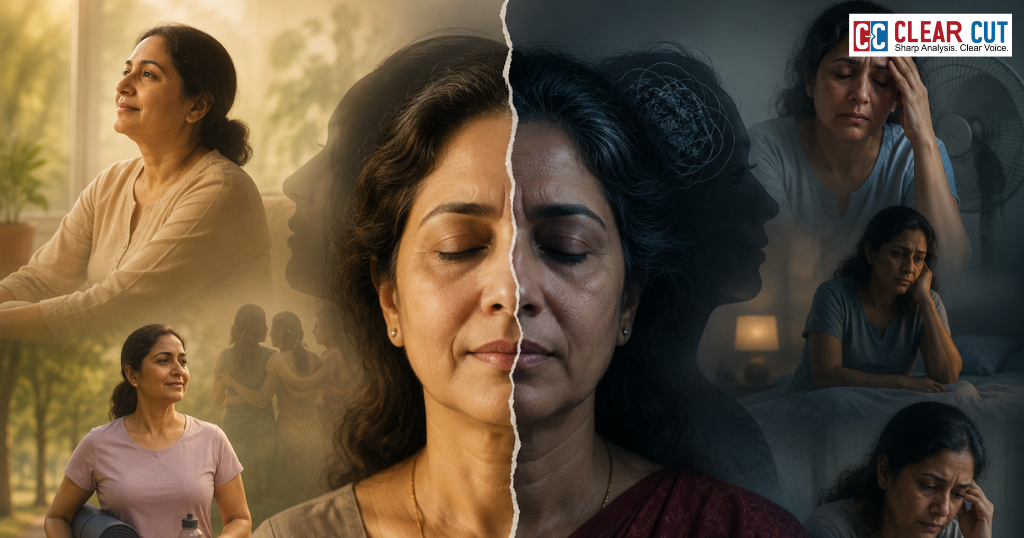
Menopause is one of the most ignored health issues for women nowadays. Despite millions going through uncomfortable symptoms like hot flashes, insomnia, anxiety, memory problems, and achy joints, lots struggle to get the right help. Because of stigma, lack of awareness, and healthcare shortcomings, tons of women face this big life change solo.
Sunita Sharma, a 49-year-old schoolteacher in Delhi, assumed it was stress when she started waking up every night covered in sweat. Her elderly mother needed constant medical care, her teenage son was getting ready for board exams, and her job had grown more difficult. Sleep vanished. Anxiety began to seep in. Her joints ached. Things that she would typically remember were forgotten.
“I thought something was seriously wrong with me,” she says. “I visited three different physicians. One believed it was age-related stress, while another recommended vitamin pills. Menopause was not brought up.
She didn’t get an answer about what she had been going through for almost two years. Sunita’s tale is by no means exceptional.
Millions of Indian women are going through menopause with little knowledge, minimal medical advice, and a culture that frequently views talking about ageing and reproductive health as taboo. Menopause is still one of the least talked about stages of a woman’s life, even though it affects all women who live long enough to experience it. Pregnancy and childbirth have become public health concerns.
The World Health Organization reports that in 2021, women over 50 made up 26% of all women and girls worldwide, up from 22% ten years prior. Millions more women will experience postmenopause for almost one-third of their lifetimes as life expectancy increases.
Beyond Just Hot Flashes
Menopause is often linked to mood swings and sporadic hot flashes. The truth may be much more nuanced. Women suffer heart palpitations, weight fluctuations, vaginal dryness, decreased bone density, joint discomfort, insomnia, anxiety, depression, memory loss, and chronic weariness. These symptoms, which frequently take women off guard, can start years before menopause during perimenopause.
Menopause usually happens between the ages of 45 and 55 worldwide, but the transition period, known as the perimenopause, can start years earlier and persist for several years, impacting social, emotional, and physical well-being.
According to a study done on postmenopausal women in South India, the following symptoms were most prevalent: lower back discomfort, joint and muscle soreness, chronic exhaustion, cognitive loss, and sleep issues. It’s interesting to note that reports of psychological and physical problems were more common than those of hot flashes.
“I was becoming someone I didn’t recognise,” says Priya Menon*, a Bengaluru-based business worker who is 46 years old. “I was managing teams and chairing meetings when all of a sudden I was unable to focus. I would forget my coworkers’ names. My family perceived me as agitated at home. I felt like I was failing at everything.
Priya discovered she was going through perimenopause after months of doubt. “What frustrated me most wasn’t the symptoms,” she said. “It was not knowing what was happening.”
A Generation Trapped Between Responsibility and Silence
Many Indian women have several obligations as they go through menopause. They frequently manage families, assist aging parents, take care of children, and make a substantial financial contribution to the family. However, they often neglect their own health.
Rekha Devi*, a 52-year-old caretaker and homemaker from Lucknow, considered getting medical assistance to be a luxury.
“My husband had diabetes, my father-in-law was bedridden, and my daughter was in college,” she says.
“When I couldn’t sleep or started feeling anxious all the time, I thought it was my duty to tolerate it. Women are taught to persevere. In many households, the expectation of endurance is still strongly ingrained.
Health specialists observe that rather than seeking treatment, women often normalise symptoms or write them off as a normal part of ageing.
The Healthcare Knowledge Gap
Social stigma is not the only issue. Menopause education and training deficits have been identified by several gynaecologists and public health specialists. Women frequently visit different specialists—cardiologists for palpitations, orthopedists for joint pain, psychiatrists for anxiety—without anyone making the connection between the symptoms and hormonal fluctuations.
Gynaecologists claim that while awareness is growing, it is still insufficient. Women are more informed than previous generations, largely because of social media and online communities. But many still come to clinics after years of agony. Better education, regular counselling, and increased awareness among medical professionals are all necessary.
Dr. Sudhaa Sharma, President, Indian Menopause Society states that “Menopause is entering the public health space. The awareness may not be adequate but it is improving and there is an institutional recognition.”
The open discussion of menopause by celebrities and prominent people has helped normalise discussions that were previously limited to private settings. Actors, journalists, and health activists in India have publicly discussed the psychological and physical effects of menopause, urging women to seek help rather than endure their suffering in quiet.
Awareness is still inconsistent.
Digital platforms and private healthcare providers may deliver information to urban women. Other obstacles that rural women frequently encounter include ignorance, difficulty accessing healthcare, and a lack of discussions about reproductive health following childbearing years.
What Women Declare They Require
Across conversations with women going through perimenopause, a few themes emerge repeatedly. Information is one of them. Many say they entered this stage of life with little understanding of what to expect.
“I knew about periods and pregnancy,” recalls Priya. “Nobody prepared me for menopause.”
The Need To Be Heard
Another common concern is the experience of seeking help. Several women describe consulting doctors for symptoms such as fatigue, anxiety, sleep disturbances, or mood changes, only to be told that stress was the likely cause.
“They told me it was stress,” says Sunita. “I just wanted someone to look at everything together and tell me what was really happening.”
Workplace Assistance
Professional performance can be directly impacted by symptoms including exhaustion, anxiety, sleeplessness, and brain fog. Menopause-sensitive workplace rules, flexible work schedules, wellness initiatives, and management awareness have all been demanded by several women’s rights activists.
Family Comprehension
Many women claim that emotional support from partners, kids, and family members can greatly lessen feelings of loneliness. “When my family finally understood what I was going through, everything changed,” Rekha explains. “I felt less alone.”
A Public Health Concern, Not an Individual One
Women in India are living longer than in past generations, and the country’s population is ageing. Millions of people will thereby experience postmenopause for almost one-third of their lives.
Menopause, according to experts, should no longer be viewed as a personal annoyance but rather as a public health concern that needs to be addressed by families, companies, legislators, and healthcare systems. Women silently bore the weight of illnesses they were unable to identify or describe for decades.
Dr. Bhatti states that “We get patients at a very late stage when they have already suffered a lot. While it’s true that menopause comes at a certain age, the conditions it leads to can be treated or managed. They should not be dismissed as if nothing can be done about it”.
Dr. Makeba Williams — OB-GYN and Certified Menopause Practitioner (US) says that “Menopause and perimenopause have been shrouded in silence, from a clinical standpoint, from a research standpoint, and culturally. There have not been enough conversations in communities about this, and there’s a lack of conversations in clinical spaces.”
She also said: “It is important that we are building these trustful relationships, so that women experiencing menopause have a safe, trusted space to ask the questions, and to have conversations.”
Menopause is more than just the cessation of menstruation. A woman’s cardiovascular health, bone strength, sleep quality, mental health, and career can all be impacted by this significant health change. However, a lot of Indian women still deal with it in quiet. They claim that what they require is information rather than sympathy. Diagnosis, not dismissal. Not quiet, but support. As India talks more openly about women’s health, menopause may be the next conversation that can no longer be ignored.
Note: Names have been changed to protect privacy.
Clear Cut Health, Gender Desk
New Delhi, UPDATED: June 15, 2026 09:00 IST
Written By: Muskan Pal