

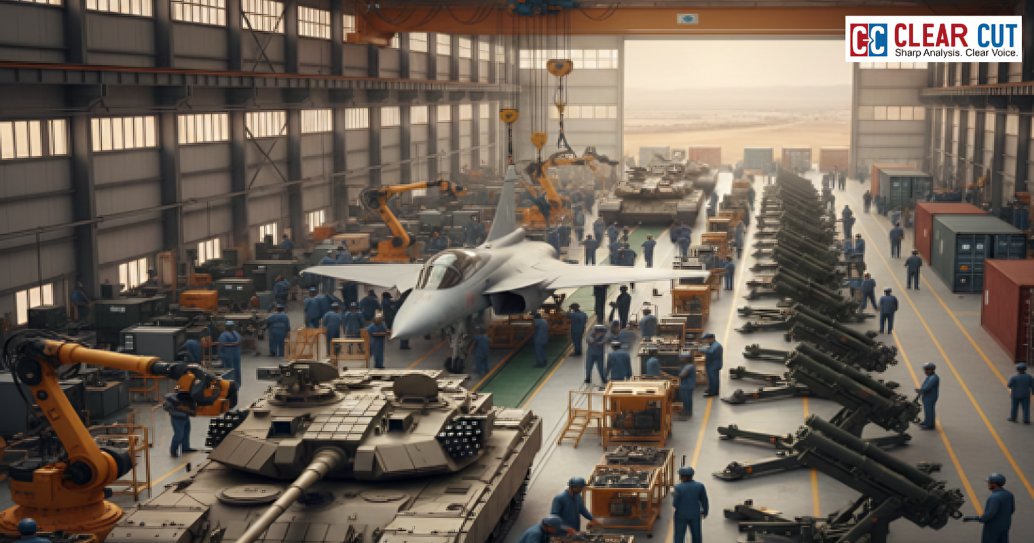
- India’s defence transformation over the last decade has focused on reducing dependence on foreign military imports through higher defence spending, increased R&D investment, and stronger support for indigenous innovation, startups, and manufacturing.
- Key initiatives such as iDEX, ADITI, DAP 2020, and Positive Indigenisation Lists have expanded domestic defence production, with exports targeted to reach ₹50,000 crore by 2029.
- The article argues that true self-reliance in defence is measured not by budget size alone, but by how much equipment India can design, develop, and manufacture within the country.
A NUMBER NOBODY TALKS ABOUT ENOUGH
Here is a fact most Indians don’t carry in daily conversation: for most of the post-independence era, between 65 and 70 per cent of India’s military equipment was procured from abroad. Not built. Not designed. Bought often at a premium, often with strings attached, occasionally from countries whose interests didn’t fully align with India’s own. A government review released through PIB on June 18, 2026 lays out, in granular detail, how this number has changed over the past 12 years.
This is not a story about parades and weapons systems. It is a story about budgets, R&D allocation, and the unglamorous machinery of industrial policy — the parts of defence transformation that rarely make it into a headline but determine, ultimately, whether a nation can defend itself without asking permission.
| ₹2.53L Cr → 7.85L Cr Defence Budget (FY14 → FY27) | ₹94,587 Cr → 2.19L Cr Capital Expenditure (FY15 → FY27) | +112% R&D Budget Growth | ₹50,000 Cr Export Target by 2029 |
FOUR PILLARS OF THE SHIFT
The government’s review frames the transformation across four pillars: Capability, meaning research and innovation; Capacity, meaning production and exports; Operational Excellence, meaning indigenous platforms reaching active service; and Credibility, meaning defence diplomacy and multilateral defence partnerships. Each pillar carries its own data trail, and together they describe a system being rebuilt from the inside out, not merely re-funded.
R&D allocation rose 112 per cent, from Rs 13,716 crore in FY15 to Rs 29,100 crore in FY27. In FY 2022-23, the government opened 25% of the defence R&D budget to industry, startups, and academia ending a near-monopoly that government-run Defence Research and Development Organisation (DRDO) laboratories had held for decades. That single decision, more than any procurement announcement, signals an attempt to inject private-sector speed into a historically slow-moving research ecosystem.
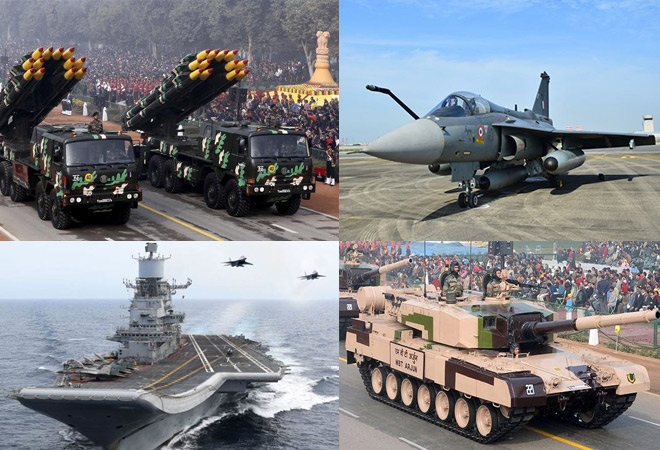
“65-70% of India’s defence equipment used to come from abroad. The real defence story of the last decade isn’t a weapons system. It’s the decision to stop asking other countries for permission to defend itself.”
IDEX AND THE STARTUP BRIDGE
Perhaps the most structurally significant initiative is iDEX (Innovations for Defence Excellence) which connects startups, MSMEs, individual innovators, and academic researchers directly to defence procurement needs, bypassing the traditional layers of large public-sector defence contractors. With a budget of Rs 498.78 crore between 2021 and 2026, iDEX had engaged 676 innovators and signed 551 Development and Deployment contracts by March 2026, implemented through the Defence Innovation Organisation (DIO).
A sub-scheme called ADITI (Acing Development of Innovative Technologies with iDEX) carries a dedicated Rs 750 crore allocation between 2023 and 2026 specifically for critical and emerging technologies, the kind of frontier capability such as AI-enabled targeting, autonomous systems, advanced materials, that conventional defence public-sector units have historically been slow to develop.
POLICY INSTRUMENTS AND THE ROAD AHEAD
The structural backbone of this transformation rests on a small set of policy instruments: the Defence Acquisition Procedure (DAP) 2020, which streamlined and indigenised procurement rules; the Positive Indigenisation Lists, introduced from 2020, which name specific equipment categories that can no longer be imported, forcing domestic development; and the Defence Industrial Corridor Production Partnership (DcPP) model, which builds regional manufacturing ecosystems rather than isolated factories.
The target of Rs 50,000 crore in defence exports by 2029 is ambitious but not implausible given current trajectories. India’s defence exports have already grown substantially over the past decade. The accountability imperative now is transparency: the Ministry of Defence must publish an annual, audited scorecard tracking indigenisation percentage by equipment category, not just aggregate budget figures. A budget number tells us what was spent. An indigenisation percentage tells us what was actually built. India’s security depends on closing that information gap and closing it fast.
Clear Cut Research, Startups Desk
New Delhi, UPDATED: June 20, 2026 05:00 IST
Written By: Tanmay Urs