

- India has surpassed key climate targets ahead of schedule, achieving 53.21% non-fossil electricity capacity and a 37.38% reduction in emissions intensity, strengthening its global climate credibility.
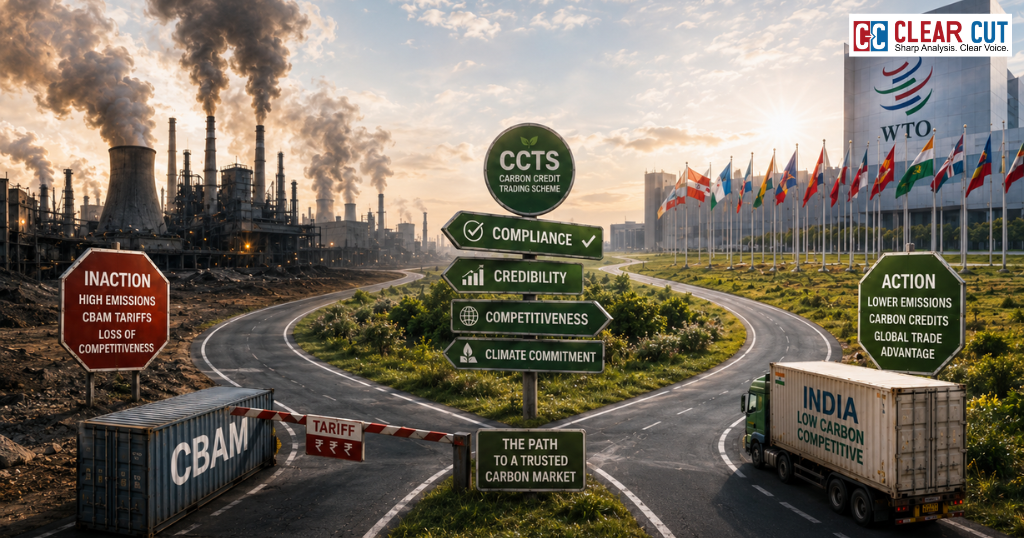
- The Carbon Credit Trading Scheme (CCTS) now covers 490 industrial entities across seven sectors, creating India’s first compliance carbon market and helping industries prepare for carbon-related trade measures like the EU’s CBAM.
- However, the market’s success depends on rapid implementation, transparent carbon credit trading, and strong monitoring systems to ensure real decarbonization and protect India’s export competitiveness.
In Geneva, on the sidelines of the WTO Trade and Environment Week 2026, India did something that would have seemed improbable a decade ago. Officials from the Ministry of Environment, Forest and Climate Change walked into a multilateral forum and presented India not as a developing country seeking climate exemptions, but as one showcasing a functioning carbon market architecture. The Carbon Credit Trading Scheme which is India’s first compliance carbon market, is now live in regulatory terms, covering 490 industrial entities across seven sectors. Whether it delivers on its structural promise depends on what happens next.
Where India Stands on Its NDC Commitments
The data presented at Geneva was striking. As of March 2026, India’s share of non-fossil fuel-based installed electricity generation capacity reached 53.21%, surpassing the Paris Agreement NDC target of 50% by 2030 nearly 5 years ahead of schedule. India’s emissions intensity of GDP declined by 37.38% between 2005 and 2022, exceeding the NDC target of 33-35% reduction well before 2030. These are not projections; they are audited outcomes. They give India’s delegation credibility in rooms that have long been skeptical of large developing economies’ climate commitments.

The CCTS Architecture
India’s Carbon Credit Trading Scheme, operationalized under the Energy Conservation (Amendment) Act 2022, covers seven industrial sectors in its first phase: aluminium, cement, chlor-alkali, pulp and paper, petroleum refining, petrochemicals, and textiles. These 490 entities operate under legally binding Greenhouse Gas Emission Intensity (GEI) targets for compliance years FY2025-26 and FY2026-27. Entities that reduce emissions below their targets earn Carbon Credit Certificates (CCCs) tradeable instruments. Those that fall short must purchase credits or pay buy-out prices.
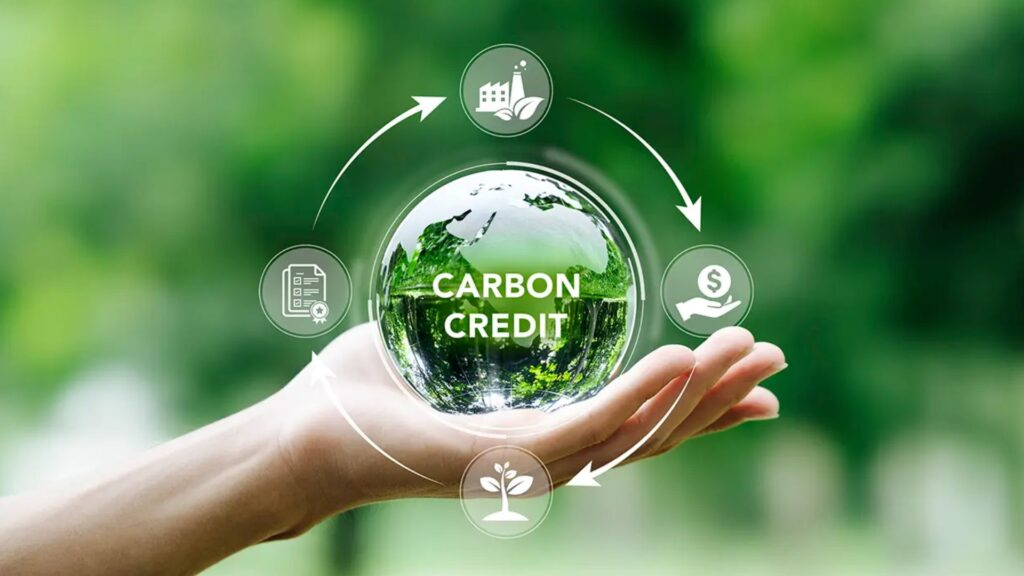
The mechanism is modelled on a perform-achieve-trade logic inherited from the earlier PAT scheme, but it measures actual GHG intensity rather than just energy efficiency. This is a crucial upgrade: it brings the scheme into alignment with global carbon market standards and opens pathways for linking with EU carbon mechanisms and CBAM compliance.
The CBAM Dimension: Why This Is Also a Trade Issue
The EU’s Carbon Border Adjustment Mechanism (CBAM), which came into effect in 2026, imposes tariffs on imports including steel, cement, aluminium, fertilizers and hydrogen based on embedded carbon content. Indian exporters in these sectors face potential CBAM liabilities that could directly affect export competitiveness. A credible domestic CCTS reduces this exposure: companies that demonstrate carbon cost internalisation in India may be able to offset CBAM liabilities. For India’s heavy industry exports, the CCTS is therefore not just an environmental policy, it is an economic defense mechanism.
The Implementation Gap
Despite regulatory progress, the CCTS compliance market has not yet begun credit issuance. IEEFA’s June 2026 report flags that early price signal credibility is critical to market confidence and that signal has yet to materialize. MRV (monitoring, reporting and verification) infrastructure is still being refined. The Bureau of Energy Efficiency, which governs the scheme, must accelerate the shift from framework design to operational trading if India’s carbon market is to produce the decarbonization incentives it promises. The voluntary segment, already active since early 2026 in biogas, hydrogen, and forestry projects, offers early lessons the compliance segment must learn from.
Conclusion: Build the Market Before the World Builds It Around You
India has earned the right to stand in Geneva and speak about climate ambition. The 53.21% non-fossil capacity, the 37.38% emissions intensity reduction, the seven-sector CCTS launch. But carbon markets do not run on announcements; they run on prices, verifiable data, and trust. India’s first Carbon Credit Certificate must trade publicly before the next WTO environment week. The industrial sectors covered by CCTS such as cement, aluminium and petrochemicals are precisely the sectors facing CBAM pressure. For every quarter the compliance market delays its first trade, Indian exporters carry that cost in global tariff exposure. The regulator must act. Industry must engage. The time for framework documents is over, this is the time for transactions.
Clear Cut Climate Desk
New Delhi, UPDATED: June 14, 2026 09:00 IST
Written By: Tanmay URS