

- India’s new IIP series (base year 2022–23) provides a more accurate picture of the economy by including emerging sectors, renewable energy tracking, and updated industrial products.
- April 2026 industrial output grew 4.9%, driven by strong manufacturing performance and a 16% rise in capital goods production, indicating a strengthening investment cycle.
- While investment activity remains robust, weaker mining output and uneven consumer demand highlight areas that require policy attention.
Statistical revision rarely makes headlines. But this one should. On June 2, 2026, the Ministry of Statistics and Programme Implementation (MoSPI) released a new Index of Industrial Production (IIP) series with 2022–23 as the base year, replacing the 2011-12 series that had become increasingly obsolete. Along with it came April 2026 data: industrial output grew 4.9% year-on-year, led by a 6.2% surge in manufacturing and a striking 16% jump in capital goods production. Taken together, these numbers are a window into where India’s industrial economy stands.
What Changed in the New IIP Series
The old series was measuring an India that no longer exists. Based on 2011-12, it missed entire sectors and carried outdated item weightages. The new 2022-23 series expands the item basket from 407 to 463 item groups, covering 1,042 items (up from 839) {MoSPI/NSO First Press Release of New IIP Series}. It introduces four sectors instead of three: the new addition is Water Supply, Sewerage and Waste Management, given a 2.02% weight. Gas Supply is now separately tracked within electricity. Manufacturing retains its dominant position at 76.06% of the index.
The new series also tracks renewable and non-renewable electricity generation separately. This is a critical upgrade as India’s grid becomes increasingly solar and wind-heavy. New items in the basket include CCTV cameras, aircraft parts, stents, vaccines, and rare earth minerals that simply didn’t feature in a 2011-12 economic universe. Items deleted include kerosene, CFLs and sewing machines.
Reading the April 2026 Numbers
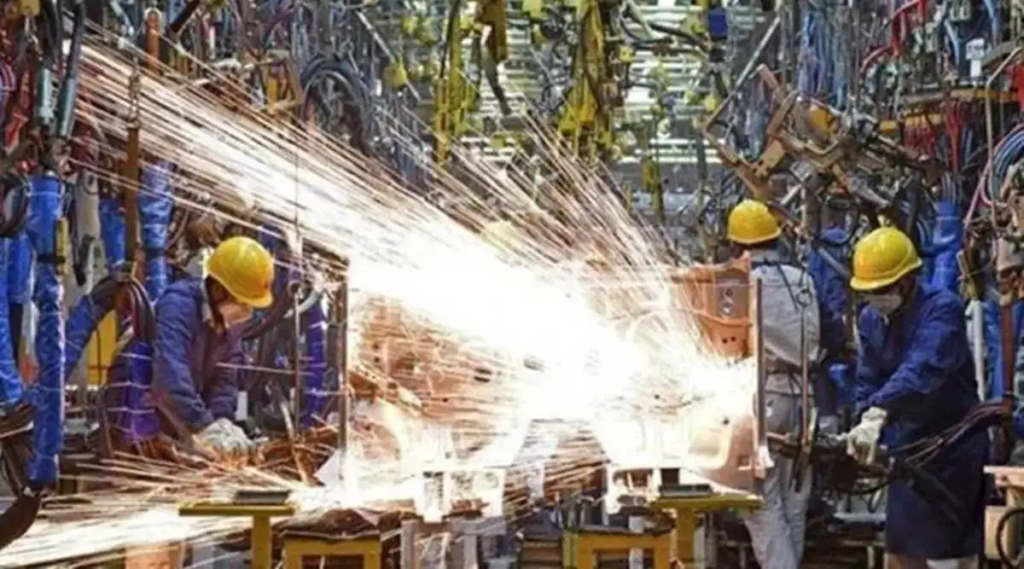
Under the new series, April 2026 IIP stood at 118.9 against 113.4 a year earlier. Manufacturing grew 6.2%. 17 of 23 manufacturing industry groups recorded positive growth, led by motor vehicles, electrical equipment and machinery. Capital goods grew 16% in April 2026 under the new series — a strong reading, though comparable year-ago figures under the new 2022-23 base have not yet been independently published, making direct year-on-year momentum comparisons premature at this stage.
However, mining contracted 5.1%. This is a persistent structural concern, particularly the 5.7% decline in fuel minerals. Consumer durables and FMCG goods also recorded slower growth compared to last year. The uneven print suggests that investment-side demand is firing while consumption-side demand remains patchy.
What Capital Goods Growth Actually Signals
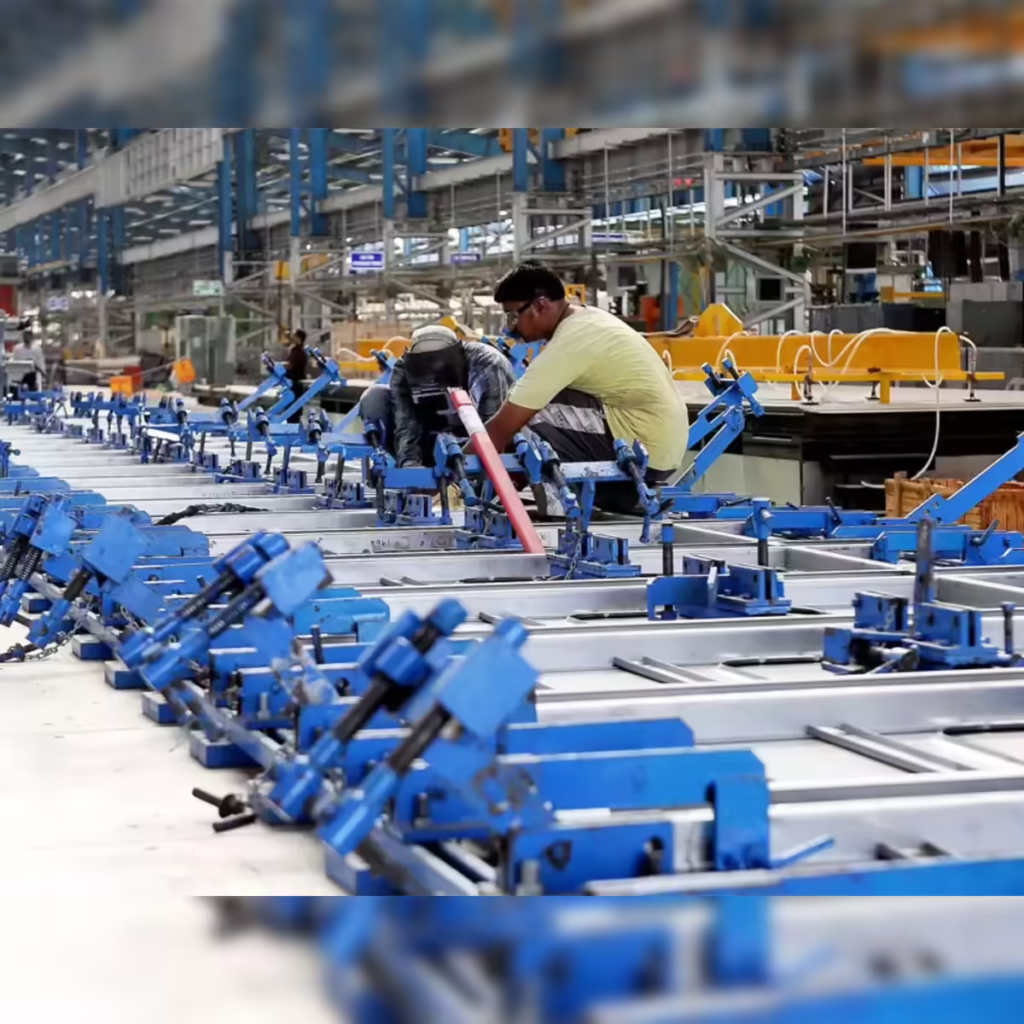
Capital goods such as machinery, equipment, and plant investments are a leading indicator of private investment cycles. Historically, sustained double-digit capital goods expansion precedes broader industrial employment and output growth. Two consecutive years of 13–16% capital goods growth is a meaningful signal of an expanding investment cycle. Bank of Baroda’s analysis confirms that capital goods ‘bucked the broader trend’ when overall IIP growth slowed, suggesting the investment impulse is durable, not fragile.
The Statistical Governance Imperative
The revision from 2011-12 to 2022-23 is overdue by any standard. Ideally, base year revisions happen every five years. India’s 14-year gap created distortions in policy analysis, budget projections, and investment decisions. MoSPI Secretary Saurabh Garg said the new series ‘plugs gaps in the previous basket.’ That is accurate but what it also demonstrates is the danger of governing a rapidly changing economy with an outdated statistical lens. The next revision must not wait another decade.
Conclusion: Measure Better, Govern Better
India’s revised IIP is a policy infrastructure upgrade, not just a statistical exercise. The 16% capital goods growth signal, the renewable electricity disaggregation and the inclusion of rare earth minerals and vaccines in the basket. These make the index a live instrument for policy rather than a lagging report card. The April 2026 data, read carefully, shows an economy where investment is outpacing consumption, manufacturing is performing, but mining and consumer demand need attention. Policymakers must act on these signals with the same urgency they bring to headline GDP numbers. A sharper ruler is only useful if you look at what it measures.
Clear Cut Research, Livelihood Desk
New Delhi, UPDATED: June 13, 2026 05:00 IST
Written By: Tanmay URS